

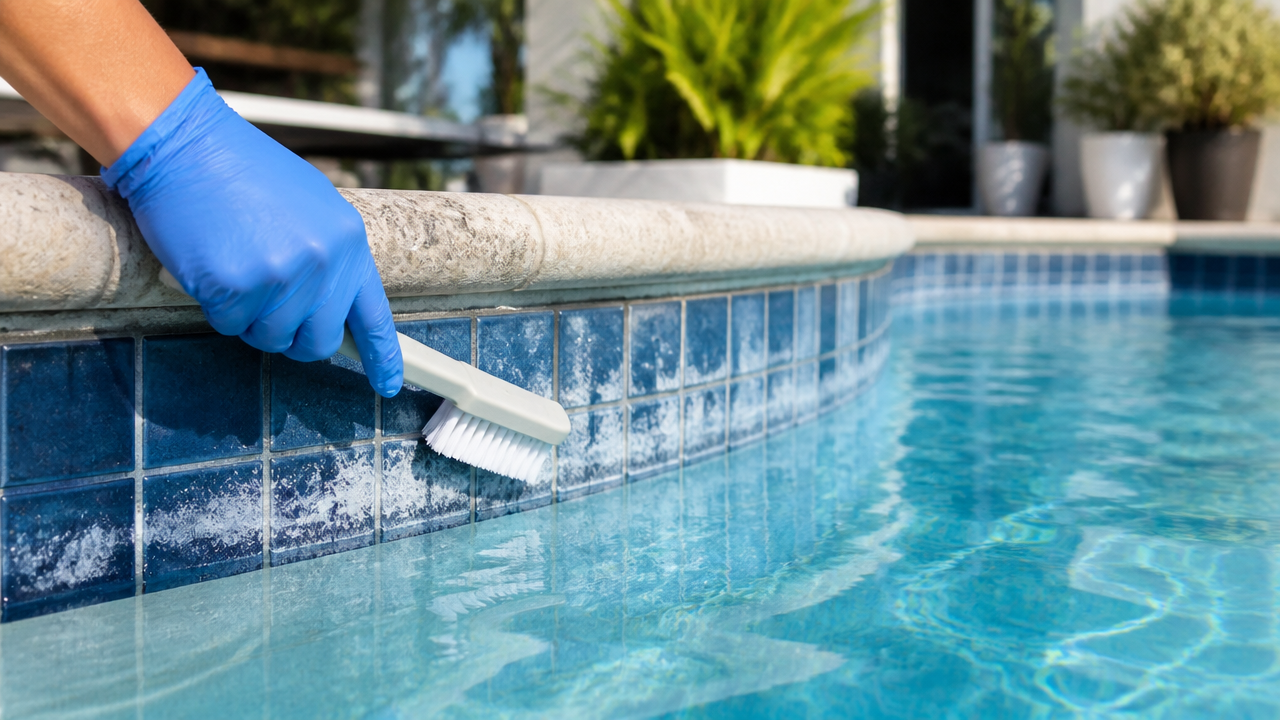
Pool scale is removable, but the right method depends on how thick the deposit is and what surface it is stuck to. If you own a residential pool, the goal is not just to scrub off the white crust, but to correct the water balance issue that caused it. That is where a methodical approach saves time, surface damage and unnecessary chemical use.
For most pools, start with the least aggressive option, clean the affected area in stages, and then rebalance the water so the buildup does not return. If the deposit is heavy, bonded to porous surfaces, or spread across large areas, you may need professional help instead of stronger DIY treatment.
Key takeaways before you start
- Scale is usually a calcium deposit, not ordinary dirt, so brushing alone may not remove it.
- The waterline is the most common problem area because evaporation leaves minerals behind.
- Use the gentlest method first, especially on fibreglass, vinyl and decorative stone.
- Cleaning without rebalancing the water is only a short term fix, because the deposit can come back.
- Persistent buildup points to a chemistry pattern, often high pH, high alkalinity, high calcium hardness, or a combination of all three.
What pool scale is, and why it forms
Pool scale is a hard mineral layer that forms when the water is oversaturated with calcium and starts leaving deposits on surfaces. In backyard pools, it commonly shows up as a rough white or grey band on tiles, coping, plaster and inside equipment areas where water dries or moves quickly.
The main drivers are high calcium hardness, rising pH, elevated total alkalinity and strong evaporation. Australian pool owners often deal with this more during hot, dry periods because evaporation concentrates minerals in the water. If topping up with hard water is common in your area, the risk is even higher.
This is why random chemical additions often make the problem worse. MyPoolMate is built around the idea that water problems should be treated by cause, not guesswork. When you can see trends in test history and compare them with your pool type, surface and season, it becomes much easier to stop the conditions that create scale in the first place.
How do you know if it is scale, not staining?
If the deposit feels rough, crusty and raised above the surface, it is more likely to be mineral buildup than a stain. Stains tend to look flat, discoloured and embedded in the finish, while scale usually has a chalky texture that catches a fingernail or scrubbing pad.
A simple clue is location. Calcium buildup often forms at the waterline, on spillways, around returns, on salt cell plates and near areas with splashing or evaporation. Metal staining can appear lower on walls or in irregular patches that do not feel hard.
| Issue | Typical appearance | Feel | Common location |
|---|---|---|---|
| Mineral scale | White, grey or off white crust | Rough and raised | Waterline, tile, spillways, fittings |
| Organic staining | Brown, green or dark patches | Usually smooth | Floor, walls, corners |
| Metal staining | Rust, blue green or black marks | Usually smooth | Random patches, around metals |
The safest way to remove light to moderate buildup
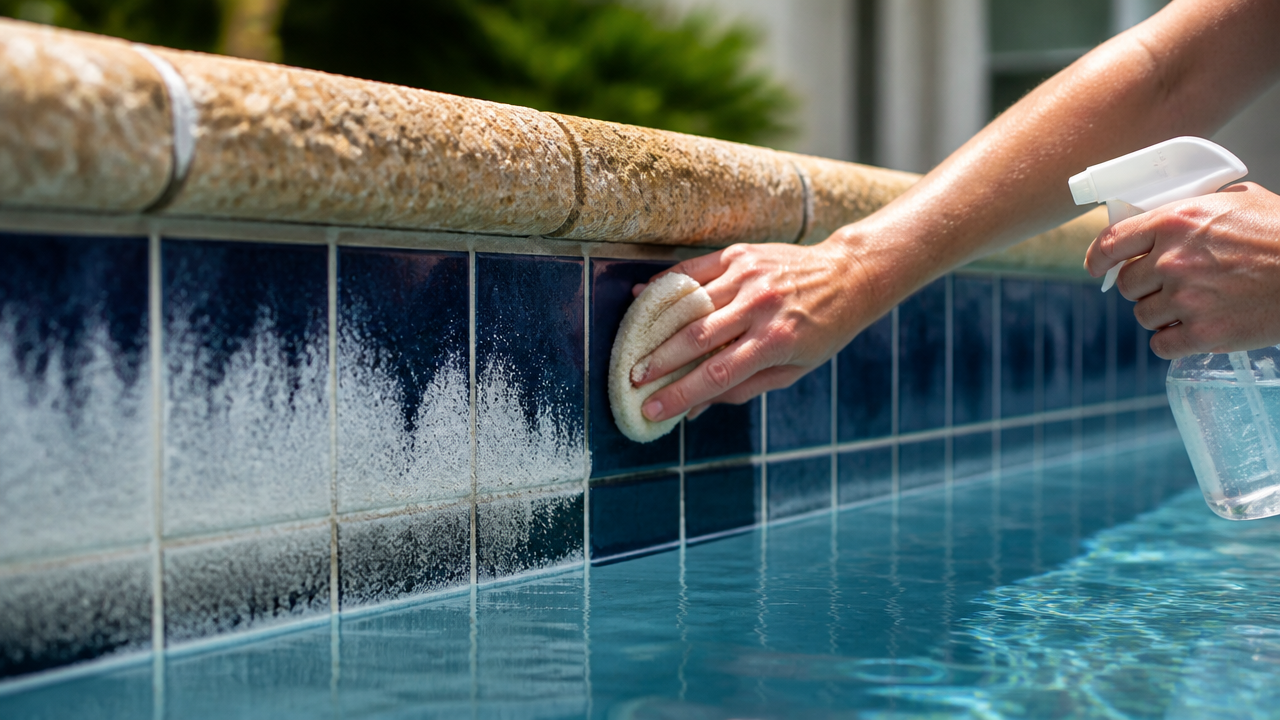
Start with manual cleaning because it gives you the most control and the least risk to the pool finish. Lower the water level slightly if needed so the full deposit line is exposed, then use a pool safe scale remover or tile cleaner that matches your surface type.
Work through this order:
- Brush away loose dirt so you are targeting the deposit itself.
- Apply a suitable descaling product to a small test area first.
- Use a non scratch pad or soft brush to loosen the buildup.
- Rinse and inspect before repeating.
- Only step up to a more abrasive method if the gentler one clearly fails.
On glazed tile, light scale may come away with a dedicated pool tile cleaner and patient scrubbing. On plaster or pebble finishes, you need more caution because aggressive tools can leave visible marks. Never jump straight to harsh acid treatment on delicate surfaces, and never mix cleaning chemicals.
Can you use a pumice stone or acid treatment?
Yes, but only in specific situations. A pumice stone can help on stubborn deposits attached to hard mineral friendly surfaces, but it can scratch softer finishes if used carelessly. Keep both the stone and the pool surface wet, use light pressure and stop immediately if the finish begins to dull.
Acid based treatment is more powerful, but also riskier. Spot cleaning with an acid product may be appropriate for severe scale on tile or masonry, yet it can etch plaster, damage natural stone and create safety hazards if handled poorly. Full acid washing is a major surface treatment, not routine maintenance, and it should be reserved for cases where gentler cleaning has failed.
Call a professional when scale is thick across large areas, bonded to decorative stone, or present inside equipment where improper cleaning could cause damage. In those cases, the wrong DIY method can cost more than professional removal.
Why the deposit comes back unless you fix water balance
Removing the crust without changing the water conditions is the most common mistake. Scale returns when your chemistry keeps pushing calcium out of solution, so the real solution is to keep pH, alkalinity and calcium hardness in a workable balance for your specific pool.
Focus on these checks after cleaning:
- Test pH and total alkalinity first, because both strongly affect scaling risk.
- Review calcium hardness, especially if you top up often with hard water.
- Watch seasonal evaporation and refill patterns.
- Check salt chlorinator cells and water features for early mineral buildup.
- Adjust in smaller doses instead of large corrective swings.
This is where a pool specific app can be more useful than generic shop printouts. MyPoolMate stores your test history, tracks recurring patterns and tailors recommendations to your pool's volume, surface, sanitisation method and season. That makes it easier to catch the chemistry drift that causes scale before the deposits become visible again.
How to prevent future buildup with less effort
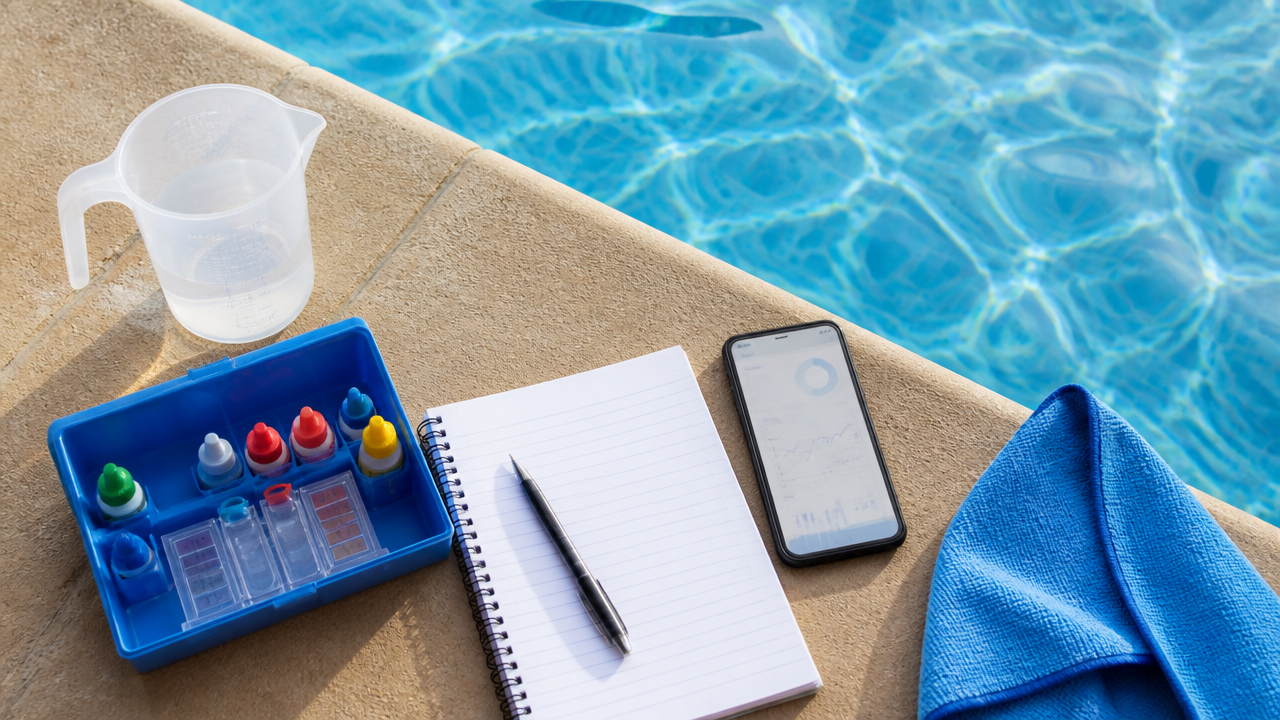
The best prevention plan is simple: test regularly, correct small imbalances early and clean the waterline before deposits harden. Scale is much easier to stop than to remove once it has baked onto the surface.
A practical routine looks like this:
- Brush and wipe the waterline weekly during warm months.
- Retest after heavy top ups, heatwaves or extended evaporation.
- Do not add calcium based products unless your pool actually needs them.
- Avoid overcorrecting pH and alkalinity in a single treatment.
- Review trends, not just one isolated test result.
If your pool has a history of recurring scale, treat that as a management issue, not a one time cleaning job. A personalised maintenance routine usually prevents repeat buildup better than stronger chemicals do.
Perguntas frequentes
What does pool scale look like?
Pool scale is a hard mineral deposit, usually calcium carbonate, that sticks to tiles, plaster, stone and metal fixtures. It often appears as a rough white or grey crust at the waterline. Left in place, it becomes harder to remove and can trap dirt and stains.
Can you remove pool scale with a pumice stone?
Yes, but only mild buildup. A pumice stone can work on hard surfaces such as some tiles and concrete, but it should never be used on vinyl, fibreglass, polished stone or delicate finishes. Test a small area first and keep both the surface and pumice wet while cleaning.
Does vinegar remove calcium buildup in a pool?
Only sometimes. Vinegar may loosen light mineral residue on small areas, but it is usually too weak for thick pool scale. Heavier deposits often need a purpose made descaler, careful manual cleaning or professional treatment. Always protect nearby surfaces and follow product directions.
Why does scale keep coming back?
Scale usually forms when calcium hardness, pH and total alkalinity stay too high for too long, especially in warm weather and high evaporation conditions. As water evaporates, minerals become more concentrated. The waterline is often the first place where those deposits become visible.
When should I call a professional for pool scale?
It depends on the surface and the severity. Light buildup can often be removed in one cleaning session. Thick crusted deposits may take several passes, lower water levels for better access, or professional methods such as bead blasting or an acid wash in severe cases.


