Calcium carbonate is the pale, hard mineral deposit that can build up on pool tiles, fittings and salt-chlorinator cells. It forms when water balance favours precipitation, so a high calcium reading alone does not explain the problem. For Australian pool owners, the practical fix is to assess the whole water balance, correct the cause carefully and prevent the conditions that let scale return.
Key points for spotting and preventing pool scale
- Scale risk depends on pH, alkalinity, calcium hardness, water temperature and other factors together.
- Chalky deposits can appear on waterlines, fittings and chlorinator cells, but cloudiness alone does not confirm scale.
- Test before adjusting. Avoid adding acid or other chemicals based on one result or a generic dose.
- Warm water, evaporation and top-ups can change mineral balance, particularly through an Australian summer.
- Personalised targets are more useful than chasing a single calcium number.
What is calcium carbonate in a swimming pool?
Calcium carbonate, with the formula CaCO3, is a mineral that can form when calcium and carbonate in pool water come out of solution. It may settle as a rough, whitish deposit on tiles, steps, fittings or equipment. The chemistry is similar to the mineral deposits found in kettles, although pool conditions and surfaces differ.
Calcium hardness measures the amount of dissolved calcium in the water. It is not the same as visible scale: a pool can have elevated calcium without obvious deposits, while the risk can rise when pH or alkalinity also pushes the water towards oversaturation. That is why a single calcium result is not a complete diagnosis. For context, review your pool calcium hardness alongside the rest of your water results.
Why does calcium carbonate scale form?
Scale forms when pool water is oversaturated with calcium carbonate. High pH, carbonate alkalinity and calcium hardness can each increase the tendency to deposit scale, while higher water temperature can make calcium carbonate less soluble. A saturation index combines key measurements to estimate whether water is more likely to form scale or dissolve calcium-based material.
Conditions can change around the pool, too. Evaporation removes water but leaves dissolved minerals behind, and refill water can add more minerals depending on its source. In salt-chlorinator cells, local conditions during chlorine production can encourage deposits, so visible buildup may appear there before it is obvious elsewhere. Avoid treating any one factor as the whole cause.
How can you recognise scale and confirm the cause?
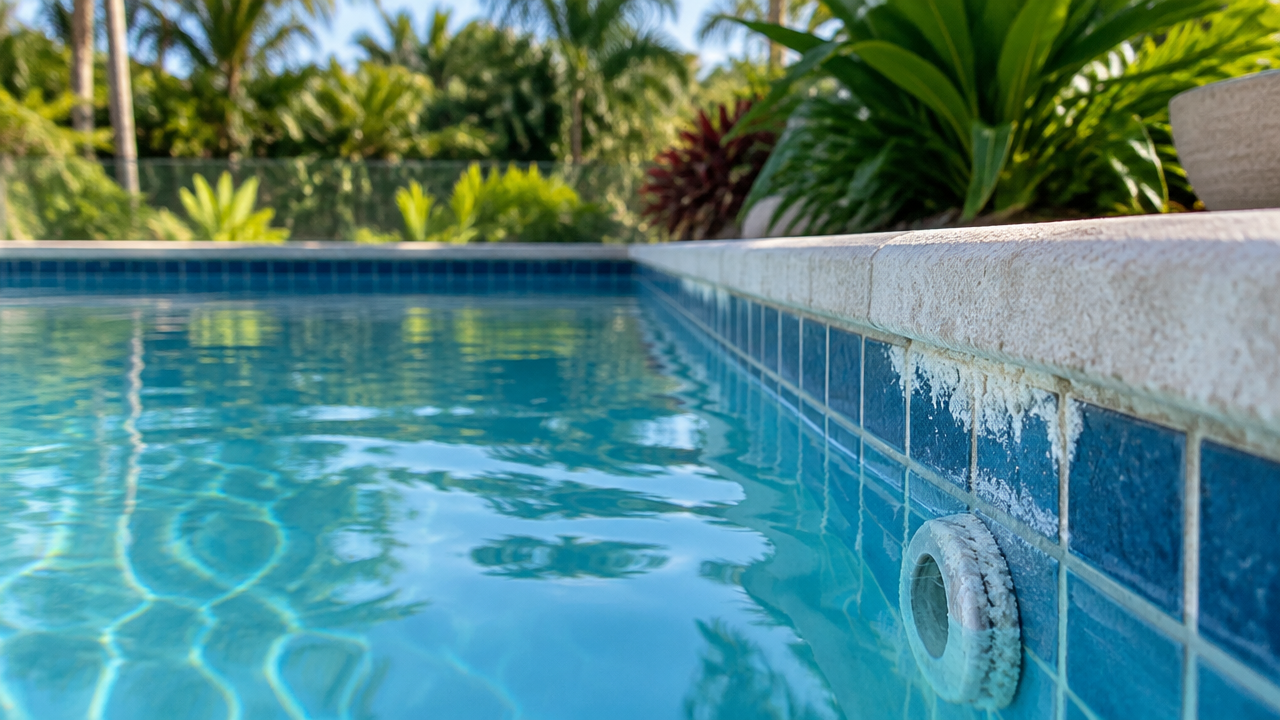
Calcium scale often feels rough and appears as a hard white or pale-grey crust near the waterline, on fittings or around a salt cell. A hazy pool is less conclusive: poor filtration, suspended particles and other water problems can also cloud water. Look at the affected surface and test the water before deciding what to do.
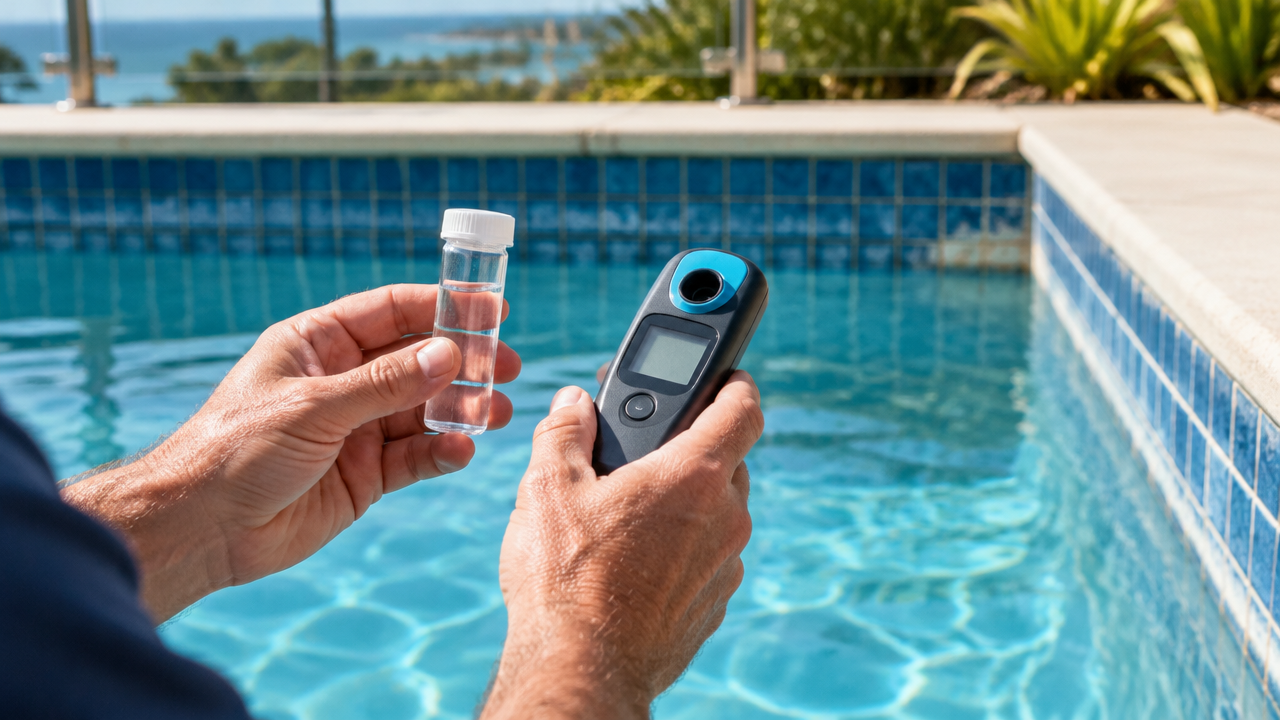
Check pH, total alkalinity, calcium hardness and water temperature, and include other inputs required by the saturation-index method you use. Salt pools may need salt or total dissolved solids considered as well. MyPoolMate lets owners enter readings or use its AI scanner to read printed pool-shop test results, then track results over time. Its AI analysis can help put changing readings into your pool’s context.
How do you prevent scale without overcorrecting?
Prevention starts with keeping the full water balance within targets suited to your pool, rather than repeatedly adding acid whenever a deposit appears. Adjust pH and alkalinity based on measured results, then retest as directed for the product and pool conditions. If alkalinity is part of the problem, understand how to manage total alkalinity before making changes.
- Keep a record of pH, alkalinity, calcium hardness and water temperature.
- Review source-water results when repeated top-ups or refills are needed.
- Brush the waterline and inspect fittings during routine maintenance.
- Check salt cells and clean them only according to the equipment maker’s instructions.
- After an adjustment, retest before adding more chemicals.
Warm conditions can make scale more likely, so review balance after hot spells, heavy evaporation or significant top-ups. If deposits recur on a salt cell, also check that the unit is operating and maintained as instructed. A guide to salt-chlorinator scale buildup can help you understand that equipment-specific issue.

How should you remove existing calcium scale?
Choose a removal method that matches the surface and the equipment affected. Tile, plaster, fibreglass and metal components can react differently to abrasive tools and acidic cleaners, so check product and manufacturer guidance first. Do not pour concentrated acid onto a deposit or mix cleaning products.
For a small waterline deposit, a compatible pool cleaner and gentle brushing may be enough. For stubborn deposits, a salt-cell coating or scale that keeps returning, test and correct the underlying water balance as well as cleaning. Acid can dissolve calcium-based material, but lowering pH too far can damage surfaces and equipment. Use a professional if the finish is delicate or you are unsure how to proceed. This guide to removing pool scale safely covers the practical considerations.
Use your pool’s readings, not a generic dose
Two pools can need different adjustments even when one test result looks similar. Volume, surface, sanitiser, water source, temperature and recent treatment all affect what a sensible next step looks like. MyPoolMate stores pool details and test history, offers seasonal settings, and uses its AI assistant, Splash, to help owners interpret changes in the context of their own pool.
When calcium carbonate appears, treat it as a clue about water balance, not an automatic instruction to add acid or reduce calcium. Confirm the deposit, test the relevant parameters, make a measured correction and retest. That approach helps avoid unnecessary chemicals while protecting pool surfaces and equipment.
Frequently asked questions
What is calcium carbonate in a swimming pool?
In a pool, calcium carbonate is a mineral that can form when water holds more dissolved calcium and carbonate than it can keep in solution. It may appear as a hard, pale deposit on tiles, fittings or salt-chlorinator cells. The risk depends on several water-balance factors, not calcium alone.
What causes calcium carbonate scale in a pool?
Scale forms when pool water becomes oversaturated with calcium carbonate. High pH, carbonate alkalinity, calcium hardness and warmer water can all contribute. Evaporation and repeated top-ups may also concentrate minerals, depending on the source water. A saturation index helps assess the combined effect of these conditions.
Is calcium carbonate the same as calcium hardness?
No. Calcium hardness measures dissolved calcium in the water, usually reported as calcium carbonate equivalent. Calcium carbonate scale is a solid mineral deposit that can form when water balance favours precipitation. A calcium hardness result is useful, but it cannot explain scale risk without pH, alkalinity and other relevant factors.
How do I remove calcium carbonate scale from a pool?
Start by confirming the water balance and identifying the affected surface. Use a cleaning method suitable for your pool finish and follow equipment instructions for salt cells or heaters. Avoid scraping delicate surfaces or adding acid directly to the waterline. Persistent or widespread deposits may need assessment by a pool professional.
Is baking soda just calcium carbonate?
No. Baking soda is sodium bicarbonate, not calcium carbonate. It is commonly used to raise total alkalinity, but adding it without checking your results can shift the water balance and may worsen scale risk in some pools. Test first and choose adjustments based on your pool’s full chemistry, not a single reading.