

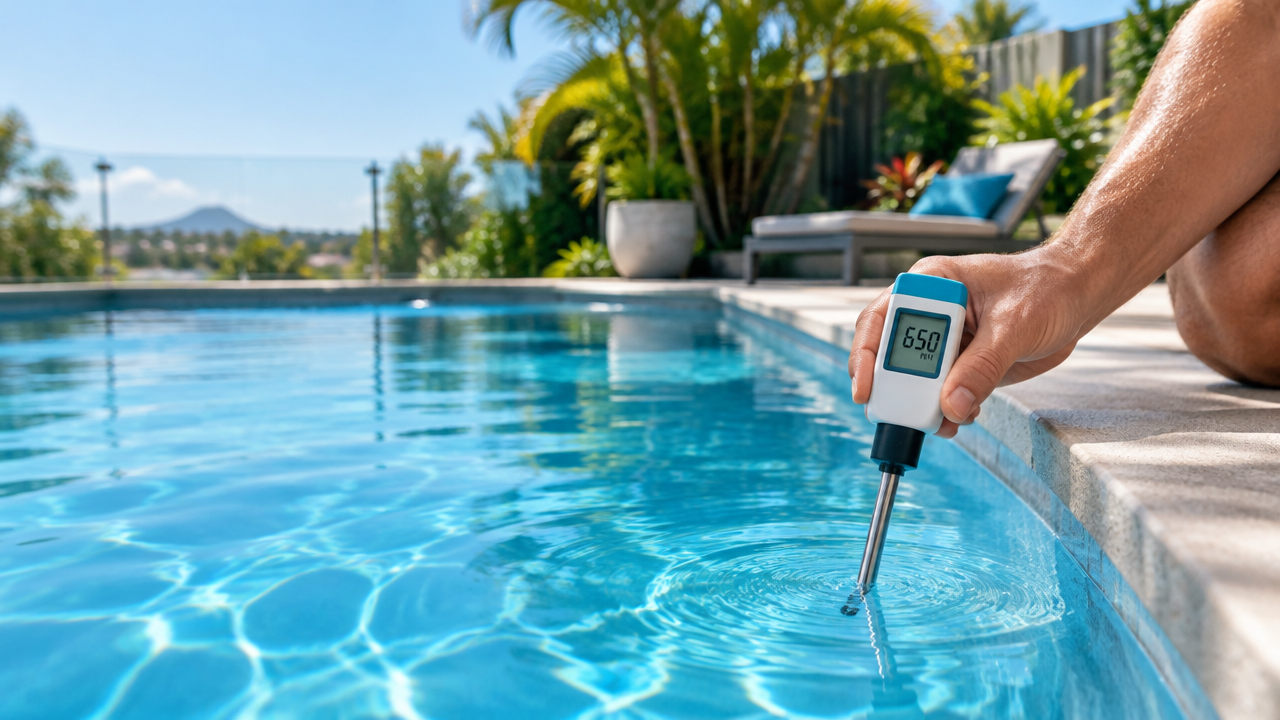
Pool ORP, or oxidation-reduction potential, is a millivolt reading that indicates how strongly water tends to oxidise or reduce substances. It can help monitor disinfection, but it does not tell you the exact chlorine concentration or prove the water is safe on its own. For Australian pool owners, the useful approach is to read ORP alongside chlorine, pH and stabiliser results.
Key points for pool owners
- ORP reflects the combined effect of oxidisers, contaminants and water conditions.
- A higher reading generally indicates greater oxidising potential, not necessarily more chlorine.
- pH, cyanuric acid, bather load and sensor condition can shift the reading.
- Use direct water tests and equipment guidance to decide what action, if any, is needed.
What does pool ORP measure?
ORP measures water’s tendency to take part in oxidation and reduction reactions. Oxidation involves the transfer of electrons; pool chlorine is one oxidiser that can contribute to this activity. The meter reports a combined electrical potential in millivolts, rather than measuring a single chemical.
That distinction matters: an ORP reading is not a chlorine test. Two pools with similar free chlorine results can show different ORP readings because their pH, stabiliser and other water conditions differ. NSW Health describes ORP as reflecting the combined effects of oxidising materials in the water, with conditions such as disinfectant availability, pH and cyanuric acid affecting the result.
Think of ORP as one monitoring signal, not a pass-or-fail verdict. It can help show a change in the water’s oxidising conditions, but it cannot identify the cause by itself.
How does an ORP meter read pool water?
An ORP meter uses a probe with a measuring electrode and a reference electrode. The meter reads the electrical potential between them and displays a value in millivolts. A pool controller may use that signal to monitor water or control a dosing system.
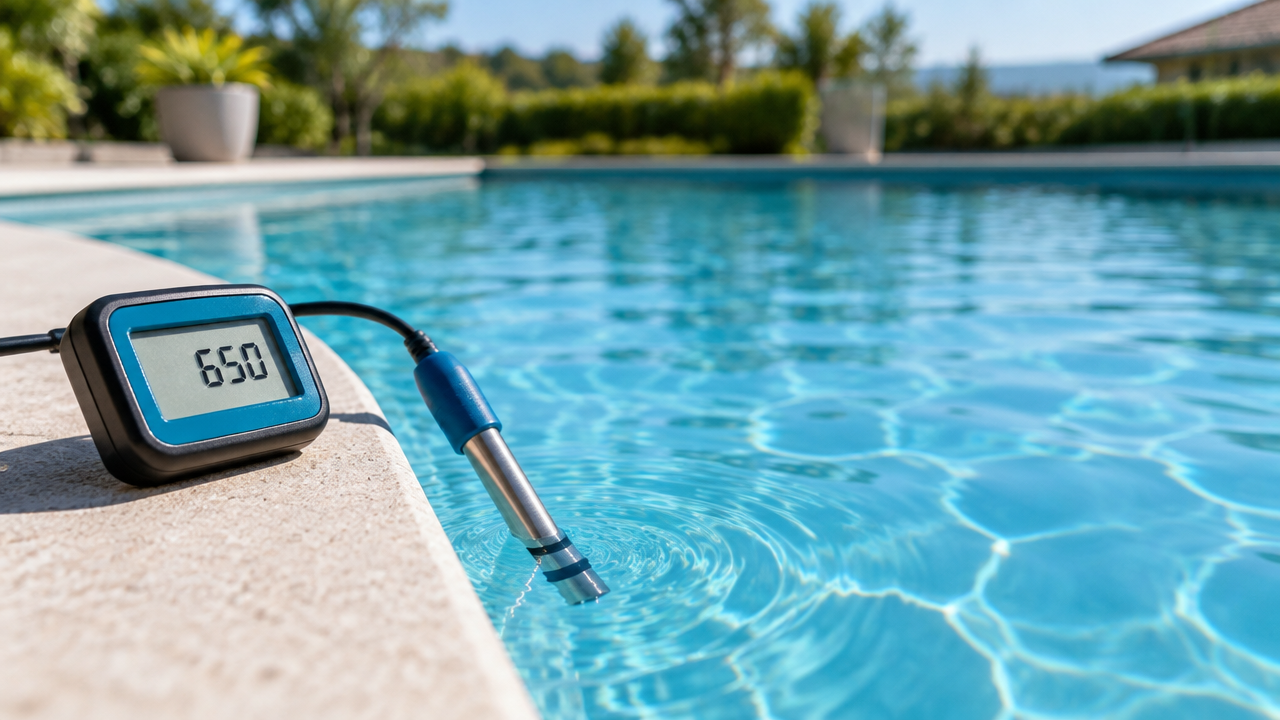
The probe’s condition and installation matter. Follow the manufacturer’s instructions for cleaning, storage and calibration, and make sure the sensor is positioned where water circulates as intended. If a reading suddenly changes or stays fixed despite changing pool conditions, check the probe and compare the result with a separate water test before adjusting chemicals.
Does adding chlorine raise ORP?
Adding chlorine will often raise ORP, but there is no simple one-to-one relationship between the amount added and the number on the meter. The reading also responds to how much chlorine is available to disinfect, as well as other oxidisers and reducing substances in the water.
pH is a key influence. As pH rises, chlorine’s disinfecting activity and the ORP reading can fall, even when a chlorine test still detects chlorine. Cyanuric acid protects chlorine from sunlight in outdoor pools, but higher stabiliser levels can also lower chlorine’s disinfection power and ORP. That interaction is one reason to check stabiliser rather than chasing a low reading with extra chlorine. Learn how cyanuric acid affects pool chlorine.
Leaves, dirt, heavy swimming and other organic material can add demand. A falling ORP may be a prompt to investigate, but it cannot tell you which factor changed.
What is a good ORP reading for a pool?
There is no universal target that works for every pool, sensor and water setup. The electrode type matters too: NSW Health summarises different reference values for different electrodes and pH conditions, and notes that appropriate values should be determined case by case.
Those reference values are not a universal target for a residential pool. Public-pool rules also vary by jurisdiction. In New South Wales, the requirement to maintain a specified ORP value was removed when the Public Health Regulation 2022 began on 1 September 2022. ORP systems may still be used, but they do not replace the required disinfectant levels and monitoring.
So, is 800 mV too high? Not by itself. Check it against your controller’s instructions and confirm the actual disinfectant and pH levels. If readings are repeatedly outside the recommended operating range, investigate the water and sensor rather than dosing to hit an isolated number.
How should you respond to a changing ORP reading?
Use the reading to guide a check, not an automatic chemical correction. Before adding anything, test the water and inspect the equipment.
- Confirm free chlorine and pH with a suitable water test.
- Check cyanuric acid, especially in an outdoor pool exposed to strong Queensland sun.
- Look for recent swimming, debris, poor circulation or other changes that could affect demand.
- Inspect and maintain the probe according to its manufacturer’s instructions.
- Only adjust chemicals when the test results and your pool’s requirements support that action.
Keep a record of readings beside your test results. A pattern over time is more useful than a single number, particularly after heavy rain, hot weather or a busy swim day. A whole-water chemistry review can help put individual results in context.
Where MyPoolMate fits into water monitoring
MyPoolMate helps Australian pool owners keep water-test history and pool details together, including pool volume, surface and sanitisation method. You can enter results manually or use the AI scanner to read printed pool-shop test results, then review patterns and personalised analysis based on your pool’s profile.
That context is useful when an ORP reading changes, because the number alone cannot explain the cause. Compare it with your measured chemistry and recent pool conditions. Splash, MyPoolMate’s pool-aware AI assistant, can help you review your recorded pool information, but it does not turn ORP into a substitute for testing disinfectant levels.
Frequently asked questions
What does ORP mean?
ORP means oxidation-reduction potential, also called redox potential. It describes how strongly pool water tends to take part in oxidation or reduction reactions, measured in millivolts. In a pool, the reading reflects the combined influence of oxidisers, contaminants and water conditions, rather than the amount of chlorine alone.
Is 800 ORP too high for a pool?
An 800 mV reading is not automatically too high or proof that a pool is unsafe. Its meaning depends on the probe, water conditions and controller guidance. Check the reading against a reliable chlorine test and pH result, then follow your equipment instructions rather than changing chemicals to chase a number.
Does adding chlorine raise ORP?
Adding chlorine will often raise ORP because chlorine is an oxidiser, but the reading may not rise predictably. pH, cyanuric acid, contaminants, temperature and sensor condition also affect it. Confirm the actual chlorine level with a suitable water test instead of assuming an ORP change tells you how much chlorine is present.
What is a good ORP reading for a pool?
There is no single ORP target that suits every backyard pool and sensor. Readings depend on the electrode and factors such as pH, cyanuric acid and chlorine availability. Use your controller’s instructions, meet local requirements and confirm sanitation with direct disinfectant testing. Do not treat one millivolt figure as a complete safety check.
How is ORP measured in a pool?
A pool ORP meter uses a probe with a measuring electrode and a reference electrode to detect electrical potential in the water. The meter displays the result in millivolts. Keep the probe clean and maintained as its manufacturer directs, and compare its reading with water-test results rather than relying on the meter alone.


