

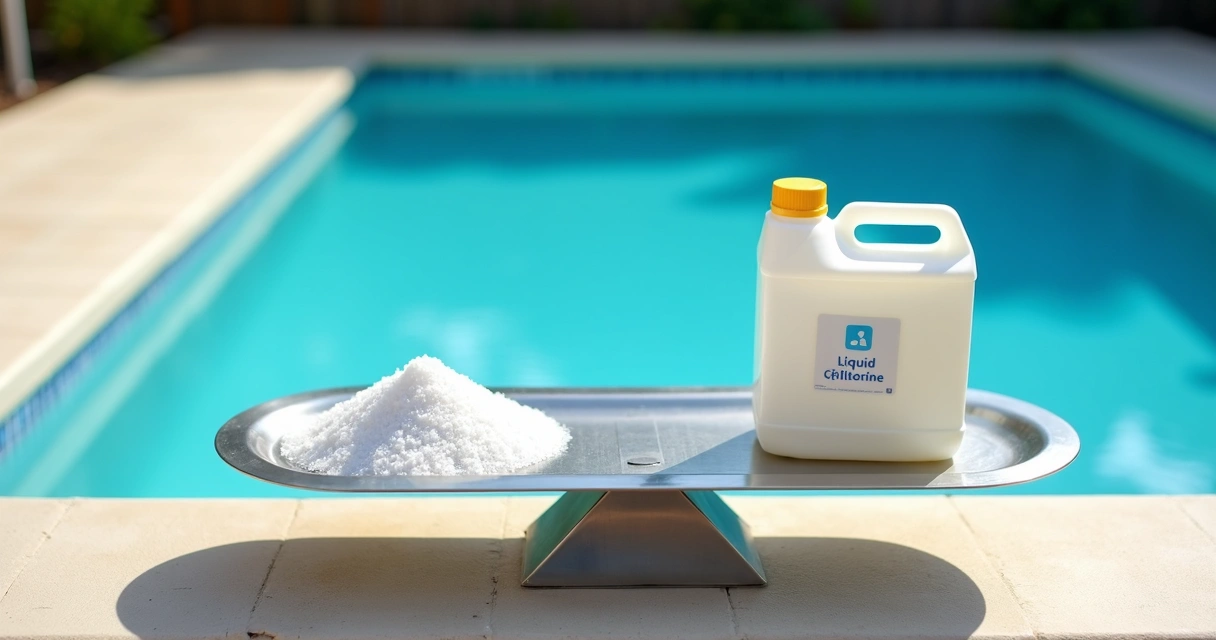
I have seen many pool owners get stuck on the same question: should I stay with liquid chlorine, or switch to a salt chlorinator? It sounds like a technical choice, but in real life it changes how often you test, dose, adjust, and worry about your water.
Keeping a pool clean and healthy depends a lot on the way it is sanitised. In my experience, a salt chlorinator can make pool care much easier for most Australian households. Still, it is not the right fit for every pool or every owner.
A saltwater pool is not chlorine-free, because the system makes chlorine from dissolved salt in the water.
That point matters. Many people think saltwater means no chlorine at all. It does not. A salt chlorinator uses electrolysis to convert salt into chlorine inside the system, so the pool still has chlorine, but it is produced on-site instead of being poured in by hand.
Same sanitizer. Different delivery.
How the two systems really differ
When I compare salt chlorinators and liquid chlorine, I try to keep it simple. Both aim to sanitise the water. The big difference is how much work they ask from you.
With liquid chlorine, you manually add chlorine to the pool on a regular basis. That means testing often, measuring doses, and staying alert during hot weather, heavy use, or rain. If you miss a few days in summer, water quality can shift fast.
With a salt chlorinator, the system produces chlorine steadily while the pump runs. That steadier feed usually means fewer sharp rises and drops in chlorine levels.
- Liquid chlorine has a lower starting cost.
- Salt chlorinators cost more upfront.
- Salt chlorinators usually need less day-to-day effort.
- Liquid chlorine means ongoing chemical purchases.
- Salt systems often cost less over time to run.
I think that difference in routine is what sways most people. If you want a low-maintenance pool, automation is hard to ignore. Some modern units can even manage both chlorine and pH, which takes even more work off your hands. That is one reason tools like MyPoolMate can be so useful, because they help owners see the full picture of chemistry instead of reacting to one number at a time.
What a salt pool feels like
One of the first things people ask me is whether a salt pool tastes like the ocean. It does not. The salt level is only about one-tenth of seawater, so you generally will not really taste it.
Salt pools contain far less salt than seawater, so the water usually feels soft rather than salty.
I have also noticed that many swimmers describe the water as gentler on their skin and eyes. That can be even more noticeable when mineral salts such as magnesium chloride are used. Families with children who swim a lot often like that softer feel. If that side of pool comfort interests you, this guide on magnesium pools and chlorine options for Australian homes adds useful detail.

Maintenance and running costs
In my experience, this is where salt chlorinators usually win. Once the system is set up correctly, you are not buying and adding liquid chlorine all the time. You still need to test the water, clean the cell when needed, and keep the chemistry balanced, but the routine is usually lighter.
Salt does not vanish quickly. It mostly stays in the water unless you lose water through heavy rain overflow, splash-out, leaks, or backwashing. For most Australian pools, salt only needs topping up once or twice a season. Many chlorinators will also warn you when salt levels are too low.
Liquid chlorine can still work well, especially if you are disciplined and do not mind regular dosing. I have known owners who are happy with it because they use the pool less often and already have a routine. But if your pool is used most days, the repeated cost and effort can add up.
Salt cells do wear out over time. Most last about three to seven years, and balanced water usually helps them last longer. If pH, calcium, or other levels drift too far, cell life can shorten. That is why I often suggest reading more than just the chlorine number. The wider pool chemistry basics make a big difference to long-term cost.
Is converting hard?
Not really. I think many pool owners expect a major project, but converting from liquid chlorine to salt is usually quite straightforward.
The usual process looks like this:
- Add enough salt to reach the target level.
- Install the chlorinator cell in the plumbing.
- Fit the controller and connect it correctly.
- Run the system and fine-tune output.
In many cases, it can be done in a few hours. If your pool has been run on liquid chlorine, the water may already contain some salt from past chemical use. That means you may need to add less salt than you expect.
Converting to a salt chlorinator is usually a simple upgrade, not a full pool rebuild.
If you want a broader technical view, I like pointing owners to this breakdown of how pool chlorinators work, their types, benefits, and common mistakes. And if you are comparing a specific setup, this salt chlorinator guide can help frame the features worth checking.
Who should choose which?
I try to answer this by looking at lifestyle first, not just hardware. A family with frequent swimmers has very different needs from someone who uses the pool once every few weekends.
Salt chlorination usually suits:
- Families who swim often
- Owners who want less manual dosing
- People who prefer steadier chlorine levels
- Households looking for lower long-term chemical buying
Liquid chlorine may still suit:
- Owners with a tight starting budget
- Pools that are used only now and then
- People who are already happy with hands-on dosing
I once helped a friend compare both paths after a bad summer of algae and rushed chemical top-ups. The issue was not just chlorine. It was inconsistency. Once he moved to more stable sanitising and tracked his readings more carefully, pool care became calmer. That is the part many people miss.
If your chlorinator ever acts up, this practical guide to salt water chlorinator troubleshooting and common fixes is worth keeping in mind.
My view
I think most Australian pool owners who want an easier routine will be happier with a salt chlorinator. The higher upfront spend often pays back through lower ongoing chlorine buying, less manual work, and a more pleasant swimming experience. But I would not say everyone has to switch. If you rarely use your pool and your current liquid chlorine routine is working well, there may be no strong reason to change.
For most busy households, salt chlorination is the simpler long-term option.
If you want clearer guidance based on your own pool size, surface, sanitiser type, and recent test history, MyPoolMate can help you make that call with more confidence and less guesswork. That is a smart next step if you want treatment advice that matches your actual pool.
Frequently asked questions
What is a salt chlorinator?
A salt chlorinator is a system that turns dissolved salt in pool water into chlorine through electrolysis. The pool still uses chlorine, but it is made in the system instead of being added manually. Salt levels are low, usually about one-tenth of seawater.
How does liquid chlorine work?
Liquid chlorine works by being poured directly into the pool water to sanitise it. It kills germs and helps control algae, but it needs regular manual dosing. In hot weather or busy swim periods, you may need to test and add it more often.
Is salt chlorination worth the cost?
For many families and frequent swimmers, yes. The upfront cost is higher, but running costs are often lower over time because you are not constantly buying chlorine. You also save time through automation and steadier sanitising.
Which is safer for my pool?
Both can be safe when water chemistry is balanced. I find salt chlorinators often help keep chlorine levels more consistent, which can reduce swings caused by missed manual dosing. Good pH, calcium, and salt management also help protect pool surfaces and equipment.
How much does each method cost?
Liquid chlorine usually costs less to start because there is no major equipment upgrade, but you keep paying for chlorine as an ongoing expense. Salt chlorinators cost more at the start for the unit and installation, then usually cost less over time, with salt top-ups only once or twice a season for most pools and cell replacement every three to seven years.


