
If you’ve owned a pool for any time, you’ve seen the test strip turn that unmistakable dark pink, warning your pH is sky-high. Over the years, I’ve noticed this is one of the most misunderstood pool problems. Today, I want to share why it happens, what it means, and how you can restore balance safely and confidently. I’ll also weave in my experience using MyPoolMate to personalize the whole process for my backyard in Australia.
Why pH climbs in backyard pools
First, let’s talk about how pH behaves. It often surprises owners to learn that ordinary activities—swimming, topping up with tap water, and even running a saltwater chlorinator—can tip the balance upward. For years, I thought splashing and sunlight didn’t matter much, but I’ve seen how fast things can shift.
Some main causes of high pH include:
- Regular use of saltwater chlorinators (these create a steady increase in pH)
- Fresh tap or bore water being added (most supplies are alkaline)
- Heavy aeration from water features, fountains, or spa jets
- Use of granular shock (especially calcium hypochlorite)
- New pool surfaces like plaster or concrete, which can “cure” by releasing alkaline substances
PH is always changing—test often.
Why stable pH is so important
It’s not just comfort or clarity that’s at stake. According to U.S. Centers for Disease Control and Prevention guidance, ideal pool pH falls between about 7.0 and 7.8. Most experts—and my own observations—suggest aiming for 7.2 to 7.6 in chlorine pools, with the lower half minimizing burning eyes and maximizing sanitizer strength.
If pH drifts much above 7.8, chlorine loses up to 90% of its power to kill germs and algae, while scale and cloudy water can develop. Too low, and you’ll face corroded metals, irritated skin, and possible damage to surfaces. I’ve seen heater parts fall apart in under a season after chronic low pH. It’s a matter of health and pocketbook.
How to test pH accurately
While there are several ways to check your pool’s chemistry, accuracy is key when you want to lower pH safely. I usually recommend:
- Liquid drop test kits—most reliable for color clarity
- PH test strips—fast but sometimes difficult to read if water is very blue or green
- Digital meters—a good investment if you want lab-like data (and what MyPoolMate supports for uploads)
Take your sample about elbow-deep, away from returns or skimmers, to avoid surface effects. Read the color quickly, as air can change results. If you use MyPoolMate, you can record these results and get instant interpretation, with charts showing trends rather than just one-off numbers.
Testing only works if you trust your result.
What is the ideal pH for safe, comfortable swimming?
For a typical chlorine pool, keep pH between 7.2 and 7.6 for best performance and comfort. Saltwater pools can tolerate the high end of the range. If you’re routinely outside this, read your local water report—your source may push you high to start with.
How to bring down high pH in your pool, step by step
Once you’ve checked and double-checked that your pH is genuinely high (7.8 or above), you’re ready to make a correction. Here’s the approach I use and recommend:
Choose the right acid: dry or liquid?
Your two main choices to lower pH are sodium bisulfate (dry acid) and hydrochloric (muriatic) acid (liquid). Both work well but have some differences:
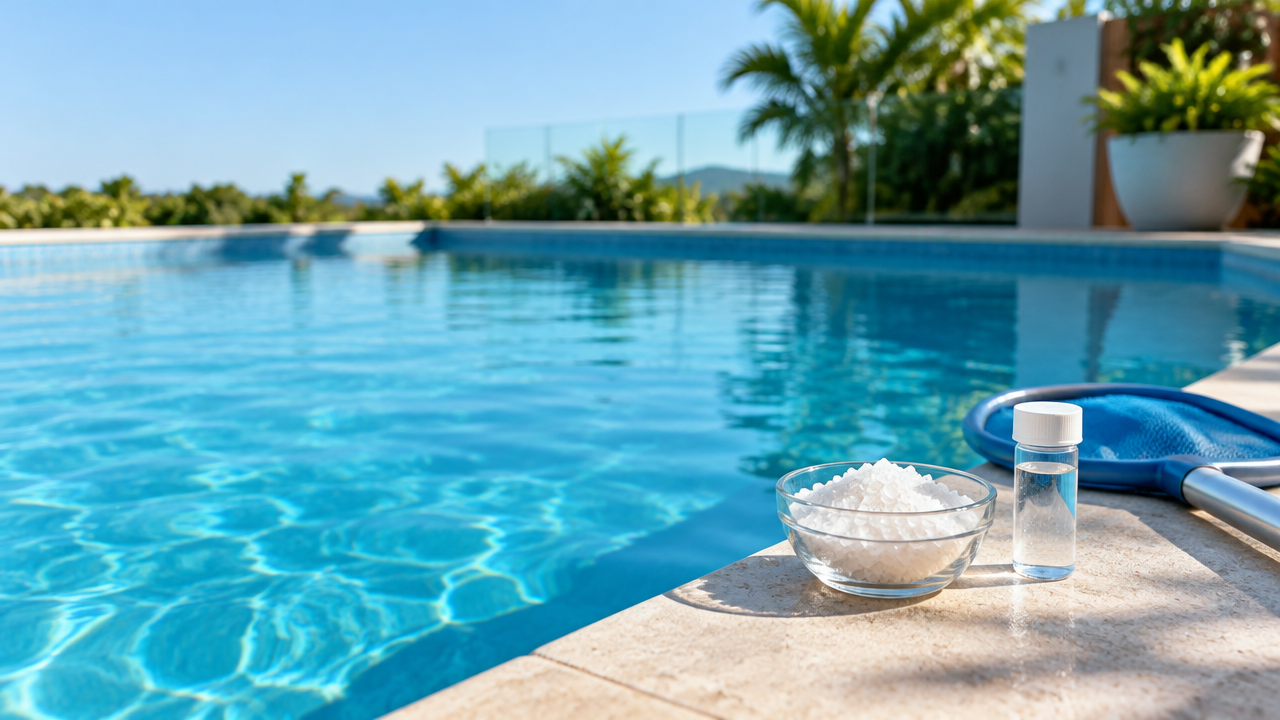
- Sodium bisulfate: Sold as white crystals or powder, easier and safer to handle, but more expensive per dose. Doesn’t fume or splash.
- Muriatic acid: Clear, strong-smelling liquid available at hardware stores or pool suppliers. Cheaper, works fast, but needs more caution with splashing or vapor.
Both products temporarily reduce alkalinity as well as pH, but if used in the right amount, the effects are balanced and reversible.
If you’re just starting, dry acid may seem friendlier, but if you maintain a large pool, liquid is more economical. For safety, always wear gloves and goggles, and keep acids away from children or pets.
Precise measuring matters—don’t guess!
The amount of acid you need depends on pool size and starting readings. MyPoolMate calculates this for you, considering your surface (which can “buffer” or slow the change), exact volume, and even weather. This removes a lot of the guesswork.
- For a 50,000-litre pool, about 500 mL of hydrochloric acid typically drops pH by 0.2-0.3 (roughly 200 g dry acid does the same), but always check calculators or trusted charts.
- Start with a partial dose. I’ve learned it’s better to add too little and resample than to overshoot and make things worse.
Where and how to add acid
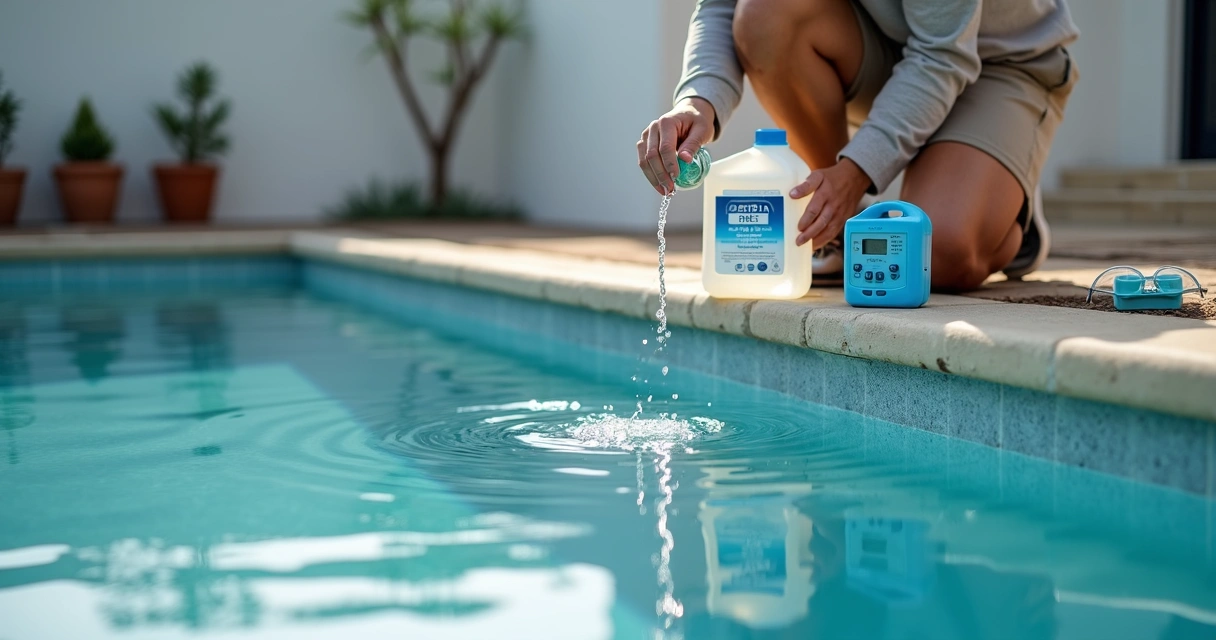
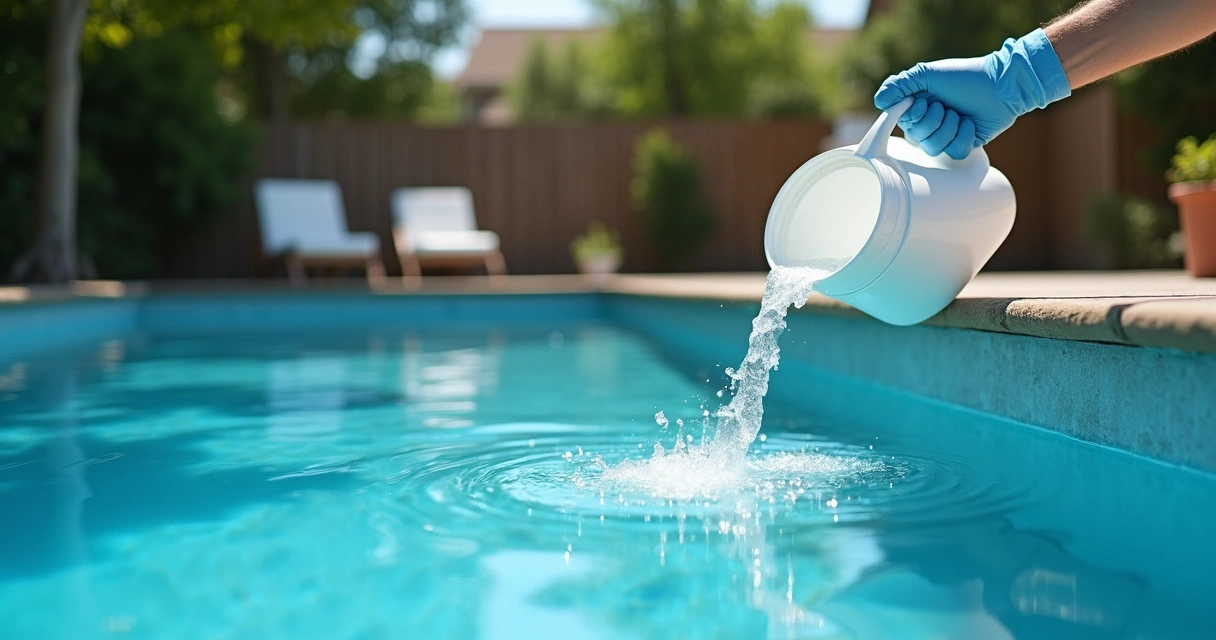
Always dilute acid in a bucket of pool water before adding, especially if using dry acid. For liquid acid, pour slowly into the deep end with the pump running, spreading the pour around the edges away from returns. Don’t add in one spot or near a skimmer—concentrated acid can attack plastic parts.
For dry acid, pre-mix it and walk around the edge, slow-pouring the solution. Avoid splashes; gentle is best.
Allow time before retesting
Acid doesn’t act instantly. Wait at least 4-6 hours before retesting, ideally letting the pump circulate for a full cycle. I usually check again in the morning before swimmers arrive.
PH and alkalinity—how they interact
I’ve learned that lowering pH by adding acid also drops total alkalinity, sometimes by more than you expect. Alkalinity acts like a shock absorber: too little, and pH bounces wildly; too much, and pH refuses to budge. If you chase one number, you end up chasing both.
My approach: Correct pH first if it’s much higher than ideal. Once pH is within range, if alkalinity has dropped below about 70–80 mg/L, you can use sodium bicarbonate to bring it back, being patient and adding small amounts in steps. There’s a more detailed guide on pool alkalinity at this article on controlling pool alkalinity.
Automation or manual correction?
Some modern pools have automated acid feeders or computer-controlled CO2 systems that lower pH slowly, avoiding big fluctuations. I’ve seen how these keep water silky and safe with minimal involvement.
- CO2 injection: Adds carbon dioxide, which dissolves partly as carbonic acid, gradually lowering pH without sharply changing alkalinity. Often used in commercial settings.
- Proportional acid pumps: Controlled by sensors, dose small amounts when pH drifts up.
- Manual correction: Still very common for residential pools, and with regular testing, this method gives predictable results if you keep good records.
If you want a more hands-off experience or have a high-demand pool (busy family, rental property), you could look into automation, but most backyard pools do well with careful manual adjustments. I always remind myself: Consistency beats convenience if you don’t check the automation often.
Risks and safe handling of acids
Handling acid sounds scary, but with protection and common sense, issues are rare. Here are my main rules:
- Wear gloves and safety goggles—splashes can burn skin and eyes
- Open containers only outdoors and keep upwind of fumes
- Add acid to water (never the other way), avoiding violent reactions
- Store in original containers, secure from pets and children
Avoid overdosing. Too much acid risks dropping pH far below safe levels, making the water corrosive. I’ve seen metal ladders pit and vinyl liners wrinkle when people have been impatient or “eyeballed” the dose.
After dosing any acid, never jump in immediately. Allow circulation for at least 2–4 hours and retest before swimming. It’s always better to err on the side of caution.
Keeping reliable records and using technology
Pools behave differently year to year and even day to day. What really helped me was keeping a record of each test, action, and result—especially when I started using photo uploads and digital scanners with MyPoolMate. Over time, I could spot seasonal patterns and stop playing chemical roulette.
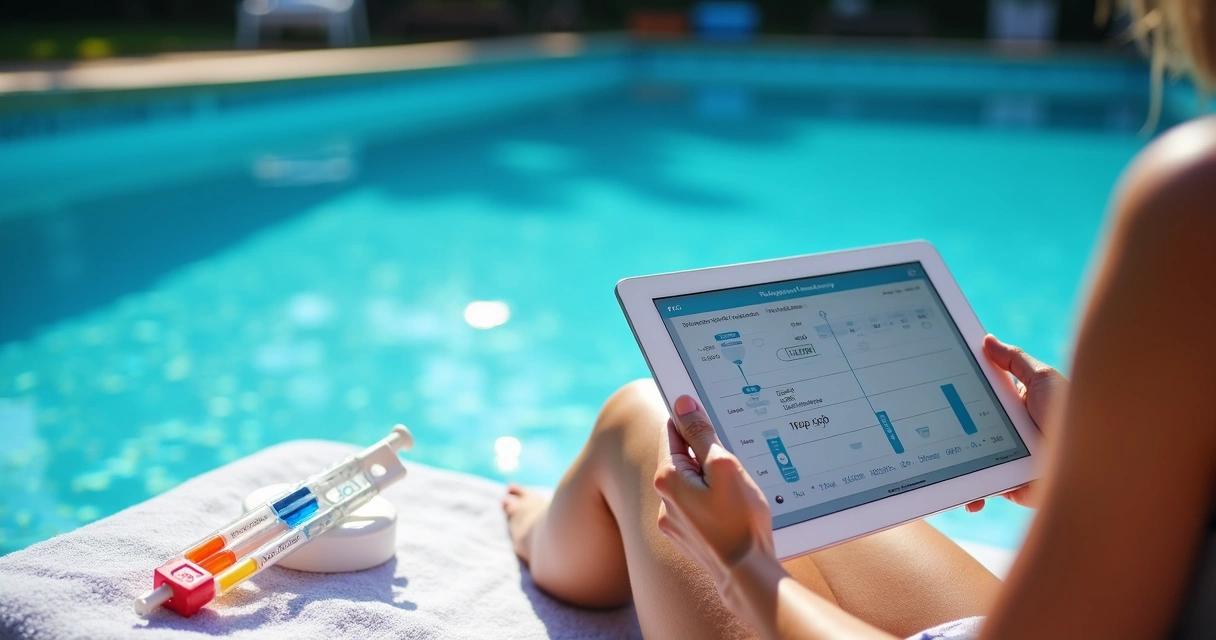
Besides pH corrections, tracking things like chlorine, salt, and organic debris (see this discussion on using enzymes and managing organic debris) ties the big picture together. You can also dig deeper into all aspects of pool chemistry at this pool chemistry resource.
Warning signs and troubleshooting
Sometimes, pH corrects itself after a heavy swim or rainfall dilutes the water. But if you’re seeing repeat spikes or drops, you might have another root cause. Maybe your source water is highly alkaline, the pool volume was miscalculated, or another chemical is throwing things off. Reading up on how to fix high salt and test accurately can be a big help.
And if you’re ever unsure about what additives are really needed or how to avoid over-correction, this breakdown on avoiding chemical overload has saved me and my budget more than once.
How often to check and maintain pH?
I always suggest testing at least once a week in mild weather, and twice weekly in peak summer. If you’ve made a recent adjustment, test again within a day or two, and after heavy rain or pool use.
Keeping track gets easier with time. And with MyPoolMate, the reminders and AI-powered interpreting take away much of the second-guessing—even letting me know if seasonal presets should nudge my target higher or lower.
Conclusion: Take control—your pool is unique
Managing pool pH is part art, part science, and a lot of experience. The biggest thing I’ve learned is that no two pools are the same. The right solution depends on what’s happening in your yard, your water, and who’s swimming with you.
Every pool has its own story—write yours with confidence.
If you want tailored help, easier record-keeping, and AI-backed advice for every pH swing, give MyPoolMate a try. It makes “lowering pH” less of a mystery and more of a routine—freeing you up to enjoy the water, not just work on it.
Frequently asked questions
What causes high pH in pool water?
Several factors can make the pH in pools climb up. Regular topping up with alkaline tap water, the use of saltwater chlorinators, running water features, and even some chlorine shocks can all push pH higher over time. New surfaces like concrete or plaster may also increase pH as they cure and release alkaline compounds into the water.
How can I safely reduce pool pH?
To bring pH down, first test your water for an accurate reading. Then use either sodium bisulfate (dry acid) or hydrochloric acid, following calculated doses for your exact pool volume. Always add acid to a bucket of pool water before pouring slowly around the edges with the pump running, and wear safety gear. Retest in a few hours before swimming or adding more.
What are the risks of low pool pH?
Water with pH much below 7.0 is acidic and can quickly corrode metal fixtures, damage plaster or vinyl liners, and irritate eyes and skin. Over time, chronically low pH can also shorten the lifespan of pool equipment and pool heating systems.
Which chemicals lower pH in pools?
The most common chemicals are sodium bisulfate (dry acid) and hydrochloric (muriatic) acid. Both are effective, with dry acid being easier to handle and liquid acid acting faster but requiring careful handling due to fumes and splash risk.
How often should I check pool pH?
I recommend testing at least once a week, or twice weekly in hot weather or after big rain. If you’ve recently adjusted your pH or made major chemical changes, retest after 4–6 hours of circulation. Pool apps like MyPoolMate can remind you of schedules and help chart trends.