
In my experience, good pool care in Brisbane starts with good testing. Heat, storms, strong sun, and sudden rain can shift water balance fast. I have seen a pool look clear in the morning and show early trouble by the weekend. That is why pool water testing in Brisbane needs to be regular, accurate, and linked to the way your own pool behaves.
Accurate test results help me treat the cause of a problem, not just the symptom.
Brisbane conditions make this even more relevant. Local water monitoring by Brisbane City Council’s water quality program shows that heavy rainfall can affect water quality, and the 2025 to 2026 enterococci results also point to patterns after rain. For backyard pools, that same weather pattern can mean dilution, contamination, and fast chlorine loss.
What I test and why
When I check pool chemistry, I focus on five core readings first:
- Free chlorine, to confirm sanitiser is active
- PH, to keep water comfortable and chlorine working well
- Total alkalinity, to help hold pH steady
- Stabiliser or cyanuric acid, to reduce UV chlorine loss
- Calcium hardness, to protect surfaces and equipment
If one value is off, another often follows. I learned this the hard way years ago after chasing low chlorine when the real problem was high stabiliser and drifting pH.
Clear water can still be unbalanced.
Which testing method works best?
Traditional shop-based testing can be useful for a broad snapshot, especially if you want a second opinion. Still, I find it has limits. Water samples can age in the car, results may depend on how the sample was taken, and advice can be too general for a specific pool volume, surface, or sanitising method.
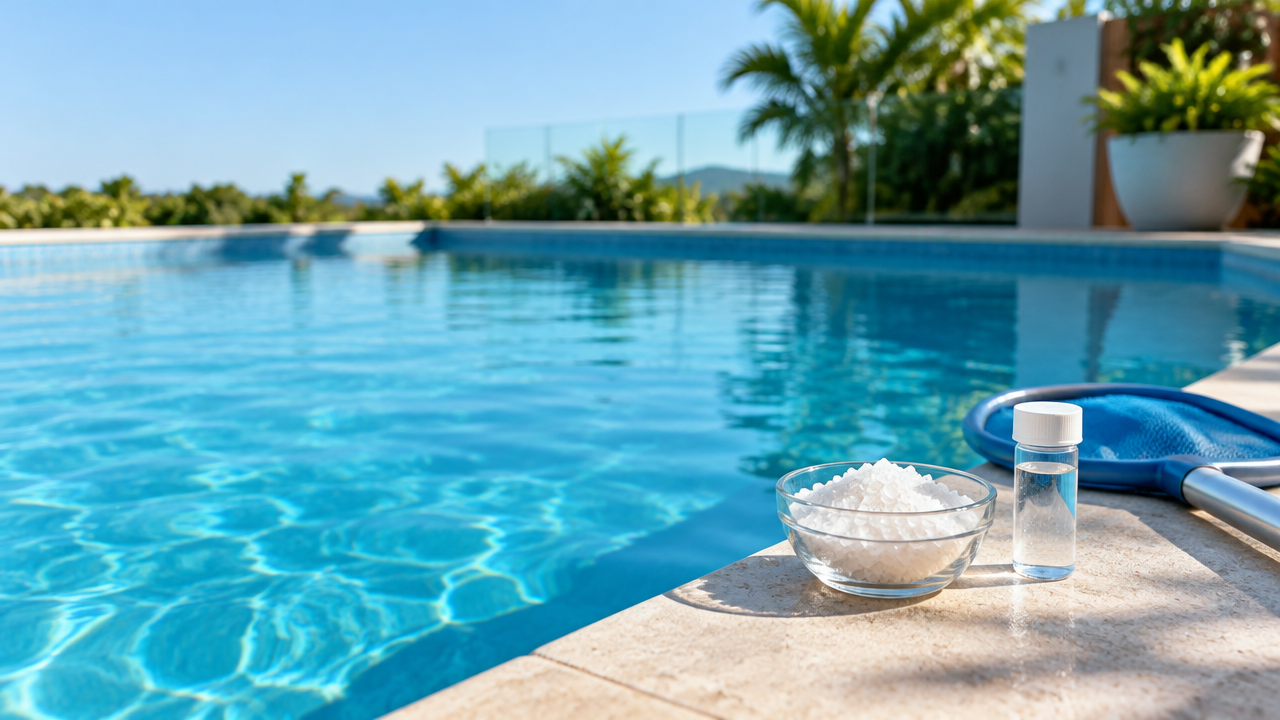
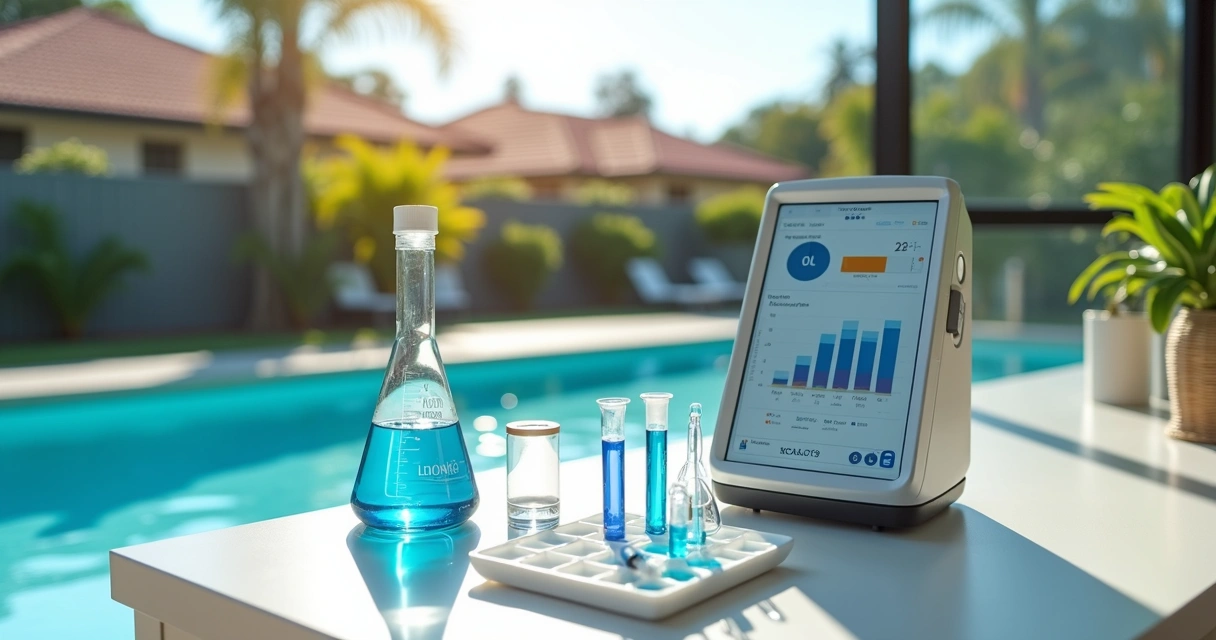
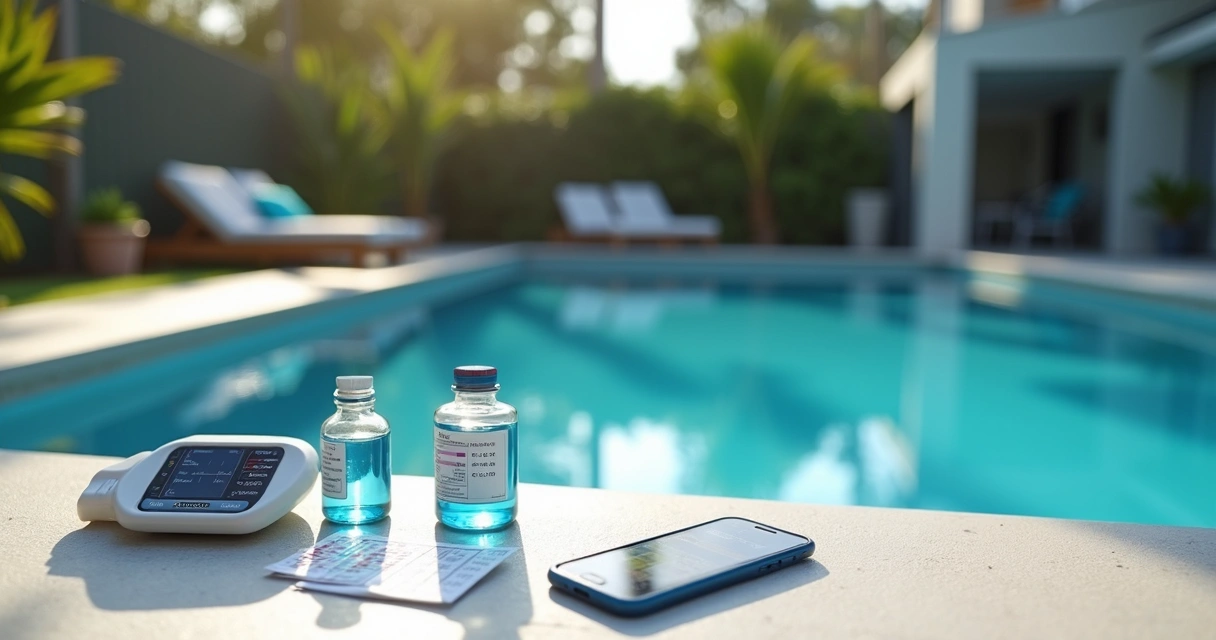
At-home testing gives me more control. Common options include:
- Test strips, which are quick but less precise
- Titration kits, which take longer but give better accuracy
- Photometers, which offer digital readings with good consistency
- AI and app-based tools, which store results and help spot patterns
The best method is the one that gives repeatable results and fits your routine well enough that you actually use it.
I think the strongest setup is a reliable home kit plus digital tracking. That is where tools like MyPoolMate make sense. Instead of generic dosing, the app can connect results to pool size, finish, sanitation type, and season. That usually leads to cleaner decisions and less waste.
How I test pool water at home
I like to keep the process simple and repeatable:
Run the pump first, usually for at least 30 minutes.
Take the sample elbow-deep, away from skimmers and returns.
Test straight away, because delay can change readings.
Record chlorine, pH, alkalinity, stabiliser, and hardness.
Compare results to your pool’s target range, not a generic chart.
Dose one issue at a time where possible, then retest.
If I am checking broader chemistry trends, I also review notes and photos. MyPoolMate does this well, and I find that history matters more than many owners expect. A single result tells me the current state. A month of results tells me the direction.
Why seasonal tracking matters
Brisbane pools do not behave the same way all year. Summer usually means more swimmer load, more UV, and faster sanitizer demand. Cooler months can hide problems because water may look fine while balance slowly drifts.
The Queensland approach to water quality assessment supports regular monitoring to protect water use. I apply the same thinking at home. In summer, I test more often. After storms, I also check sooner. If you want a practical local routine, I suggest reading this Queensland pool maintenance guide.
For specific issues, targeted follow-up helps. If alkalinity keeps shifting, I would review advice on safe and stable pool alkalinity. If salt is reading high, I would compare it with this guide on fixing high pool salt levels with accurate testing. If water looks dull from organics, this article about enzyme pool care for organic debris can help. I also like browsing the broader pool chemistry articles when I want to compare patterns.
For busy or high-use pools, routine checks are even more serious. Pool water analytical services used for operator testing show how microbiological checks and disinfection review support swimmer safety, especially in warmer weather.
My view is simple. Better testing leads to better dosing, steadier maintenance, and fewer surprise problems. If you want a clearer picture of your own pool, get to know MyPoolMate and see how personalised tracking can turn test results into smarter care.
Frequently asked questions
How often should I test my pool water?
I suggest testing at least two to three times a week in summer and at least weekly in cooler months. After heavy rain, high use, or visible changes, I would test again straight away.
Where can I buy pool water test kits in Brisbane?
You can buy pool water test kits from pool supply stores, large hardware retailers, and online sellers that ship to Brisbane. I prefer choosing a kit with clear instructions and reliable refill reagents.
What chemicals are needed for pool water testing?
Testing itself uses reagents, tablets, or strip pads depending on the kit. After testing, you may need chlorine, acid, buffer, stabiliser, or calcium products based on the results. I always dose from measured results, not guesswork.
How much does pool water testing cost in Brisbane?
The cost varies by method. Test strips are low cost, liquid reagent kits sit in the middle, and digital meters cost more upfront. In my view, the real cost comes from poor readings that lead to the wrong chemical treatment.
What are the best pool water testing methods?
For me, the best choices are titration kits and good digital photometers because they are more consistent than strips. The strongest approach is accurate home testing paired with digital records and tailored guidance, such as the tracking and reporting available through MyPoolMate.