
I have seen many pool owners chase cloudy water, sore eyes, or fading equipment without first checking one simple number. That number is pH. If your water is too acidic, you can waste money on chemicals, stress your pool surface, and still not fix the real problem. In my experience, when people want to raise pool pH safely, they get better results when they slow down, test properly, and adjust in measured steps.
For most Australian backyard pools, the practical pH target is 7.2 to 7.6.
That range matters because it helps chlorine work well while staying gentler on skin, eyes, metal parts, and pool finishes. The guidance on swimming pool water quality also notes that keeping pH in a suitable range helps reduce irritation, and that rain and swimmer load can shift water balance. In Australia, that matters a lot. Hot weather, strong UV, sudden storms, and heavy summer use can all push chemistry around fast.
What pH means in pool water
PH tells me how acidic or alkaline the water is. A reading below 7 is acidic. A reading above 7 is alkaline. Pool water sits best in a narrow middle zone, where sanitisers perform properly and surfaces are less likely to corrode or scale.
If pH drops too low, the water becomes aggressive. I have seen it etch plaster, stain fittings, and irritate swimmers within days.
Low pH acts fast.
Common signs of low pH include:
Eye or skin irritation after swimming
A sharp chemical smell, even when chlorine is not very high
Corrosion on ladders, handrails, or light fittings
Etching on plaster or damage to grout
Faded vinyl or brittle pool components over time
Unstable chlorine readings that seem to swing without warning
If that sounds familiar, I would not treat pH in isolation for long. Low alkalinity often sits behind it.
Why alkalinity and pH must be checked together
Total alkalinity acts as a buffer. It helps stop pH from bouncing up and down too quickly. When alkalinity is too low, pH can crash and keep drifting down after you correct it. When alkalinity is too high, pH can become stubborn and drift upward.
If alkalinity is out of range, pH correction often becomes short-lived.
For many residential pools, I aim for total alkalinity around 80 to 120 ppm, though the best target can vary with your sanitiser, surface, and local conditions. This is one reason tools like MyPoolMate are useful. A pool with salt chlorination in coastal heat may not behave the same way as an indoor plunge pool or a heavily shaded backyard pool.
If you want a deeper look at this relationship, I suggest reading this guide on controlling pool alkalinity for safe, stable water. It helps frame why a pH fix sometimes fails when the buffer is off.
How I test pH and alkalinity step by step
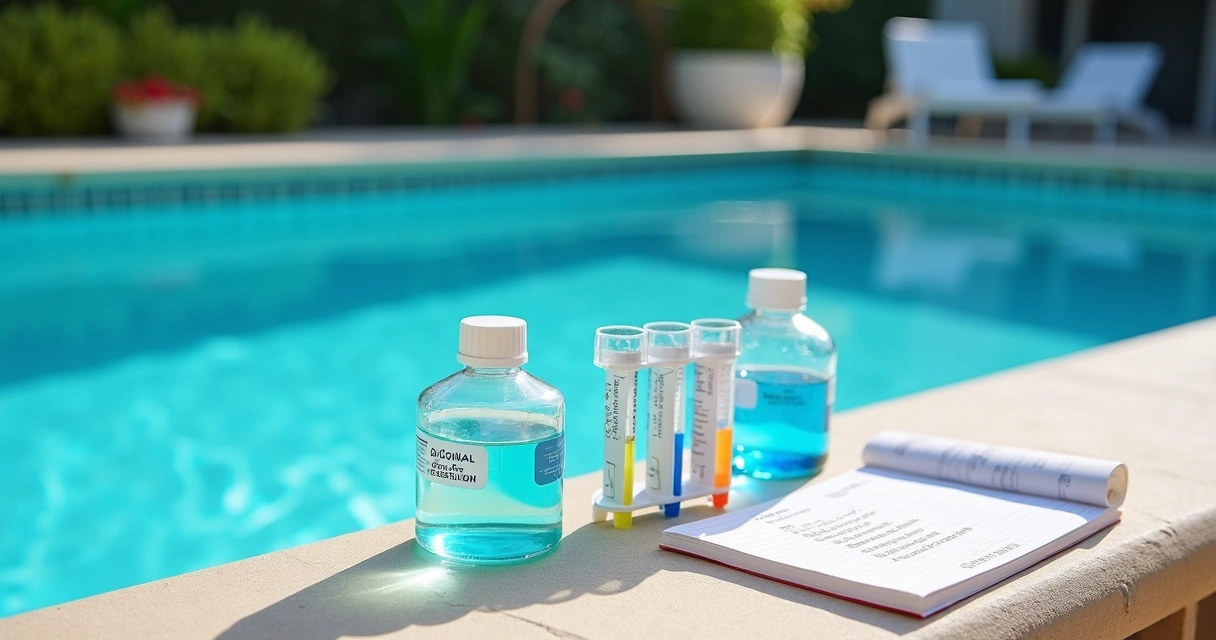
I prefer a standard liquid test kit or a good test strip used carefully. The process is simple, but I try to be consistent.
Run the pump for at least 30 minutes so the water is mixed.
Take the sample elbow-deep, away from returns, skimmers, and chemical feeders.
Rinse the test cell with pool water first.
Fill to the marked line exactly.
Test pH using the reagent or strip, then compare the colour promptly.
Test total alkalinity using the kit instructions, counting drops carefully if it is a titration test.
Write the numbers down with date, time, and recent changes such as rain, heavy use, or chemical additions.
I learned the hard way that memory is unreliable. A simple record often reveals patterns. MyPoolMate does this well because it keeps test history and highlights trends rather than treating each reading as a one-off event.
How I increase low pH safely
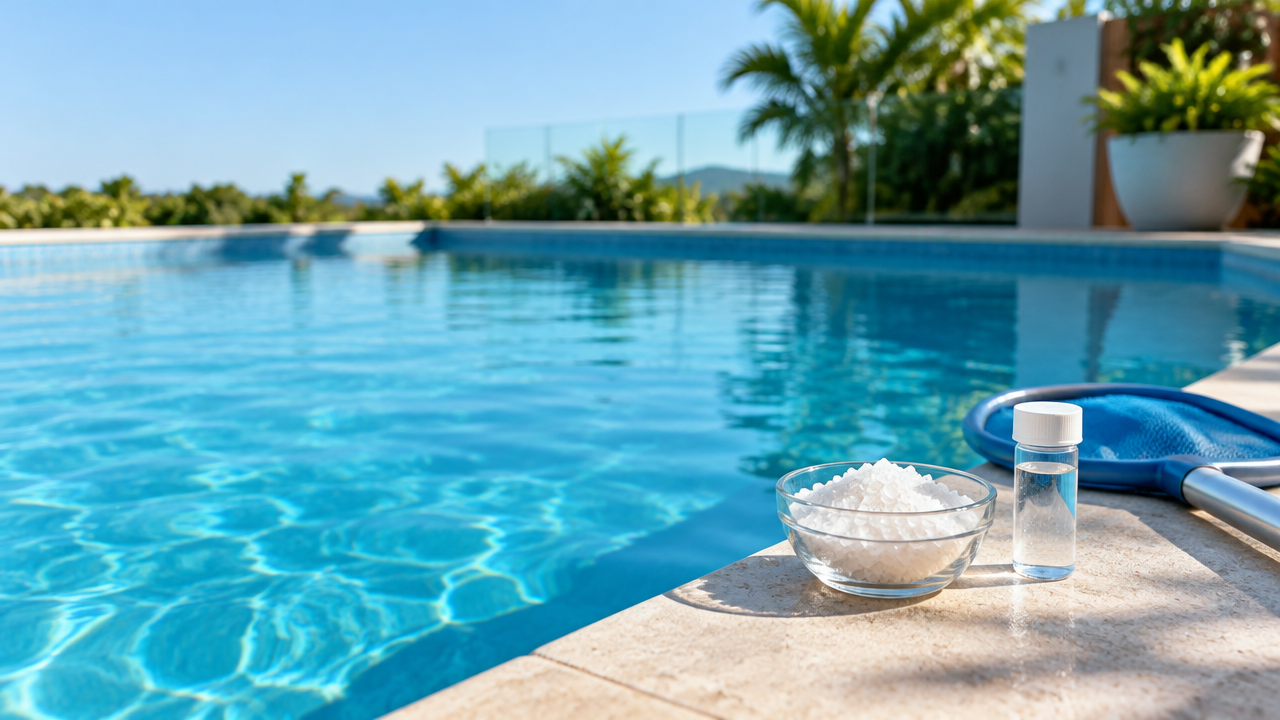
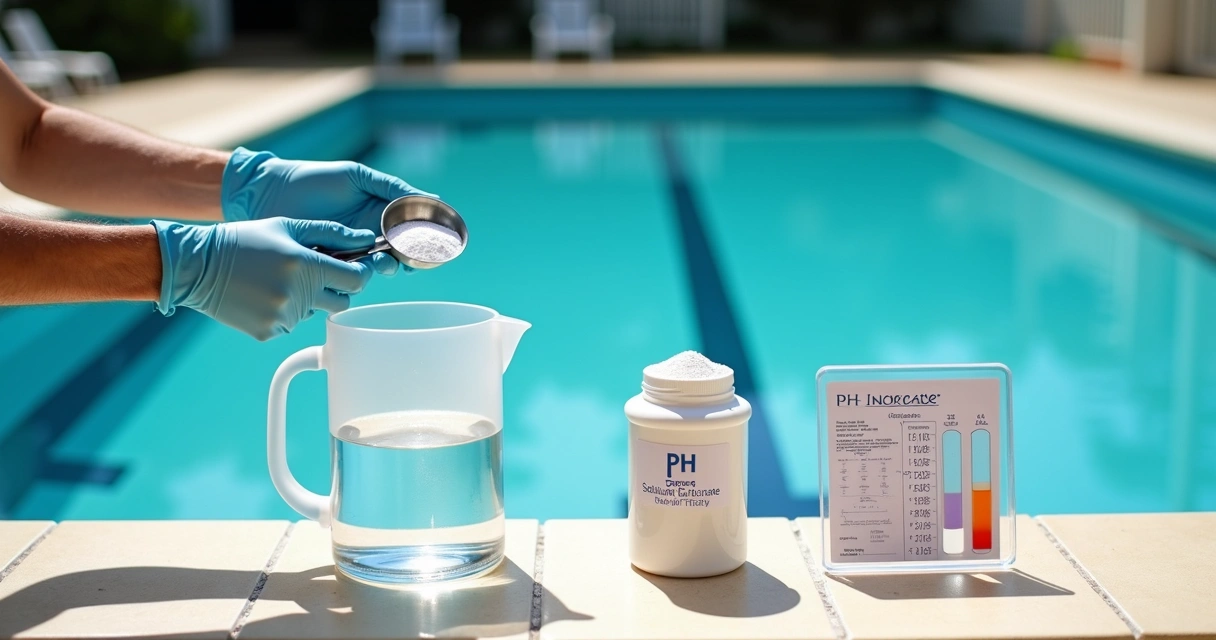
The most common product for lifting pH is soda ash, also called sodium carbonate. Baking soda, or sodium bicarbonate, mainly raises alkalinity, though it can nudge pH upward a little. I choose between them based on both readings, not just one.
Use soda ash when pH is low and alkalinity is acceptable or only slightly low.
Use baking soda when alkalinity is low and pH also needs gentle support.
These are practical starting doses I use for a pool with circulation running:
Soda ash: about 100 grams per 10,000 litres can raise pH by roughly 0.1 to 0.2, depending on current alkalinity and water balance.
Baking soda: about 180 grams per 10,000 litres can raise total alkalinity by roughly 10 ppm, with only a mild effect on pH.
For a 40,000 litre pool: start with 400 grams of soda ash for a modest pH lift, or about 720 grams of baking soda for a 10 ppm alkalinity rise.
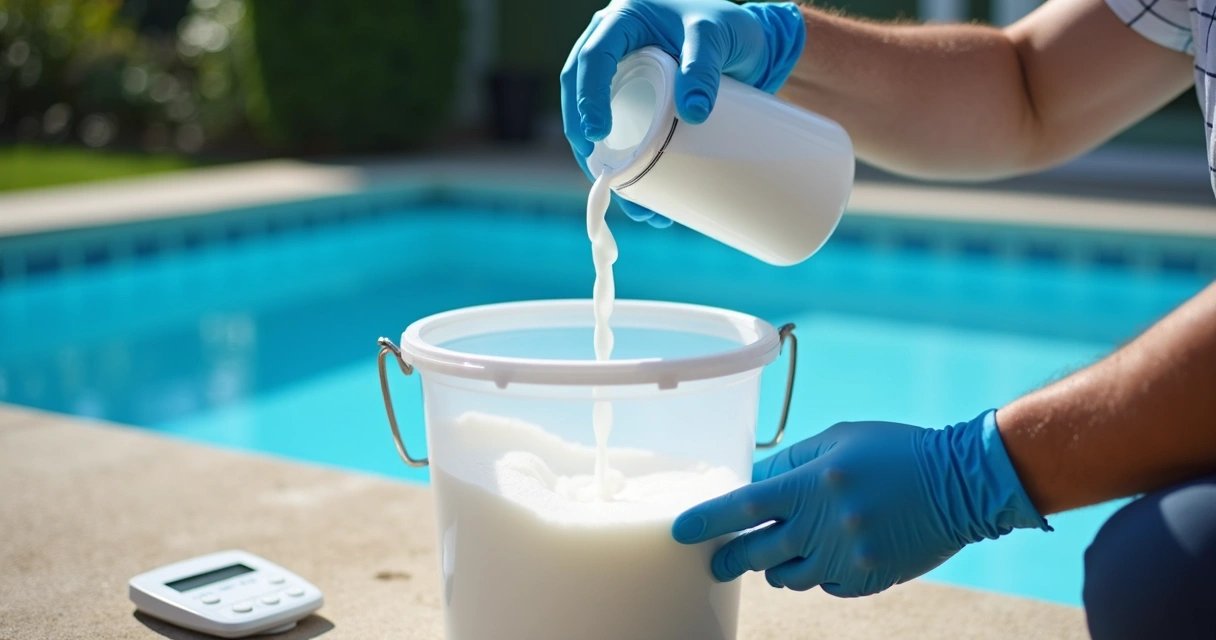
I always pre-dissolve when the product label allows it, using a clean bucket of pool water. Then I pour it slowly around the deep end or along the perimeter, never all in one spot. If the label says broadcast directly, I still spread it evenly and brush afterward.
Do not dump a large correction in at once. I prefer smaller doses, then retesting.
What to expect after dosing
After adding soda ash, I let the pump run for at least 2 to 4 hours before retesting pH. If I adjusted alkalinity with baking soda, I usually give it 4 to 6 hours, or longer if the pool is large.
Sometimes the water turns cloudy right after soda ash is added. That can happen when the product is added too fast, when calcium hardness is high, or when the dose is larger than needed.
In many cases, slight cloudiness clears with circulation and brushing. If it lingers, I test pH, alkalinity, and calcium hardness again before adding anything else.
For outdoor pools, sanitiser performance also depends on stabiliser. The NSW Health advice on cyanurate stabilisers explains that too much stabiliser can reduce chlorine effectiveness. I mention that because some people blame pH for dull water when the chlorine problem is actually tied to stabiliser levels.
Common problems I see
When pH will not stay up, I look for causes instead of adding more and more product.
Heavy rain: Fresh rain can dilute and shift chemistry, especially in summer storm periods.
Low alkalinity: The pH rises briefly, then falls back.
High swimmer load: Busy weekends can change readings quickly.
Acid overuse: Sometimes previous corrections overshot.
Sanitiser type: Some chlorination methods push pH up over time, while other treatment patterns can pull it down first.
I also see confusion caused by pool shop printouts listing many products at once. In my view, that is exactly where a root-cause approach helps. The article on whether you need all the chemicals a pool shop recommends is worth reading if you want a calmer, more measured method.
Safety notes I never skip
Chemicals solve problems, but only when handled with care.
Wear gloves and eye protection.
Keep products dry and sealed.
Never mix different chemicals together.
Add chemicals to water if pre-dissolving, not water to chemicals.
Store them away from children, pets, and direct heat.
Read the label because product strength can vary.
If I am working through several chemistry issues, I separate adjustments and allow circulation time between them. That keeps reactions more predictable.
How often I check pH in Australia
In warm months, I like to test pH and chlorine at least twice a week. In cooler months, once a week may be enough for many home pools. I test alkalinity weekly or fortnightly, depending on how stable the pool has been.
I check more often after:
Heavy rain
Heatwaves
Pool parties or high use
Backwashing or large top-ups
Any major chemical correction
If you live in a high-use climate, this Queensland pool maintenance guide gives good seasonal context. I also like keeping a broader view of chemistry through these pool chemistry articles, especially when pH issues overlap with salt, chlorine, or scaling concerns. And if your water balance has been affected by salinity changes, this guide on fixing high pool salt levels can help connect the dots.
Conclusion
When I need to bring pool water back from low pH, I trust the same process every time. I test pH and alkalinity together, choose the right product, dose in small amounts, circulate well, and retest before adding more. That approach is safer for swimmers, kinder to equipment, and easier on the budget. If you want more personal guidance based on your own pool size, surface, sanitiser, and recent test history, I recommend getting to know MyPoolMate and seeing how its tailored water analysis can help you treat the real cause instead of guessing.
Frequently asked questions
What causes low pH in pools?
Low pH can come from heavy rain, high swimmer load, acid additions, low total alkalinity, and some treatment patterns that slowly make water more acidic. In outdoor Australian pools, weather swings and frequent top-ups can also shift readings.
How can I safely increase pool pH?
I safely increase pool pH by testing pH and alkalinity first, then adding a measured dose of soda ash in stages with the pump running. If alkalinity is low, I may use baking soda first or alongside a smaller pH correction. After dosing, I wait a few hours and retest.
What are the best products to use?
Soda ash is usually the best choice when pH is low and you want a clear upward correction. Baking soda is better when total alkalinity is low and pH only needs light support. The right product depends on both readings, not just the pH result alone.
How often should I check pool pH?
I suggest checking pH at least twice a week in summer and once a week in cooler months for many home pools. Test more often after storms, pool parties, heatwaves, backwashing, or any chemical adjustment.
Is it safe to swim after raising pH?
It is usually safe to swim once the chemical has fully dispersed, the pump has circulated the water, and the pH has been retested within the normal range. I wait until the water is clear and balanced before letting anyone in.