
Some days, I walk out to my pool and wonder how our lives got so much easier with robotic pool cleaners. Years ago, cleaning the pool meant hours with a manual vacuum or a long-handled net under the harsh sun. Lately, I’ve noticed these smart little robots zipping across pool surfaces all over my neighborhood. But even as their popularity grows, many pool owners still feel uncertain about picking the right type—especially when it comes to choosing between bag and canister models.
How do robotic pool cleaners work?
Robotic cleaners are self-driven machines that operate independently from your pool’s filtration system. Plug the transformer into an outdoor socket, connect the robot, and set it in the water. It crawls around, scrubbing surfaces while its internal pump draws water—and all those leaves and bits of dirt—into a storage compartment.
Instead of relying on suction from your pool pump or pressure from return jets, robotic pool cleaners use a low-voltage transformer for safe, energy-efficient cleaning.
The magic is in their internal filter system. As the robot moves, a powerful onboard pump pulls water and debris into either a collection bag or a rigid canister. The cleaner’s motorised tracks or wheels help it climb walls, scrub at waterline build-up, and make repeated passes over the pool floor for thorough results.
Just plug in, drop in, and let the robot do the work.
The rising popularity of robotic pool cleaners
Over the last decade, demand for robotic cleaners has soared. I see more people choosing them over traditional suction or pressure cleaners—and for good reason. They save time, work on a set schedule, are easy to clean out, and don’t require re-plumbing the pool. You’ll find an in-depth explanation of how these automation tools impact cost and ease in my guide to pool automation.
Still, the choice between bag and canister models is the question I get asked most. Each style fits different needs, and understanding the difference can save time, money, and hassle.
Bag style robotic cleaners: fine filtration, but more effort
Bag type cleaners are known for their superior fine particle filtration. The bags used in these robots can filter debris as small as two microns—almost invisible to the naked eye. If your pool is plagued by dust, fine particles, or you battle recurring algae, a bag style cleaner can leave the water looking nearly glassy.
- Filters water down to 2 microns
- Captures fine dust, silt, pollen, and small particulate matter
- Can help achieve sparkling clear water after storms or summer winds
- Bag cleaning can be fiddly—turn the bag inside out, rinse, and sometimes soak to remove trapped slime
Bag cleaners deliver exceptional clarity when dust and silt are your main problem, but you need patience for emptying and rinsing the filter bag.
Canister style robotic cleaners: easy-empty for heavy leaves
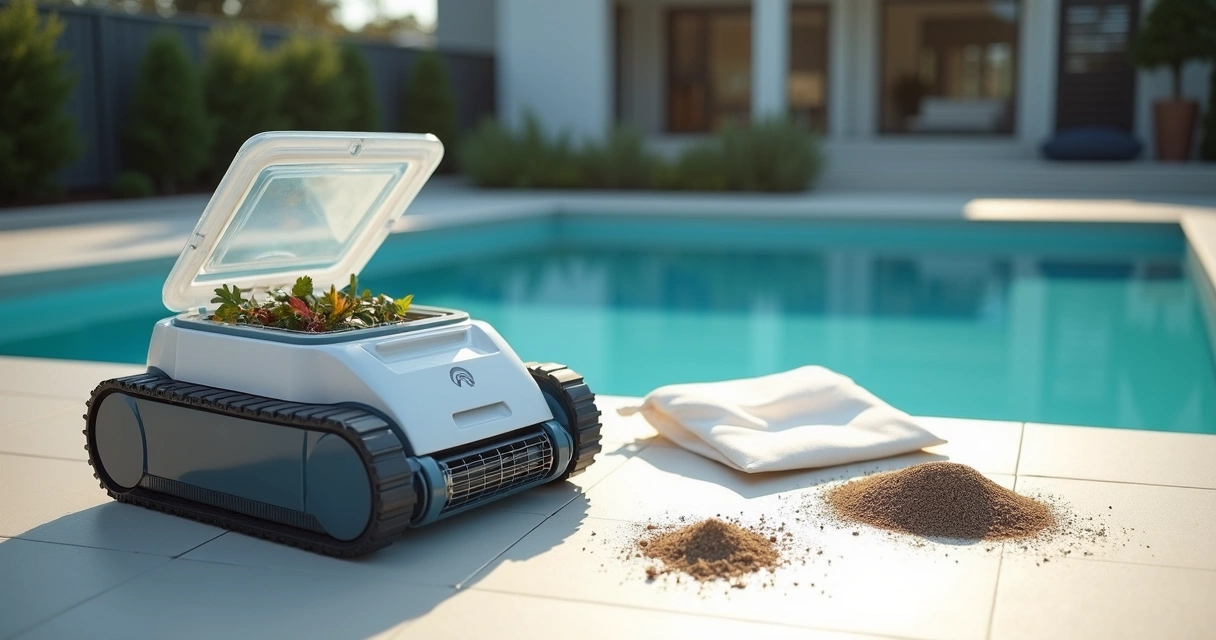
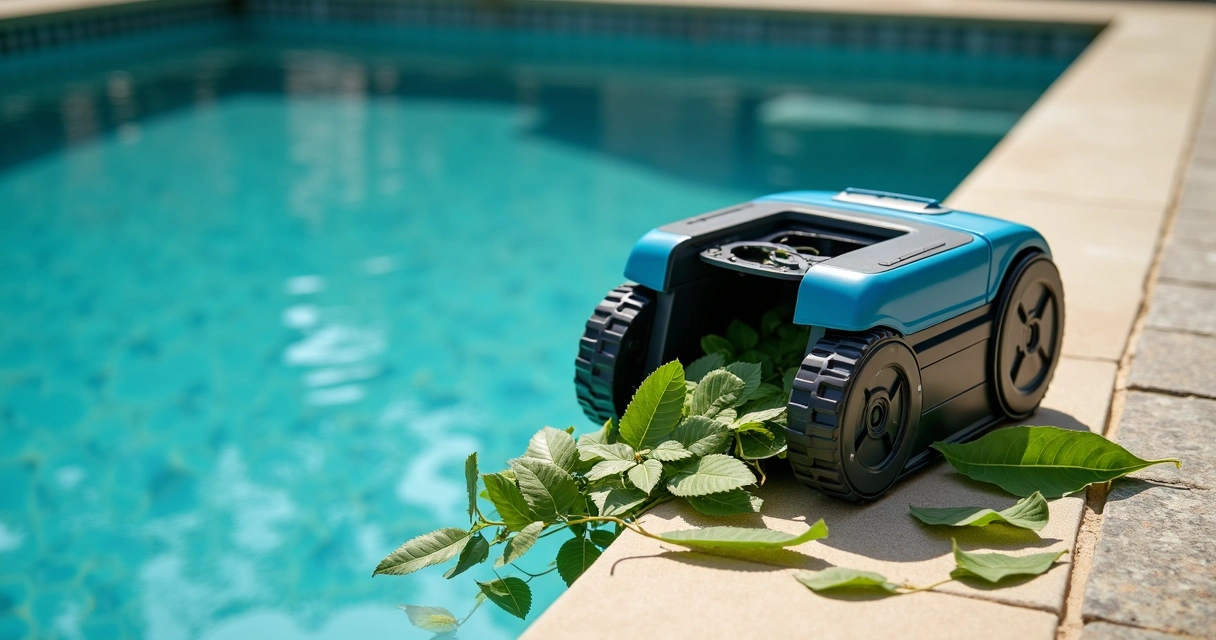
Canister (sometimes called cartridge) style cleaners have surged in popularity, thanks to their simple emptying mechanism. Most open with a latch and allow you to tip the contents out directly into your garden bin. If your pool collects lots of gum leaves, twigs, or seed pods, canister cleaners are a smart choice.
- Easy-release canisters or baskets—tip and rinse in seconds
- Good for big debris like leaves and acorns
- Available in single or dual-canister designs
- Don’t filter fine dust as well as bag styles; some ultra-fine particles pass through
Cleaning is as simple as unlatching the compartment, shaking out debris and rinsing under your garden hose.
Matching your cleaner to your pool’s debris
Choosing a cleaner isn’t about the fanciest model—it’s about what your pool needs most. Here are some practical considerations for anyone weighing bag versus canister:
- Does your pool collect more leaves or more fine dust?
- Is pollen or fine silt a major nuisance after storms or seasonal changes?
- Are you looking for quick, mess-free cleanouts?
I recommend thinking about your specific location. In some areas, leaf drop is the bigger headache. In others, dry winds leave the pool bottom coated in pale dust. If you’re not sure, I’ve written more about regional pool care and challenges in this Queensland maintenance guide.
If you choose a canister style for leaves, you may still need to manually vacuum fine dust after windy days, unless your robot model is designed to handle both.
Types of robotic pool cleaners: from basic to premium
Once you’ve settled on a bag or canister filtration system, consider which robot “class” matches your needs and budget. My firsthand experience with different models taught me to balance price, durability, and cleaning ability. Below, I break down the main categories.
Floor-only economical cleaners (such as Revolution I)
These are entry-level models that clean just the pool floor. They’re lightweight, inexpensive, and easy to pick up and move. You plug them in, drop them in, and get back to your day. The main trade-off? You’ll probably need to brush the walls and steps yourself, or spot vacuum now and then.
- Lower purchase price
- Floors only—no wall climbing drive
- Simple controls, typically one cycle only
- Manual wall and step cleaning needed
For a busy family with a tight budget, these can make regular cleaning quick and manageable.
Mid-range floor and wall cleaners (e.g. Zodiac CX20, CX35, TX35, Qt15)
Mid-priced robots are a favourite among pool owners who want more coverage but need a repairable, affordable machine. These climb walls, scrub waterlines, and run reliably—but they achieve their lower price with cheaper motors and materials. Expect a shorter working lifespan compared to more expensive units, but efficient cleaning each cycle.
- Clean both floors and walls
- Cheaper internal components
- More features, like programmable cycles and washable filters
- Shorter average lifespan, especially with frequent use
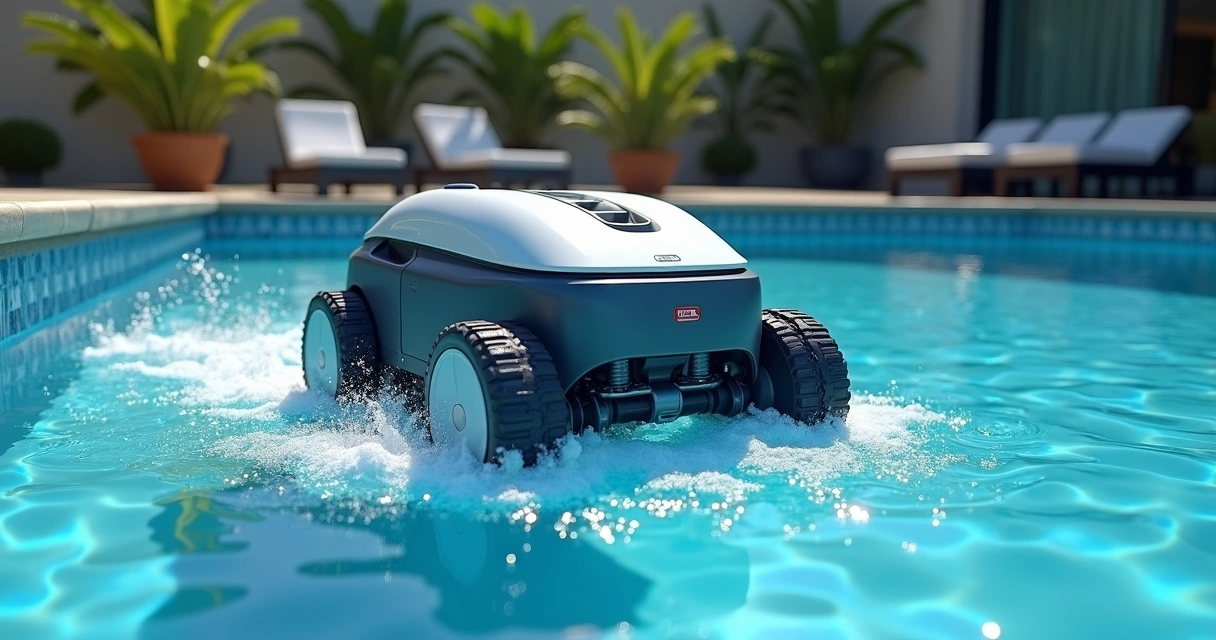
High-end robots (Zodiac Premium, Astral Pool, others)
Flagship models combine durability, smart navigation, and advanced features. They tackle floors, walls, corners, and sometimes steps, with sturdy motors and big tyres for grip. Many include “caddy” carts for storage and easy transport, long cables to cover large pools, and even mobile app control or scheduled starts. Upfront price is higher but many owners (including myself) find they last longer with fewer repairs.
- Full coverage: floors, walls, waterlines, steps (for some models)
- Strong build quality and premium materials
- Caddies and storage solutions included
- Smart navigation, programmable cycles, and sometimes Wi-Fi or app features
- Higher upfront cost, but longer typical lifespan
Premium robots often feel like a one-time investment, as they stay in service for many years with basic care.
How to care for and store robotic pool cleaners
On almost every model, the rules are the same. Run a cycle for 2-3 hours, then remove the robot from the pool. Rinse debris, empty the bag or canister, and store the machine in a shaded area—ideally using its caddy to protect the cable. Leaving a robotic cleaner in the pool 24/7 will reduce its lifespan and can damage the motor or plastic over time. I wrote more about extending equipment life in this guide to pool maintenance costs and savings.
Take it out, empty it, store it dry.
Thinking about your worst pool problem
Ultimately, your pool’s biggest cleaning challenge should determine the robot style. Here are a few questions to help you decide:
- Suffering from layers of gum or eucalyptus leaves every week? Go for an easy-empty canister model.
- Battling endless red dust, silt, or pollen? A bag-style filter may be best for keeping things crystal clear.
- Getting calcium or fighting frequent algae? Sometimes, neither robot handles this alone—occasional manual brushing might be needed, or call a technician for stubborn issues.
If you need a machine that lives in the pool and works continuously, not all robots will fit that purpose—consider a specialist solution for continuous cleaning and seek professional advice.
Specific models: Astral Viron QT1050 and Zodiac Duo-X DX4050 iQ
Among the top-tier options, the Astral Viron QT1050 and Zodiac Duo-X DX4050 iQ both offer robust build, advanced controls, multi-layer filtration, and easy handling. While they come at a higher price, I’ve found their reliability and ability to tackle large debris and fine silt make them worth considering for long-term owners, especially on pools with custom finish or unique cleaning demands.
Where to find robotic pool cleaners and expert advice
For Australian pool owners, Pool Shop is a trusted choice for pool and spa supplies—offering cleaners, pumps, chlorinators, lights, chemicals, spare parts, and more. They stock major brands like Zodiac, Astral Pool, Maytronics, Hayward, and others. They stand out with fast delivery, price match guarantee, and expert service at their Unanderra shop just south of Wollongong, or easy orders online. You can reach them directly at support@poolshop.com.au or 02 9137 8914 for specialist advice before you buy.
If you’d rather avoid the “chemical guesswork” so common in some pool shops, tools like MyPoolMate help you get tailored care recommendations—so you use only what your pool really needs, whether choosing cleaning equipment or adjusting water chemistry.
Conclusion: find the robot that fits your lifestyle
The right robotic pool cleaner makes maintenance simple, adds years to your pool’s finish, and frees you for better things than scooping leaves. I believe the secret is matching the cleaner to your pool’s most common debris—whether that means bag for dust, canister for leaves, or a specialty robot for year-round challenges. For ongoing guidance, or to get the most from your maintenance budget, consider learning more about proper filter care and see how MyPoolMate can take the stress out of pool ownership. Try our app and never guess again about what your water—or your cleaner—really needs.
Frequently asked questions
What is a bag-type pool cleaner?
A bag-type pool cleaner is a robotic unit that collects debris inside a fabric filter bag, capable of capturing particles as small as two microns. These are great for fine dust and pollen but the bag must be carefully emptied and rinsed to maintain suction and performance.
How does a canister pool cleaner work?
A canister pool cleaner collects debris in a rigid compartment. Most canister robots use a basket or tray accessible via a top latch. After each run, you pop open the compartment, pour out the leaves and rinse it—no need to touch dirty filter bags.
Which is better: bag or canister?
It depends on your main debris problem. Bag cleaners excel at catching fine particles and dust, while canister models are best for heavy leaf loads and quick emptying. Consider which nuisance is worse in your pool, then choose accordingly.
How often should I clean the filter?
Clean the filter bag or canister after every use or when full, especially during heavy leaf drop or after storms. Regular cleaning keeps your robot running smoothly and extends its lifespan. For more about filter maintenance, check my guide on cleaning pool filter cartridges.
Is it worth it to buy robotic cleaners?
In my experience, robotic pool cleaners are a smart investment for most pool owners. They cut down maintenance time, improve water clarity, and reduce the strain on your main filtration system. Even the entry-level models can pay for themselves with the time and effort they save.