

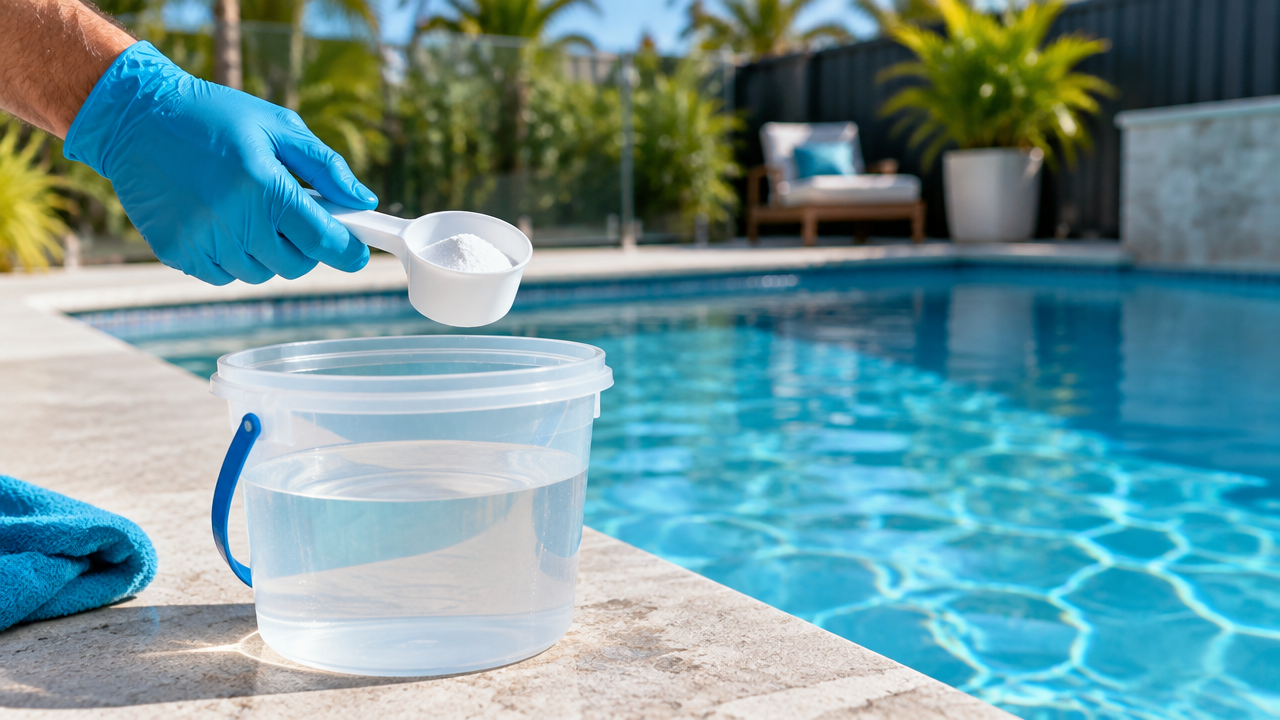
Soda ash, also called sodium carbonate, is used to raise low pool pH. It can also lift total alkalinity, so test both readings before dosing and follow the product label for your pool’s volume. A measured, gradual adjustment is safer than adding extra and trying to correct the result later.
Key points for using soda ash in a pool
- Use it when a reliable test shows your pH is below your pool’s target range.
- Check total alkalinity as well, because sodium carbonate can affect both measurements.
- Calculate the dose from your pool volume and the specific product instructions.
- Add a cautious amount, circulate, then retest before deciding whether more is needed.
- Never mix pool chemicals together or add a second product at the same time.
What does soda ash do to pool water?
Soda ash increases pH by adding an alkaline compound to the water. It can raise total alkalinity too, but its main pool-care use is correcting low pH. Sodium bicarbonate, often called baking soda, is generally used when the main problem is low alkalinity. The two products are not interchangeable dose for dose.
pH matters for swimmer comfort, equipment and chlorine performance. The CDC notes that chlorine becomes less effective as pH rises above 8.0, while water below pH 7.0 can increase the risk of pipe corrosion. Follow the operating guidance for your pool and sanitiser, rather than chasing a number without considering the rest of the water balance.
If alkalinity is also outside its target, address the overall balance rather than repeatedly adding pH chemicals. This guide to stable pool alkalinity explains why the two readings should be considered together.
When should you use it, and when should you wait?
Use soda ash only after a fresh test confirms low pH. If your test result is borderline, inconsistent or unexpected, repeat the test before treating the pool. A single reading is not a reason to pour in chemicals, especially if recent rain, top-ups or a heavy swim load may have shifted the water.
Wait and investigate if pH is already in range, total alkalinity is high, or the water has recently received another treatment. Adding more alkalinity without checking can make balance harder to manage. If pH is low and you need a step-by-step adjustment approach, see this pool pH correction guide.
How to add soda ash safely
- Test first. Measure pH and total alkalinity with a reliable pool test method, and note the results.
- Confirm the pool volume. Use the actual volume where possible. A rough estimate can make a calculated dose inaccurate.
- Read the product label. Work out the amount for your pool and the change needed. Products and pool conditions differ, so avoid generic scoop-based advice.
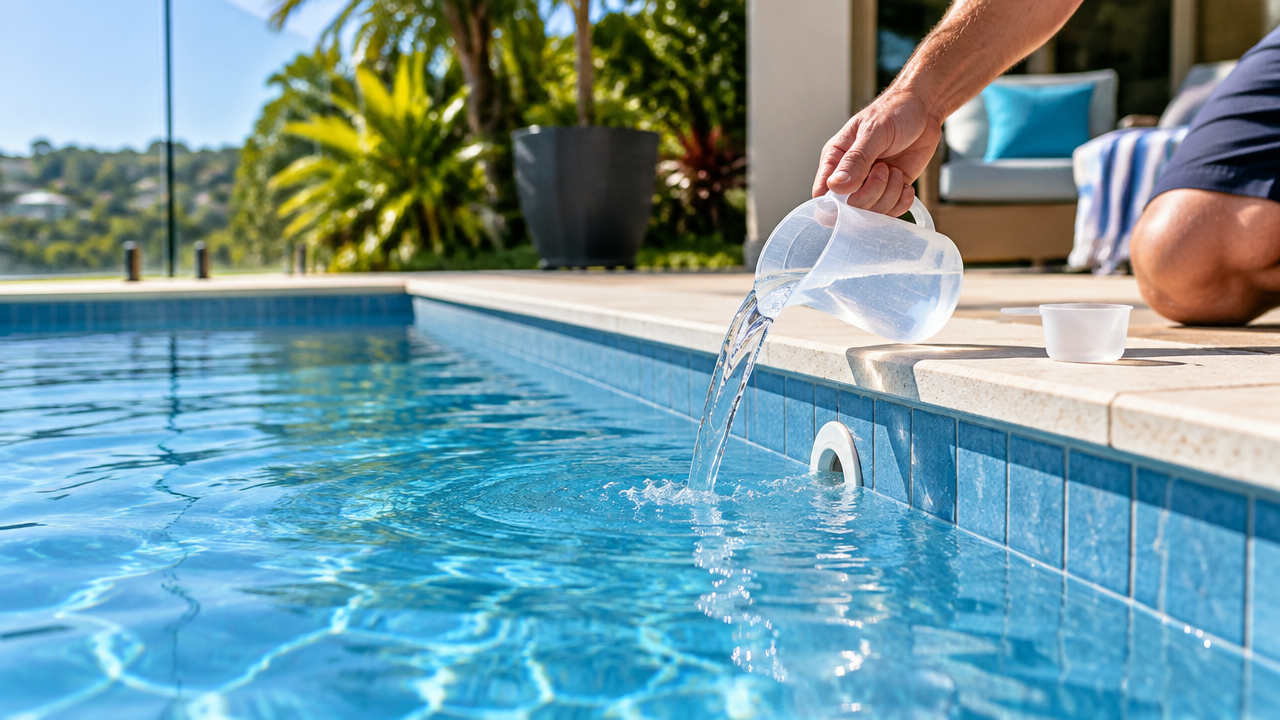
- Apply it as directed. Keep the circulation system running if the label permits, and add the product exactly as instructed. Do not combine it with other chemicals or pour it into a chemical container.
- Allow mixing, then retest. Follow the label’s waiting time before checking pH again. Add more only if a new test shows it is still below target.
Keep swimmers out during treatment and follow the product label before reopening the pool. Wear any protective equipment the label recommends, avoid breathing powder, and store the container closed in a dry place away from incompatible chemicals. CDC pool chemical guidance stresses preventing chemical mixing and following safe handling procedures.
Why can soda ash make pool water cloudy?
Cloudiness after treatment can happen when water balance shifts or the chemical is not dispersed as directed. Adding too much at once can also push pH or alkalinity beyond the pool’s target, so do not respond to cloudy water by immediately adding another chemical.
Keep the circulation system running if appropriate for your setup, brush areas where powder may have settled, and retest before making another adjustment. Check pH, alkalinity and calcium hardness, since water balance depends on more than one reading. A measured chemical calculator can help you translate a confirmed result and pool volume into a label-aligned dose.
Soda ash or baking soda: which should you choose?
| Product | Best fit | What to check |
|---|---|---|
| Soda ash, sodium carbonate | Low pH that needs a stronger increase | Recheck pH and alkalinity after treatment |
| Baking soda, sodium bicarbonate | Low total alkalinity | Monitor pH as well as alkalinity |
Bicarbonate can raise pH when the starting pH is low, but it is usually selected to increase alkalinity. Soda ash is commonly used to raise depressed pH. Test both values before choosing, and avoid substituting one for the other based only on the label’s broad claim that it “balances” water.
Make each adjustment fit your pool
The same scoop can produce different results in pools with different volumes and starting chemistry. Pool surface, sanitising method, seasonal conditions and recent chemical additions also matter. That is why a test result, pool profile and dose calculation are more useful than generic advice.
MyPoolMate helps Australian pool owners track pool details and water-test history, review personalised chemistry guidance and keep follow-up tasks organised. You can enter test results manually or use its AI scanner for printed pool-shop results, then ask Splash, the pool-aware AI assistant, about your latest readings. Use its guidance alongside product labels and appropriate testing, not instead of them.
Frequently asked questions
Are soda ash and baking soda different?
Yes. Soda ash is sodium carbonate, while baking soda is sodium bicarbonate. Both can affect pool pH and alkalinity, but they do so differently. Soda ash is generally chosen when pH needs a stronger lift; bicarbonate is usually used to increase total alkalinity with a smaller pH change.
What is soda ash used for in a pool?
In pool care, soda ash is used mainly to raise low pH. It can also increase total alkalinity, so check both readings before adding it. The right amount depends on your pool volume, current water balance and the product directions, not just the pH result.
Can I use bicarbonate of soda instead of soda ash?
For a low-pH pool, sodium bicarbonate may be a better fit if total alkalinity is low too, because it primarily raises alkalinity. If pH alone needs a stronger increase, soda ash is usually more suitable. Test both values first, then choose a product based on the imbalance.
What is a substitute for soda ash in a pool?
Sometimes, but it is not a like-for-like substitute. Bicarbonate of soda mainly raises total alkalinity and usually affects pH less than soda ash. It may suit water with low alkalinity, but it may not correct a low pH efficiently on its own. Test both readings before choosing.


