

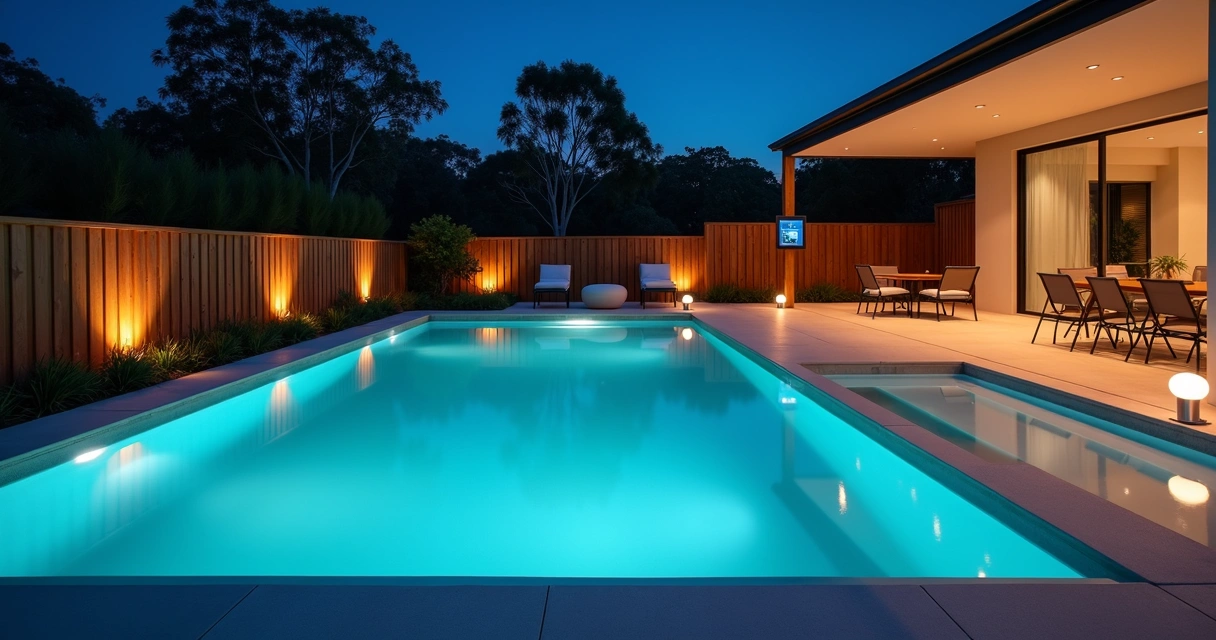
I have always felt that pool lighting changes more than visibility. It changes the mood, the safety, and even how often a pool gets used after sunset. A plain backyard can feel calm and polished with the right light. A badly lit pool, on the other hand, can look flat and feel risky.
When I look at the best pool lighting options today, I keep coming back to three clear choices: LED lights, solar lighting, and smart controls. Each has a place. The right one depends on your pool shape, how often you swim at night, your power setup, and your budget.
For most residential pools, LED lighting gives the best mix of brightness, lifespan, and running cost.
I also think lighting decisions work best when they are made with the whole pool in mind. That is one reason platforms like MyPoolMate make sense to me. If I can track maintenance, water balance, and seasonal pool use in one place, it becomes much easier to decide whether a lighting upgrade is worth it.
Why pool lighting matters
Some owners see lighting as a design extra. In my experience, it is also practical. Good lighting helps people see steps, ledges, and the pool edge more clearly. It can reduce trip risks around the water and make evening swimming more inviting.
I once visited a pool that looked fine during the day, but at night the deep end disappeared into darkness. It felt uncomfortable right away. That stuck with me.
Light changes how safe a pool feels.
Before choosing a system, I usually think about these points:
- How bright the pool area needs to be
- Whether the lights are for swimming, appearance, or both
- How easy the system is to maintain
- How the lights will affect power use over time
If you are already planning broader pool upgrades, I think it also helps to keep an eye on automation ideas such as those covered in pool automation advice.
LED pool lights
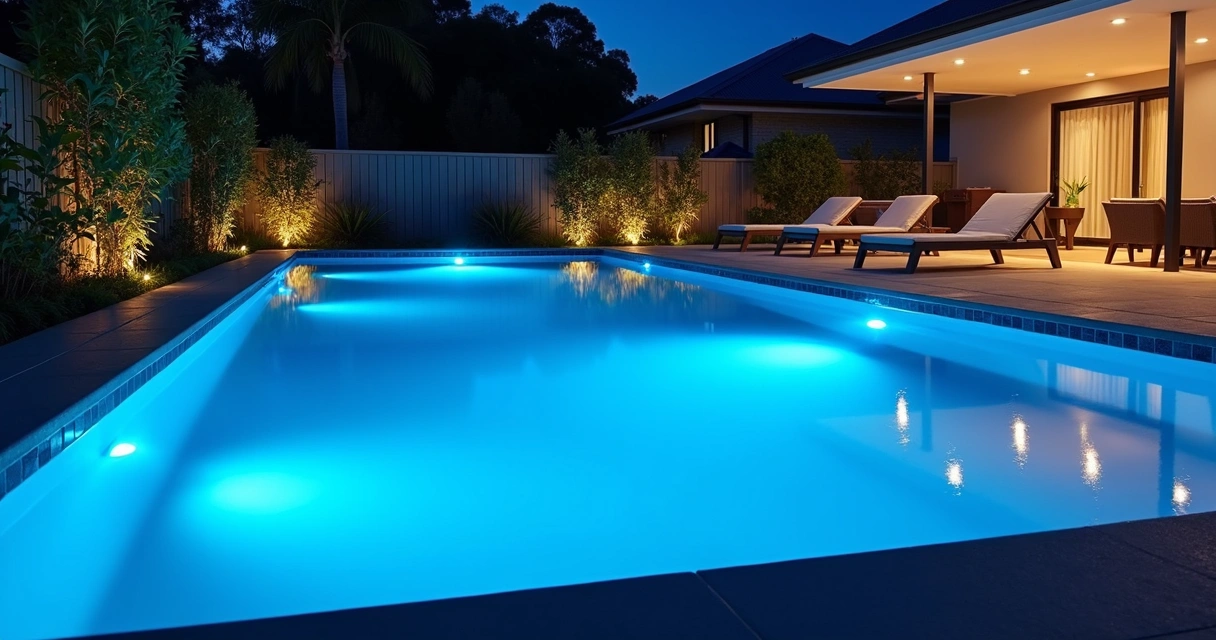
LED lights are the option I recommend most often. They are bright, long-lasting, and available in many colours and beam styles. You can fit them into new pools or upgrade older systems, depending on the existing setup.
LED pool lights work by sending electric current through a semiconductor, which creates bright light with lower power use than older bulbs.
What I like most about LEDs is control. You can choose cool white for a clean modern look, warm tones for a softer feel, or colour-changing settings for entertaining. They also tend to need fewer bulb replacements, which matters when a fitting is underwater.
The main benefits are easy to spot:
- Lower energy use than older light types
- Long service life
- Strong brightness and better colour quality
- More design choices, including fixed and colour-changing modes
There are a few things I would still check first. Not every existing niche or transformer suits every LED retrofit. Installation should also follow local electrical and pool safety rules. In Australia, that is not an area where I would guess my way through it.
If you are comparing pool ownership costs more broadly, I suggest reading this breakdown of pool maintenance costs in Australia. Lighting is only one part of the picture, but it does affect long-term spending.
Solar pool lighting
Solar pool lighting can be a smart fit, but I see it as a different category. In most cases, solar lights are used around the pool rather than as powerful underwater lights. They are great for paths, fences, garden beds, and pool surrounds.
I like solar lights for simple reasons. They are easy to place, they do not always need wiring, and they can improve visibility around the pool without pushing up power bills much. For some homes, that is enough.
Solar pool lighting is best for pool surrounds and mood lighting, not usually for strong underwater illumination.
The trade-off is consistency. Solar performance depends on sunlight exposure, panel quality, battery condition, and season. After cloudy days, the lights may not stay bright for as long. That is the part many people overlook.
From what I have seen, solar works best when you want:
- Easy accent lighting around the pool area
- A low-wiring option for gardens and paths
- Gentle night lighting for casual evening use
- A smaller upfront project
If your pool gets heavy evening use, I would not rely on solar alone. I would pair it with fixed lighting for the water itself.
Smart controls
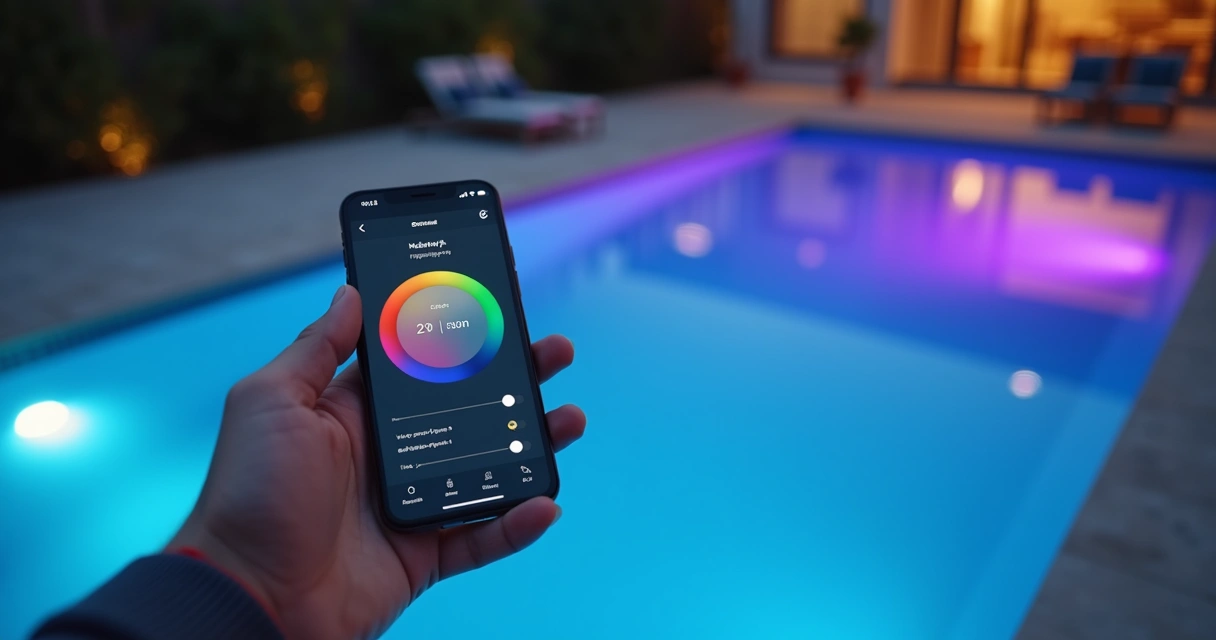
Smart lighting control is where things get more convenient. Instead of walking outside to switch lights on and off, you can schedule them, dim them, change colours, or sync them with other pool equipment.
I think this is where modern pool ownership starts to feel less fragmented. When the pump, sanitation habits, maintenance routine, and lighting all follow a plan, the pool becomes easier to manage. That is very much in line with what MyPoolMate is trying to solve for owners who want clearer, more personal pool decisions.
Smart controls can include:
- App-based on and off settings
- Timers and schedules
- Colour scene presets
- Links with broader pool automation systems
I would still keep my expectations realistic. Smart controls do not make weak lights better. They improve convenience and flexibility. So I see them as an upgrade to a good lighting setup, not a replacement for one.
If you want a practical view of app-based pool care, I think these articles connect well with lighting planning: a pool care app that does not sell chemicals and a guide to choosing the best pool management tool.
How I would choose between them
When people ask me which option is best, I do not give the same answer every time. I break it into use cases.
If I wanted the strongest all-round result, I would choose LED pool lights with smart controls. If I wanted to improve ambience around the pool with a lighter budget, I would add solar path and garden lights. If I wanted a full evening setup, I would combine all three in layers.
A simple way to think about it is this:
- Choose LED for the water itself.
- Add solar for surrounding paths and features.
- Use smart controls if you want convenience and scheduling.
I also think climate and local use patterns matter. A household in Queensland may use the pool differently across the year than one in cooler areas, so planning should match actual habits. For that reason, this Queensland pool maintenance guide is a useful companion read.
My final view
If I had to keep it simple, I would say LED lighting is the top choice for most pool owners, solar lighting is a helpful support option, and smart controls add comfort that many people grow to love quickly. The best setup is not always the most expensive one. It is the one that suits how the pool is really used.
Good lighting should help your pool feel safer, look better, and fit naturally into your routine. If you want a clearer view of how upgrades like lighting fit into your wider pool care plan, I recommend getting to know MyPoolMate and seeing how personalised pool tracking can support smarter choices.
Frequently asked questions
What is the best pool lighting option?
I think LED pool lighting is the best option for most residential pools. It gives strong brightness, long life, and lower running costs than older light types. If I wanted the most balanced setup, I would start with LED in the pool and then add solar or smart features where they make sense.
How does LED pool lighting work?
LED pool lighting works by passing electricity through a small semiconductor that produces light. In my experience, this gives a bright and steady result while using less power than older bulbs. Many LED systems also allow colour changes and dimming, depending on the setup.
Is solar pool lighting effective at night?
Yes, solar pool lighting can be effective at night, but I would be realistic about its role. It usually works best for paths, garden edges, and general ambience around the pool. Its performance depends on how much sunlight the panels get during the day and how strong the battery is.
Are smart pool lights worth it?
I think smart pool lights are worth it if you want convenience. They make it easier to schedule lighting, adjust brightness, and change colours without manual switching. I would not buy smart controls to fix poor lighting, but I would add them to a good system for a better user experience.
How much does pool lighting cost?
Pool lighting costs vary based on the number of lights, the type of fittings, installation needs, and whether smart controls are included. I usually see solar surround lights as the lower-cost entry point, while built-in LED systems cost more upfront. Over time, LED systems can still be a good value because they tend to last longer and use less power.


