

Chloramines are compounds formed when chlorine reacts with ammonia and other nitrogen-containing material in pool water. They contribute to combined chlorine readings and can cause a strong pool smell or irritation. For Australian pool owners, the useful first step is to test before adding chemicals, then address the cause rather than guessing with a large chlorine dose.
Key points for pool owners
- Combined chlorine is calculated by subtracting free chlorine from total chlorine.
- Swimmer waste and other nitrogen-containing material can contribute to chloramine formation.
- A strong smell is a clue, not a reliable test result.
- Correct treatment depends on your pool’s volume, current chemistry and product instructions.
- Retest after treatment to check whether combined chlorine has fallen.
What are chloramines in a swimming pool?
In pool care, chloramines form when chlorine combines with ammonia or nitrogen-containing contaminants brought in by swimmers. Sweat, urine, body oils and some personal-care products can add to the load. Pool professionals commonly refer to these compounds as combined chlorine.
A combined chlorine test result is a practical measure, not a precise identification of every chemical in the water. Pool readings help you understand whether chlorine is bound up in reactions, but they do not tell you the exact mix of compounds present. Understanding how pool chlorinators work can also help explain why steady sanitation and regular testing matter.
What are the signs of chloramines?
A persistent, pungent pool smell can indicate combined chlorine, but smell alone cannot confirm it. Eye, skin or airway irritation may also occur, particularly in indoor pool areas where air movement is poor. These symptoms can have other causes, so do not use them as a substitute for testing.
Outdoor residential pools have more open-air ventilation than enclosed pools, but their water can still develop elevated combined chlorine. If swimmers feel unwell, they should leave the water, rinse off and avoid re-entering until the pool has been checked. Never combine pool chemicals or add products together; follow each product’s label and safety directions.
How do you test for combined chlorine?
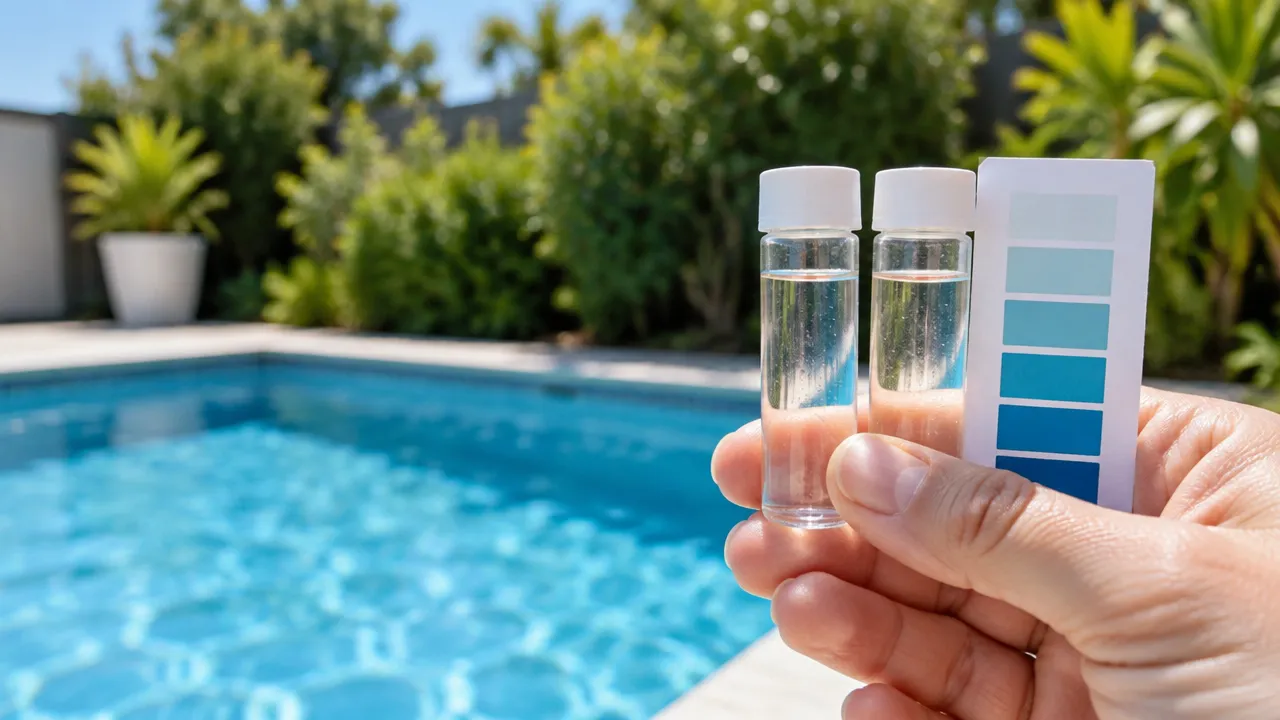
Test free chlorine and total chlorine using a suitable pool test kit or a pool shop water test. Subtract the free chlorine result from the total chlorine result to estimate combined chlorine. For example, if total chlorine is 3.0 ppm and free chlorine is 2.5 ppm, combined chlorine is 0.5 ppm.
A common residential benchmark is to keep combined chlorine at or below 0.5 ppm, but follow the guidance for your test method, pool and sanitiser. If results seem inconsistent, have the water checked before dosing. A clear guide on reading pool shop test results can help you identify which values you need.
How do you reduce chloramines in pool water?
Start by confirming the reading and checking what may be driving it. Then improve routine care and follow the product directions for any oxidation treatment. Avoid adding a guessed amount of chlorine: the correct dose depends on your pool volume and chemistry, including pH and stabiliser level.
- Retest free and total chlorine, then calculate combined chlorine.
- Remove leaves and other debris, and check that the pump and filter are operating properly.
- Review sanitizer, pH and stabiliser readings against the targets for your pool.
- If combined chlorine remains high, use only a suitable treatment at the labelled dose and in the stated order.
- Circulate the water as directed, then retest before swimming or adding more chemicals.
Regular showers before swimming, good pool hygiene and avoiding overcrowding can reduce the contaminants swimmers bring into the water. Balanced, consistent sanitation also helps prevent unnecessary chemical use. See practical ways to use pool chlorine more efficiently.
How can MyPoolMate help you spot a recurring problem?
A single reading shows what is happening now; a history can reveal whether combined chlorine repeatedly rises after heavy use or between routine treatments. MyPoolMate lets Australian pool owners record water tests, view chemistry trends and scan printed pool shop results, helping them keep readings in context alongside their pool’s details.
Use the record to compare before-and-after results, rather than treating each test as an isolated event. If readings stay outside your pool’s target range or you are unsure which treatment is suitable, get advice from a qualified pool professional. More chlorine is not automatically the right answer.
Frequently asked questions
What causes chloramines in pool water?
Chloramines form when chlorine reacts with ammonia and other nitrogen-containing material in the water. Sweat, urine, body oils and some personal-care products can add that material, especially when swimmer load is high or water care is inconsistent. A strong pool smell can be a clue, but testing is needed to confirm combined chlorine.
How do you get rid of chloramines in a pool?
Reduce chloramines by confirming the test result, then correcting the cause. Remove debris, maintain circulation and filtration, and follow your pool product instructions for oxidation or breakpoint chlorination. Check the water again before adding more chemicals. Avoid a blind shock dose: pool volume, stabiliser, pH and current chlorine levels all affect treatment.
How do you test for chloramines?
Use a reliable pool test that measures free chlorine and total chlorine. Subtract free chlorine from total chlorine to estimate combined chlorine. For example, total chlorine of 3.0 ppm minus free chlorine of 2.5 ppm equals 0.5 ppm combined chlorine. A pool shop can test the water if your readings are unclear.
How long do chloramines last in pool water?
Chloramines do not have one fixed lifespan in pool water. Their level changes with swimmer load, sunlight, water balance, circulation and treatment. Retest after treatment rather than assuming they will clear by a certain time. If the reading remains high, check the cause and your pool-care instructions before adding more chemicals.
What do chloramines do to your body?
Chloramines can irritate the eyes, skin, nose and airways, particularly where indoor pool air is poorly ventilated. A strong smell or irritation is not a reliable measurement of pool chemistry, and other causes are possible. Leave the water if you feel unwell, rinse off, and check the pool before swimming again.


