
Why Most Pool Chlorine Is Wasted—And How to Use Much Less
I’ve spent years watching Australian pool owners pour endless bags and bottles of chlorine into their water, chasing perfect clarity. It’s a scene I’ve witnessed countless times: the pool smells sharp, eyes sting after a quick swim, and the chemical bills keep stacking up. “It’s just how pools work,” I used to hear. But is it, really?
Why do we rely so much on chlorine?
Chlorine has long been the backbone of pool care in Australia and around the globe. Most pool owners I speak to know it as the magic bullet—add some, and your pool stays clear, blue, and safe. And yes, chlorine really does have some impressive strengths:
- Disinfects, quickly killing bacteria and viruses that make swimmers sick.
- Oxidizes organic debris, breaking down leaves, sweat, sunscreen, and more.
- Helps clarify water by attacking particles that cloud the pool.
- Affordable and available everywhere, from supermarkets to specialty shops.
There’s a reason it’s everywhere. In my experience, chlorine works exceptionally well where health is at stake. Its main job is to destroy harmful germs. But I’ve learned that most of the chlorine in a pool doesn’t even get that chance.
Chlorine is most effective when it disinfects—but that’s rarely its only job.
What happens to most of the chlorine we use?
Here’s the reality that took me—and many others—by surprise. Over 75% of the chlorine dosed in residential pools is spent on things other than killing germs. That’s a huge number.
If you break it down, here are the other “jobs” chlorine is pressed into handling:
- Attacking and breaking down organic debris (like leaves, pollen, body oils, and sunscreen).
- Trying to clear up cloudy or green water caused by algae or biological contamination.
- Masking the effects of unbalanced water, especially when other pool chemistry is off.
The problem is that chlorine just isn’t built for these tasks. It’s a powerful disinfectant, but only a passable cleaner and a very average clarifier. For those other jobs, it works—just not efficiently. That’s when waste creeps in.
More chlorine, more problems
I’ve found that when we try to handle every pool problem by adding more chlorine, we quickly run into a list of side effects:
- Chlorine bills soar, eating into the summer fun budget.
- Water chemistry goes up and down. High levels trigger the need for balancing chemicals to fix pH, alkalinity, and hardness.
- Unpleasant odors and skin irritation follow, especially as chloramines (the byproduct of chlorine vs. debris) build up.
- Pools get cloudy or green, and stains or tile scum often start to appear.
From what I’ve seen, adding more and more chlorine just piles new problems on top of old ones. Sometimes, the cycle feeds itself for months.
If you’re curious about what’s really necessary and what isn’t in pool care, I strongly recommend reading my guide on "Do I Need All the Chemicals the Pool Shop Recommends?"
Where do all these extra ‘jobs’ come from?
This is where things get interesting. It’s not just dust, dirt, or swimmers that use up chlorine’s strength. Two big culprits keep showing up: phosphates and organic debris.
Phosphates—the hidden enemy
Phosphates are nutrients that act like plant food for algae. I see them enter pools from:
- Tree leaves and grass clippings
- Fertilizers sprayed nearby, sometimes carried by wind or rain
- Swimmer detergents, soaps, and body products
- Tap water, especially in some Australian suburbs
When phosphate levels climb, algae blooms thrive, demanding even more chlorine just to keep up. Chlorine gets burnt out trying to keep algae at bay, instead of doing what it does best.
Organic debris—the constant battle
Here’s another observation: organic contamination never stops. Body oils, skin cells, lotions, insects, pollen, and pets all add to the ‘chlorine workload.’ Yet chlorine isn’t very good at breaking these down—meaning you need much more just to keep water looking clear and smelling fresh.
How phosphate removers can change everything
After seeing countless algae blooms and filter headaches, I started recommending phosphate removers. They’re simple to use. You dose directly according to your pool volume, and over time, you starve algae at its source.
Regular use means even if phosphates come in with wind, water, or rain, they don’t get the chance to fuel algae growth. And once you’re not chasing algae, chlorine does its real job—disinfecting the water for your family.
Enzyme products: A smart way to clear out organic debris
I remember the first time I tried a high-quality enzyme blend. I couldn’t believe how clear the water stayed, even with kids constantly in and out. These enzyme products break down oils, fats, and organic particles far more completely than chlorine on its own.
Enzymes “digest” debris, leaving less for chlorine to fight. That means more of your chlorine is saved for disinfection, and less is wasted “burning up” sunscreen, body oils, and pollen.
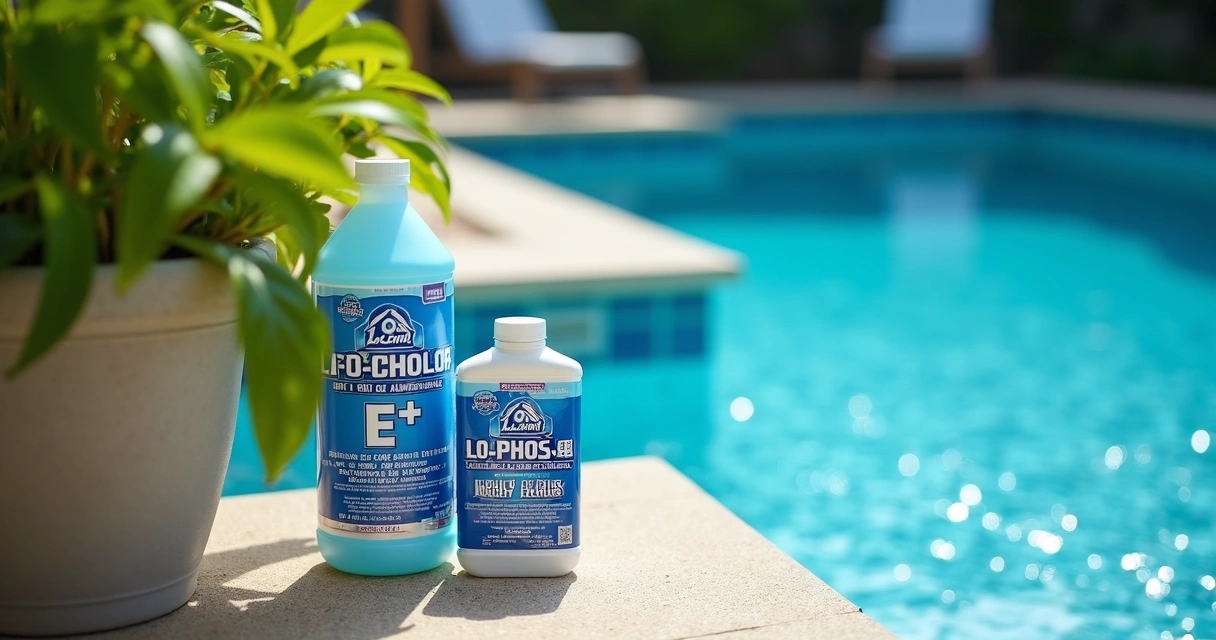
To make this concrete, using as little as five ounces of Lo-Chlor Lo-Phos E+ each week can eliminate as much organic debris as a full gallon of chlorine. At the same time, Lo-Phos E+ adds phosphate remover with every dose, making the process even simpler for busy pool owners like me.
The perfect pair—Lo-Phos E+ and 90-Day Algicide
If you want a simple routine that keeps water clear and blue with much less chlorine, pairing Lo-Phos E+ and Lo-Chlor 90-Day Algicide makes a lot of sense. The enzyme and phosphate remover does the heavy lifting for organic and nutrient control, while the algicide gives you a lasting barrier against green water.
Together, they form a straightforward, affordable strategy. You save time, cut down on test-and-dose cycles, and use less chlorine. That means:
- Less need for balancing chemicals
- Fewer filter cleaning hassles
- Much less chance of cloudy water or stains
Let your products do the work, and let chlorine return to what it does best: disinfection.
The big picture: Smarter pool care with less chlorine
Most of the pool owners I talk with are solving the same problems over and over: green water, weird stains, tile scum, filter struggles, mysterious water loss, and the never-ending see-saw of chlorine in the water. I’ve watched people throw money at balancing agents, clarifiers, algaecides, and endless bottles of chlorine.
With MyPoolMate, owners can track what goes into their water, see clear reports, and use AI guidance to make better decisions. When you understand what’s in your pool and address root causes (like phosphates and organics), everything gets easier. If you want advice on smart savings, pool maintenance, and the right chemicals, I suggest checking out my breakdown on pool maintenance costs in Australia and how to lower them.
If you’re ever unsure about your pool’s exact needs, a quick look at the pool chemical calculator demystifies correct dosing, saving money and avoiding waste.
And if you ever wonder how chlorinators work and what mistakes to avoid, I recommend reading my article on pool chlorinator types and common mistakes.
Conclusion: Let smarter products and technology make pool care simple
In my experience, using chlorine just for what it’s good at and giving enzyme and phosphate removers the rest of the job frees up your time and wallet. The side benefits are real: fewer irritants, less odor, lower chemical costs, and far less stress.
If you’re tired of fighting the same battles every summer, I urge you to get smarter with your pool routine. Try MyPoolMate to build a pool profile, track chemistry, and get tailored advice. You’ll quickly see how much simpler and less expensive pool care can become—no wasted chlorine, no endless guessing, just enjoyable swims every time.
Frequently asked questions
What causes pool chlorine to be wasted?
Chlorine gets used up fast when it has to deal with things like organic debris, phosphates, and algae, rather than just disinfecting bacteria and viruses. In my opinion, most wastage comes from handling tasks it isn’t well suited for, like breaking down sunscreen, sweat, lotions, and especially fighting algae blooms caused by high phosphate levels.
How can I make chlorine last longer?
In my experience, the best way is to keep phosphates out of the pool using a regular phosphate remover and to add a good enzyme treatment. This lets chlorine focus on killing germs, which is what it does best. Keeping debris out and using a pool cover when not in use helps as well. Regular, small maintenance doses instead of big corrections also stretches your chlorine further.
What are alternatives to traditional chlorine?
While nothing quite replaces the need for some chlorine in residential pools, you can dramatically cut usage by using enzyme cleaners and phosphate removers. Algaecides, like 90-Day formulas, give extra protection. Combined, these products handle organic and nutrient-based problems, so you only need as much chlorine as is needed for safe disinfection.
Is it worth it to use less chlorine?
Yes, using less chlorine brings fewer side effects, clearer water, and definitely saves money over a swimming season. When pool water is balanced and protected from algae and debris, many of the common headaches—smells, irritation, cloudiness—simply disappear. Plus, less labour and fewer balancing chemicals are needed.
How much money can I save on chlorine?
From what I’ve seen, homes using enzyme and phosphate removal products can cut chlorine spending by up to 50%. That can add up to hundreds of dollars each year, not to mention saving on other chemicals. If you want a full breakdown of savings, check out my article on pool maintenance costs in Australia.