
If you’ve spent any time at the pool shop counter, you know that moment of staring at a printed page or colored chart, numbers and strange terms everywhere, maybe a red flag or “out of range” slapped on some line. I’ve stood there too, holding my breath, hoping I didn’t just fail Pool Chemistry 101. But the truth is, learning to interpret these water test results is not as scary as it seems. Most people can read and act on them, especially once you know exactly which parameters matter for a typical Australian pool and what those numbers actually mean for safety, comfort, and the money in your wallet.
Why learn to read test results yourself?
Over the years, I’ve come to realize something: when you understand your own water test numbers, you take back control—avoiding mystery, worry, and often unnecessary costs. Pool shops sometimes push more chemicals than you need or offer generic recommendations that ignore your specific set-up, the size of your pool, or whether it’s painted, tiled or fiberglass.
By knowing what a real pool water report is telling you, you can:
- Keep your water safe and sparkling for family and guests
- Spend only on what’s required, not what “might help”
- Prevent gradual damage to pool surfaces, equipment, or even your skin
- Spot slow-building problems early so recovery is easy, not expensive
That’s why I think tools like MyPoolMate matter—they give everyday owners smarter, more personalised, and less stressful answers, all based on real data you can understand yourself.
The main water test parameters: What they are and why they matter
Most retail water test printouts for Australian pools list the following core elements. Let me explain each one, the ideal ranges, how to spot a problem, and why it matters for your pool’s health.
Chlorine (free and total)
- Purpose: Destroys germs, keeps water safe to swim
- Types on test slip: “Free chlorine” (the working sanitizer) and sometimes “Total chlorine” (includes both free plus spent/combined forms).
- Ideal ranges: For outdoor, stabilised pools: 2-3 mg/L (ppm) below 26°C, 3 mg/L and above if it’s hotter. Indoor/unstabilised: 1-2 mg/L or higher if water is warm (see Healthy WA guidance).
- What out-of-range means: Too low and bacteria can multiply, risking illness and algae. Too high can sting eyes or bleach swimsuits but is rarely harmful in normal ranges.
Chlorine is your first line of defence against germs.
PH Level
- Purpose: Measures if water is acidic or alkaline; affects chlorine power, swimmer comfort, and pool surface wear.
- Ideal range: 7.2 to 7.8. Most authorities and Better Health Channel suggest aiming near 7.5.
- What out-of-range means: pH below 7.0 is corrosive – it can damage pool surfaces and burn eyes. Above 8.0, water feels slippery, promotes cloudiness, and chlorine becomes less effective. Many “green pool” events start as a pH problem.
Even small pH changes can have a big impact on skin comfort and chlorine’s effectiveness.
Total Alkalinity (TA)
- Purpose: Acts as a pH buffer, helping prevent sudden swings or “bouncing”
- Typical range: For Australian pools, usually 80-120 mg/L (ppm) works well. Some sources accept wider margins, but I find aiming for 100 is simple and effective.
- Imbalance symptoms: Low TA = pH won’t stay stable, fluctuates wildly. High TA makes pH tough to adjust and causes cloudy water.
More advice on maintaining this is available at this guide to controlling pool alkalinity.
Think of total alkalinity as your pool’s “shock absorber” for sudden chemical changes.
Calcium Hardness
- Purpose: Checks dissolved calcium, key for protecting surfaces (especially concrete, tile, or pebblecrete).
- Recommended range: 200–400 mg/L (ppm) is common for concrete; 150–250 mg/L for fiberglass or vinyl. Too little leads to leaching—the water “steals” minerals from grout or paint. Too much = scale, roughness, or cloudy appearance.
- Most common issue: Rain, topping up with soft water, or frequent water change can lower hardness. Overdosing calcium additives goes the other way.
Keep calcium in line to protect pool walls, pipes, and your salt chlorinator cell.
Stabiliser (Cyanuric Acid, CYA)
- Purpose: Shields chlorine from being destroyed by sunlight in outdoor pools.
- CYA ideal range: 30–50 mg/L (ppm) for most Australian backyard pools, as recommended by local guidelines.
- What happens if out of range: Too low, you’ll need to add chlorine constantly. Too high, and chlorine effectiveness drops (especially above 80 mg/L) because it “locks up” sanitizer.
Some test reports label this as “conditioner” or “sunscreen.”
Other parameters sometimes found on reports
- Salt (for saltwater pools): Most systems run best at 3,000-5,000 mg/L. Too much or too little risks cell failure. For fixes, see these steps to manage high pool salt levels.
- Phosphates: Acts as algae food. Some shops report it, though moderate levels rarely require urgent treatment. Address if your pool constantly turns green despite other parameters being correct.
- Metals (Copper, Iron): Source of staining or cloudy water; best to treat only if present above trace levels and causing actual issues.
Focus on the core five: chlorine, pH, alkalinity, hardness, and stabiliser.
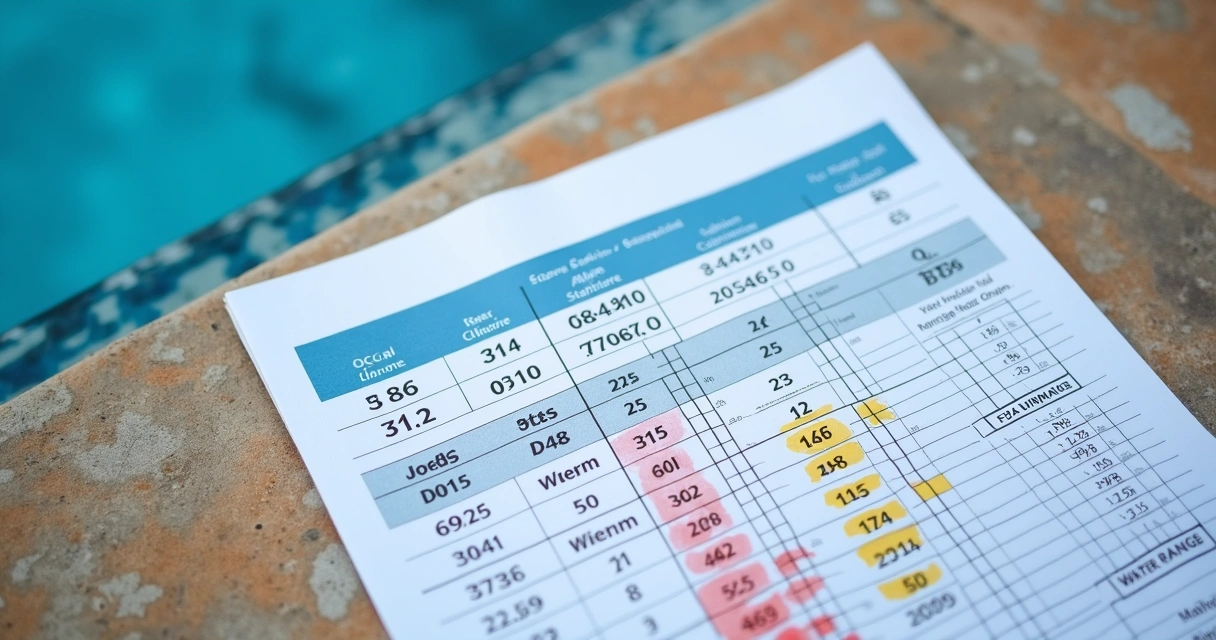
How to actually read a pool shop water test report
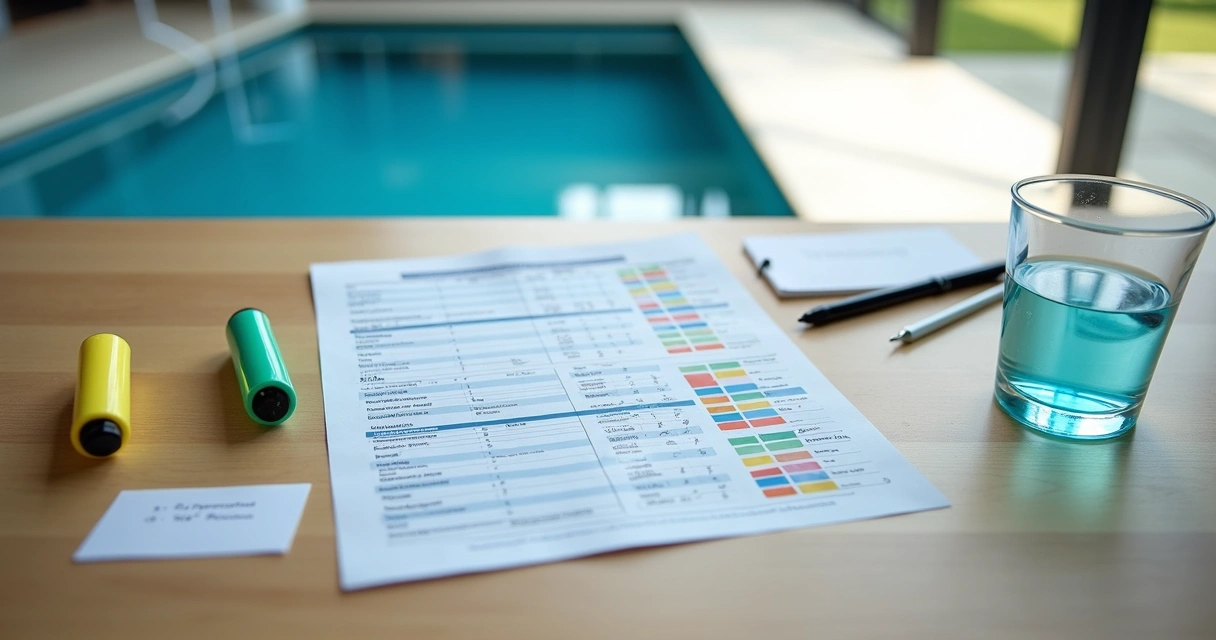
The format might look overwhelming—a mix of numbers, colors, sometimes bar graphs, and usually a spot for recommendations. Here’s exactly what I do each time I get a printout or colored strip:
- Find the parameter name in the left-hand column (e.g., 'Free Chlorine').
- Identify your result. It may be a number, a ‘pass/fail’ icon, or even a colored box.
- Check the ideal/target range. Most decent reports print this next to your value, or you can refer to the ranges already listed above.
- Look for out-of-range markers. Many shops use a red box/triangle, highlighting, or bold font for levels that are too high or too low.
- Ignore lines unrelated to your pool. For instance, salt is irrelevant for a chlorine tablet pool; copper/iron is only a concern if you have discolored spots or green water despite perfect sanitizer.
If your number is inside the ideal range, you’re good—no change needed.
I always cross-check recommendations printed on the sheet with what’s actually out of range. If something is flagged for “adjustment” but you’re happy with your water and numbers look good, question whether it’s really needed or just “routine shop advice.” There’s a handy discussion about this caution at Do I really need all the chemicals the pool shop recommends?.
Simple examples: Matching readings to what your pool needs
Here’s a common real-world situation—a friend just showed me this (values are mg/L unless stated):
- Free Chlorine: 0.5 (flagged low)
- PH: 7.6
- Total Alkalinity: 100
- Calcium: 180
- Stabiliser: 40
I would say:
- Chlorine needs a top-up, probably a shock dose. Everything else is fine—skip extra balancers.
- No reason to “boost” calcium or add more stabilizer. The numbers are healthy.
Focus on the flagged result that’s out of range; don’t just blindly add everything suggested by a generic checklist.
Common water imbalances and when to adjust
Sometimes you’ll notice a pattern on repeated printouts. Here are the most frequent “why did this happen?” scenarios and quick pointers:
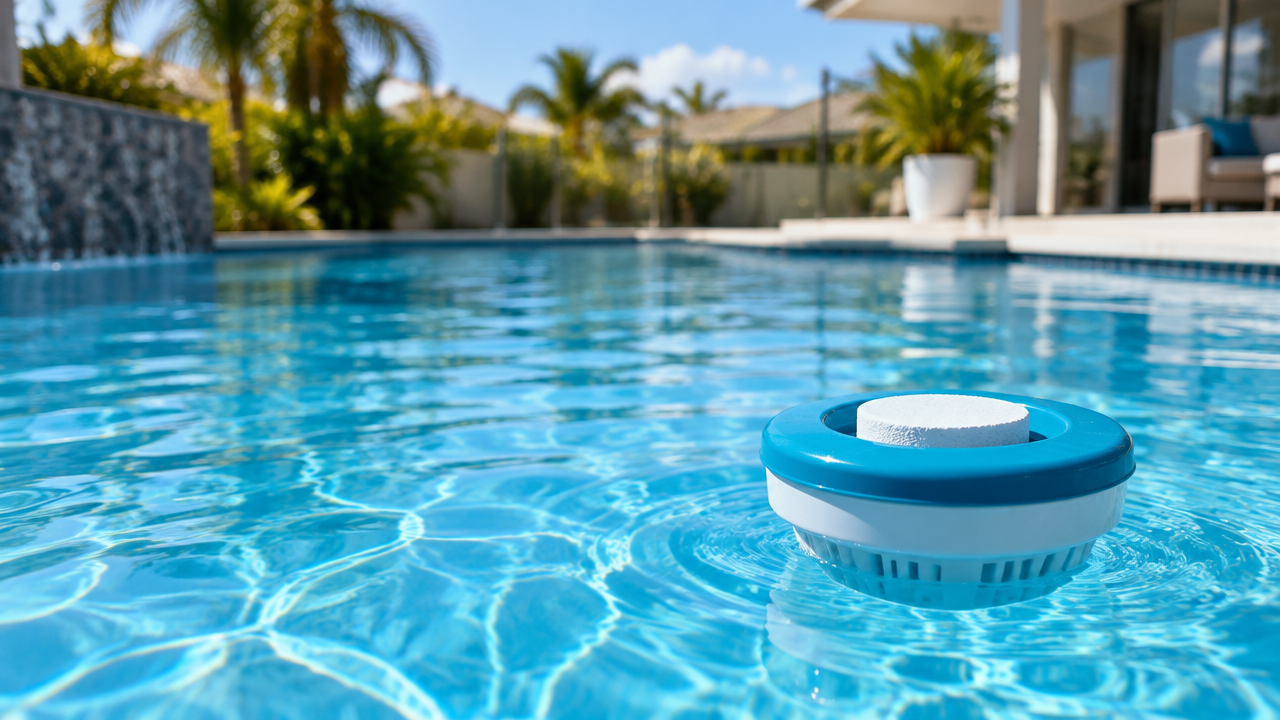
- Low chlorine from heavy rain, hot weather, excess use, or pump problems. This needs urgent action—follow a chlorine shock protocol before swimming.
- High pH or constant “drift” upwards: Usually tied to high alkalinity or lots of splashing/aeration. Lower with pH reducer only if consistently above 7.8.
- Crystal-clear water turning cloudy: Could be high calcium, overused clarifiers, or early algae bloom—check both pH and sanitizer.
- Green water? Double-check all parameters—chlorine, stabilizer, phosphate—and act quickly, not just with algaecide but by correcting underlying issues first.
- Spring/fall swings: The start or end of the swim season can change chemistry as temperatures shift, rainwater dilutes everything, or leaf build-up introduces new contaminants.
Best practice is to monitor the basics (pH and chlorine) at least every 2–3 days in summer and weekly in winter, which lets you spot trends early.
About chemical dosing
When it’s time to adjust levels, dose carefully—more isn’t always better. There are smart online calculators for exact amounts based on your pool size and water readings, such as the pool chemical calculator for dosing that I use. Always add chemicals slowly, preferably pre-dissolved, and allow time for them to circulate fully before testing again.
Always dose for your exact pool volume, not a “standard” backyard pool.
Manual interpretation vs digital and AI analysis
For years, I did all my water readings and calculations manually. I’d cross-check printouts against guidelines, scribble notes, and occasionally, still, miss a creeping issue. Now, tools like MyPoolMate have changed the way I approach this routine. Here’s how the two compare:
- Manual: You must match values to reference ranges, often from memory or handwritten notes, and decide whether (and how much) to dose based on generic advice. Mistakes usually mean wasted chemicals or missed issues.
- AI-powered tools: MyPoolMate lets me scan printed pool shop reports or enter results manually, stores my pool specifics, and flags what my unique pool actually needs—no overprescribing or “One Size Fits All” guesses. It keeps test history, spots trends, and customizes targets for my set-up and the season (hot summer, cooler winter, etc.).
Automatic tools save time and create a running “pool health diary”—no more searching for old slips or guessing what happened last winter.
What surprised me most was just how quickly MyPoolMate could spot a trend I’d otherwise only see after weeks—a gradual pH climb, or a stabiliser level that was inching too high. That’s the difference real analysis can make.
How to respond to flagged issues—practically and safely
When a report marks something in red, don’t panic. I keep it simple:
- If the sanitizer (chlorine) is low, act before anyone swims. Use a shock dose if needed, follow label instructions, and keep the pool uncovered to gas off any byproducts.
- If pH is off, only adjust if outside 7.2–7.8. Use acid or buffer, never both at once, and retest after several hours.
- For low calcium or stabilizer, add only what’s necessary for your volume—excess lasts for months and is hard to reverse.
- Mix chemicals separately, with gloves and eye protection, and never pour directly into a skimmer if possible.
- If out-of-range levels persist or your printouts don’t match what you see (water clarity, swimmer comfort), check for hidden sources like top-up water or debris.
I strongly recommend recording every result in a maintenance log—apps like MyPoolMate make this automatic, but even a notebook works. Reviewing your own history can reveal tiny changes that help anticipate or prevent larger problems.
For organic build-up, stains, or recurring dullness, using enzymes can be a smart preventative measure, as covered in guidance like this article about pool enzyme care.
Building a pool care routine based on test results
Knowledge is nothing without routine action. Here’s what I recommend—backed by years of not only reading reports but also fixing others’ neglected backyard pools:
- Test chlorine and pH at least twice a week in summer, weekly in off-season, as recommended by Better Health Channel.
- Log each result to spot any long-term drift (apps really shine here, building a chart of your own).
- After adjusting, always retest before “double-dosing.” Many issues can be fixed in a single round, not endless back-and-forth.
- If anything keeps slipping out of range, investigate for underlying issues—chlorine demand (heavy rain, algae, leaves), undetected leaks, or incorrect pool volume estimation.
- Use digital analysis like MyPoolMate to help interpret tricky or conflicting readings, and get a second opinion tailored to your pool.
The more you record and review, the quicker you’ll understand what your pool really needs.
Conclusion: Take full ownership of your pool’s water
I spent years feeling slightly nervous—or skeptical—about those slips of paper from the pool shop. Now, I see them as a friendly check-in, a way to keep my family’s swimming safe, comfortable, and affordable. If you learn to read each parameter, match it to your pool, and challenge every “automatic” recommendation, you will save effort, avoid nerves, and enjoy crystal-clear water all year.
If you want to experience the power of AI for your pool, keep records, and only buy what’s truly necessary, I invite you to try MyPoolMate for yourself. Your water, your way.
Frequently asked questions
What do pool test results mean?
Pool test results are a snapshot of your water’s core chemistry (sanitiser, pH, alkalinity, calcium, and stabiliser), indicating whether your water is safe, comfortable, and protecting your pool itself. Each parameter must be within a specific range to avoid health, cloudiness, staining, or expensive damage. Out-of-range numbers mean you may need to add or reduce certain chemicals for best results.
How to read a pool test report?
Start by matching each result to the ideal range for Australian pools—often provided on the test printout or in summary tables like those above. Review which numbers are flagged “low” or “high,” ignore any lines for chemicals not used in your pool, and act only on the readings that matter. For unfamiliar terms, refer to a user guide or services like MyPoolMate which can translate the numbers into clear actions.
What is balanced pool water?
Balanced water keeps all parameters (chlorine, pH, alkalinity, calcium, stabiliser) within their safe and effective limits. It prevents corrosion, scaling, cloudy water, and unsafe swimming. Regular balanced results mean less stress, fewer chemicals, and more days of trouble-free swimming.
Which pool chemicals do test results show?
Standard pool shop tests usually report on free chlorine (sanitizer), pH, total alkalinity, calcium hardness, and stabiliser (cyanuric acid). Some printouts add salt (for saltwater pools), phosphate, or trace metals such as copper, mainly for advanced troubleshooting.
How often should I test my pool water?
Australian health authorities and my own experience recommend testing pH and sanitizer at least twice per week during summer and after big events like storms or parties, and at least weekly during winter. Monitoring more often helps spot changes and keeps your pool safer, cleaner, and simpler to manage.