

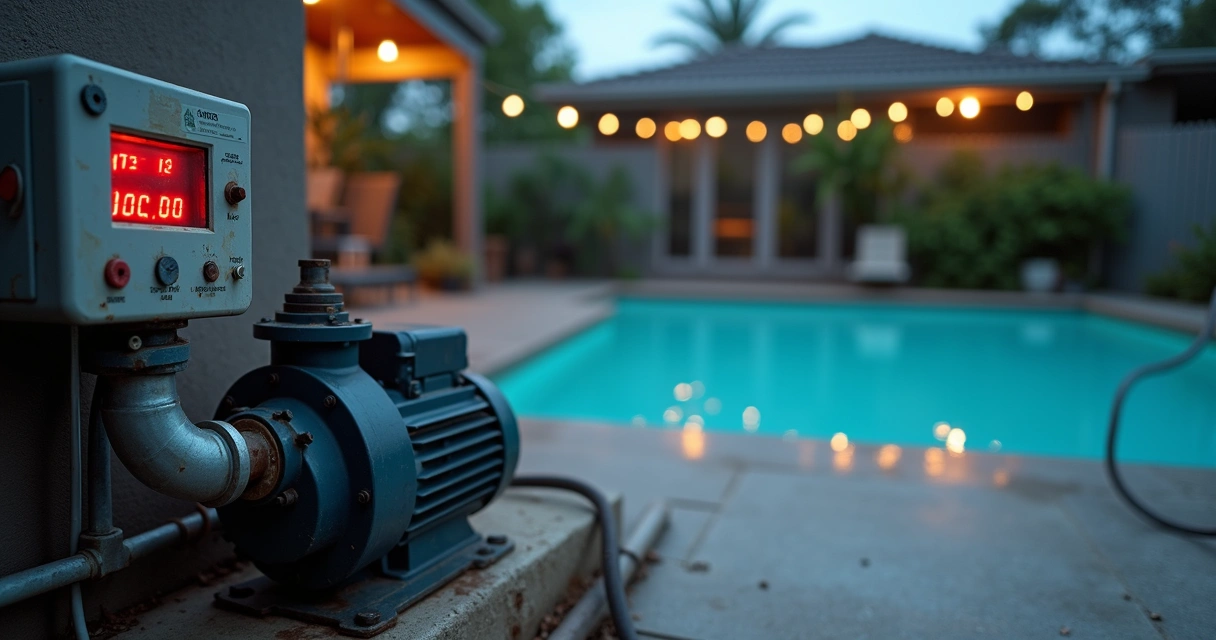
I have seen many pool problems start with the water, but the real cause was the equipment. The water turned cloudy, chlorine vanished, or the pump sounded wrong. Then the repair bill grew because the warning signs were missed.
Pool equipment rarely fails without warning.
If you spot the clues early, you can avoid bigger damage, wasted chemicals, and days of poor swimming conditions. That matters even more in Australia, where warm weather can push a small issue into an algae problem very fast. I also think it helps to pair routine checks with a tool like MyPoolMate, because tracking water results and maintenance history makes equipment problems easier to spot.
What early trouble looks like
When I inspect a pool setup, I do not just look for broken parts. I look for patterns. A pressure change. A sound that was not there last month. A pump basket that never fills right. Small signals matter.
Here are 13 signs your pool equipment needs repair or replacement fast.
1. The pump is making loud or strange noise
A healthy pump has a steady sound. If it starts grinding, screeching, rattling, or whining, I take that seriously. It may point to worn bearings, a failing motor, or debris where it should not be.
Left alone, that noise often turns into a full shutdown.
2. Water flow is weaker than normal
If the return jets feel weak, or your cleaner is moving slowly, poor flow could be the first sign of trouble. I usually check for a blocked basket, dirty filter, suction leak, or pump issue. If the flow keeps dropping after basic cleaning, the equipment may need repair.
Weak circulation is one of the clearest signs that your pool system is struggling.
3. The pump keeps losing prime
I have seen this one frustrate pool owners because it comes and goes. The pump fills with water, then air gets in and the flow breaks. This often means an air leak on the suction side, low water level, or a worn lid O-ring.
If you want a practical walkthrough, I suggest reading this step-by-step guide to priming your pool pump. If priming becomes a regular battle, something deeper is wrong.
4. The filter pressure stays too high or too low
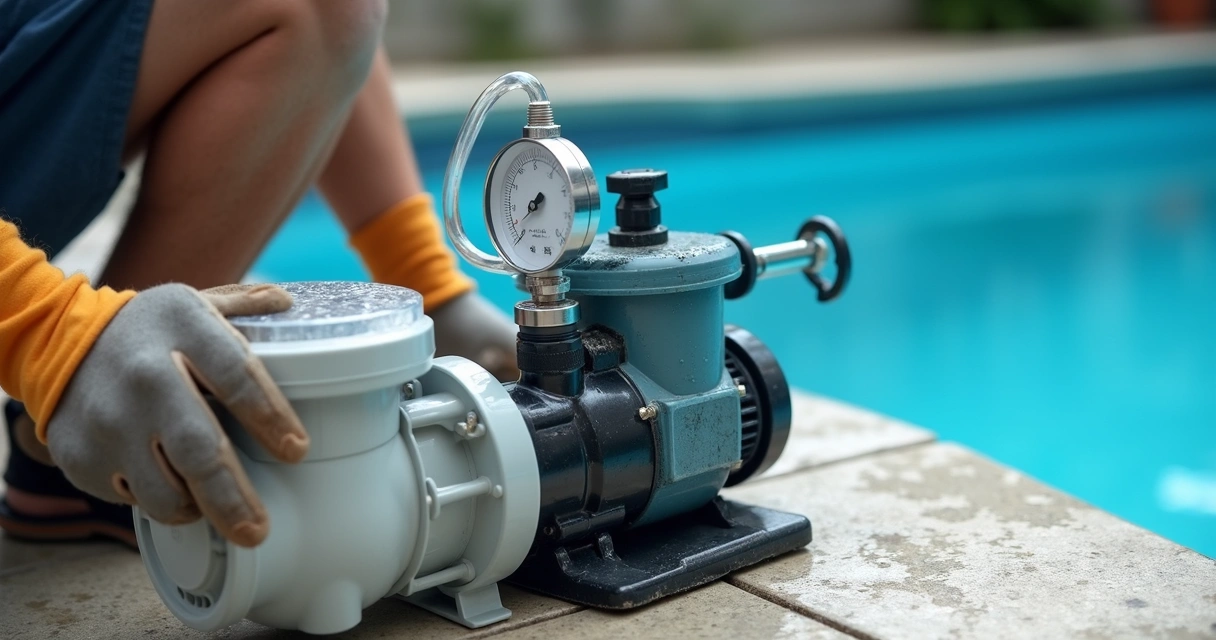
Your pressure gauge tells a story. High pressure often means the filter is dirty or blocked. Very low pressure can point to a suction issue, clogged impeller, or failing pump. I always compare the reading to the system’s normal clean baseline.
When the pressure stays abnormal after cleaning, I stop guessing and inspect the equipment more closely.
5. There are visible leaks around equipment
A small drip may not look dramatic, but I never ignore it. Water around the pump, filter, heater, or chlorinator can mean cracked housings, bad unions, failing seals, or pressure stress. Over time, leaks can damage nearby parts and even the pad surface.
Leaks grow.
If I see wet patches that return after drying the area, I treat that as a repair sign, not a cosmetic issue.
6. The filter needs constant cleaning to keep up
Filters need cleaning, of course. But if your cartridge clogs much faster than it used to, or the filter cannot hold clear water for long, the filter media may be worn out. In my experience, many people keep cleaning a part that is already past its working life.
For cartridge systems, this step-by-step guide to cleaning a pool filter cartridge is useful. If proper cleaning does not restore normal performance, replacement may be the smarter move.
7. Your salt chlorinator is not keeping chlorine up
When chlorine stays low even though salt and run time seem fine, I look at the salt cell. A dirty, worn, or failed cell can stop producing enough chlorine. This can look like a water chemistry issue at first, but the equipment may be the true cause.
MyPoolMate is helpful here because it lets you compare test history over time instead of relying on one reading. If chlorine output has been fading for weeks, that trend often points to the cell.
You can also check this guide to see if your pool salt cell is working.
8. The heater takes too long or will not start
If your heater struggles to fire up, shuts off early, or takes much longer to warm the pool, I would not wait too long. Heater faults can come from flow issues, sensor failures, ignition trouble, or internal scale buildup.
Slow heating is not just annoying. It can signal wear that gets more expensive if ignored.
9. Breakers trip when equipment runs
This one needs fast attention. If the pump, heater, or chlorinator trips the breaker, there may be an electrical fault, motor problem, or moisture getting where it should not. I do not recommend treating that as random.
If pool equipment is tripping power, stop using it until it is checked safely.
10. Rust, cracks, or burnt marks are visible
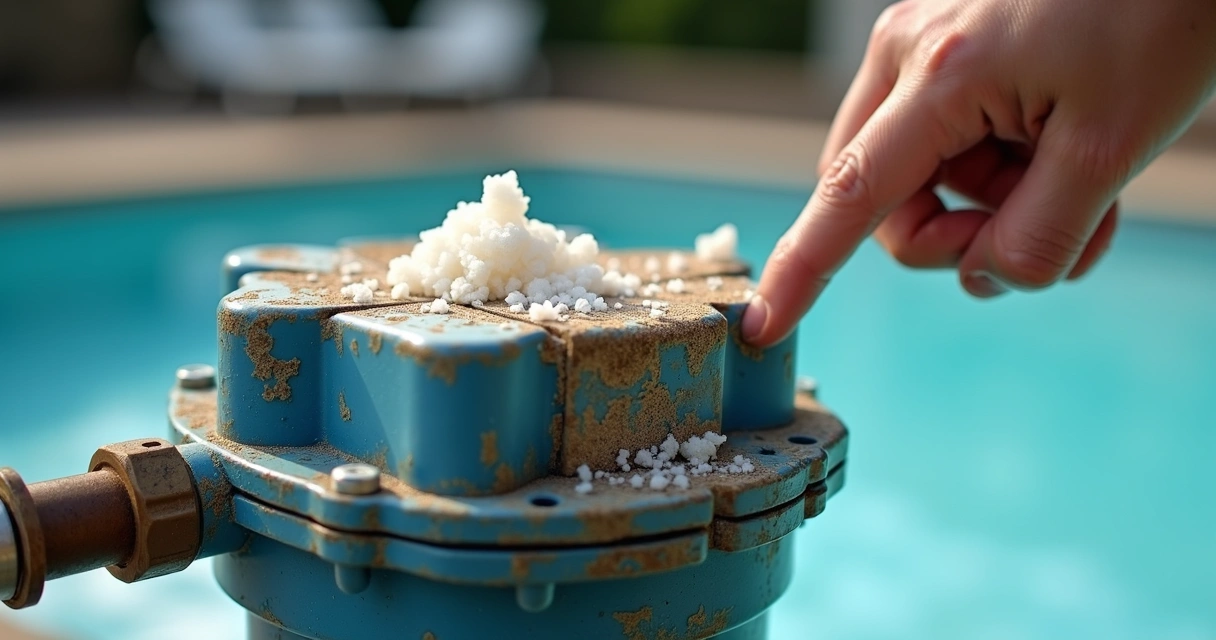
I trust my eyes. Corrosion on metal parts, cracked housings, warped plastic, and burnt wiring smells are all signs that a part may be near failure. Outdoor pool equipment takes a beating from sun, heat, salt, and moisture, so surface damage should never be brushed aside.
Even one cracked union or brittle valve can lead to a bigger plumbing problem.
11. The cleaner stops moving or misses large areas
If your automatic cleaner used to cover the pool well and now does not, that can mean more than a cleaner fault. I often trace this back to weak suction, bad pressure, worn hoses, or circulation issues upstream.
When cleaning patterns change, equipment performance should be checked as a whole.
12. Your power bill jumps without a clear reason
An old motor, blocked system, or failing component can run longer and draw more power. I have seen owners blame seasonal use when the real issue was a pump working too hard. If your electricity cost rises but your pool habits have not changed much, I would inspect the equipment.
That is another place where record keeping helps. MyPoolMate can make it easier to match water balance, run time, and maintenance patterns with system changes.
13. Water quality keeps getting worse despite proper treatment
This is often the final sign. If you balance the water, clean the pool, and still battle cloudy water or algae, poor equipment performance may be blocking recovery. Bad circulation, weak filtration, or low sanitiser output can undo good chemical care.
For seasonal care and local conditions, I like to review broader maintenance habits too. This pool maintenance section and this Queensland pool maintenance guide can help you connect equipment issues with day-to-day pool care.
When repair makes sense and when replacement is better
I usually ask three things before deciding. How old is the unit? How often has it failed? Is the repair cost close to a large share of replacement cost?
- If the problem is a seal, basket lid, union, or sensor, repair may be enough.
- If the motor is old, the housing is cracked, or failures keep returning, replacement often makes more sense.
- If poor equipment is causing chemical waste, acting sooner can save money over time.
When a pool system cannot hold stable water after basic care, equipment should move to the top of the suspect list.
Conclusion
I think the biggest mistake is waiting for a total breakdown. Most pool equipment gives warnings first, and those warnings are easier to deal with than a dead pump in hot weather. If you notice odd sounds, leaks, pressure changes, weak chlorine output, or stubborn water problems, act fast. If you want a clearer picture of what your pool is telling you, get to know MyPoolMate and use it to track tests, tasks, and patterns before small equipment issues turn into bigger ones.
Frequently asked questions
What are common signs of pool equipment failure?
Common signs include loud pump noise, leaks, low water flow, odd filter pressure, poor chlorine production, tripped breakers, visible cracks, and water that stays cloudy even after treatment. I find that repeated small issues often point to one failing part in the system.
How much does pool equipment repair cost?
Repair cost depends on the part and the fault. Small fixes like seals, unions, or basic service work can be modest, while motor, heater, or chlorinator repairs can cost much more. In my experience, the best approach is to compare the quote with the age and condition of the equipment.
Is it worth it to replace old pool equipment?
Yes, sometimes it is. If the equipment is aging, breaks down often, or no longer keeps the pool stable, replacement can be the better choice. I usually lean toward replacement when repair costs keep returning or when one old unit is causing wider water care problems.
How often should I check my pool equipment?
I recommend a quick visual check every week and a closer check each month. Look at pressure, leaks, flow, noise, and chlorinator output. During summer or heavy use, I would check even more often because problems tend to grow faster in warm weather.
Where to find reliable pool equipment repair?
I suggest looking for a qualified local pool technician or licensed trade professional who works with residential pool systems. It also helps to keep clear records of symptoms, test results, and maintenance history. That is one reason MyPoolMate can be useful, because better records make diagnosis faster and more accurate.


