

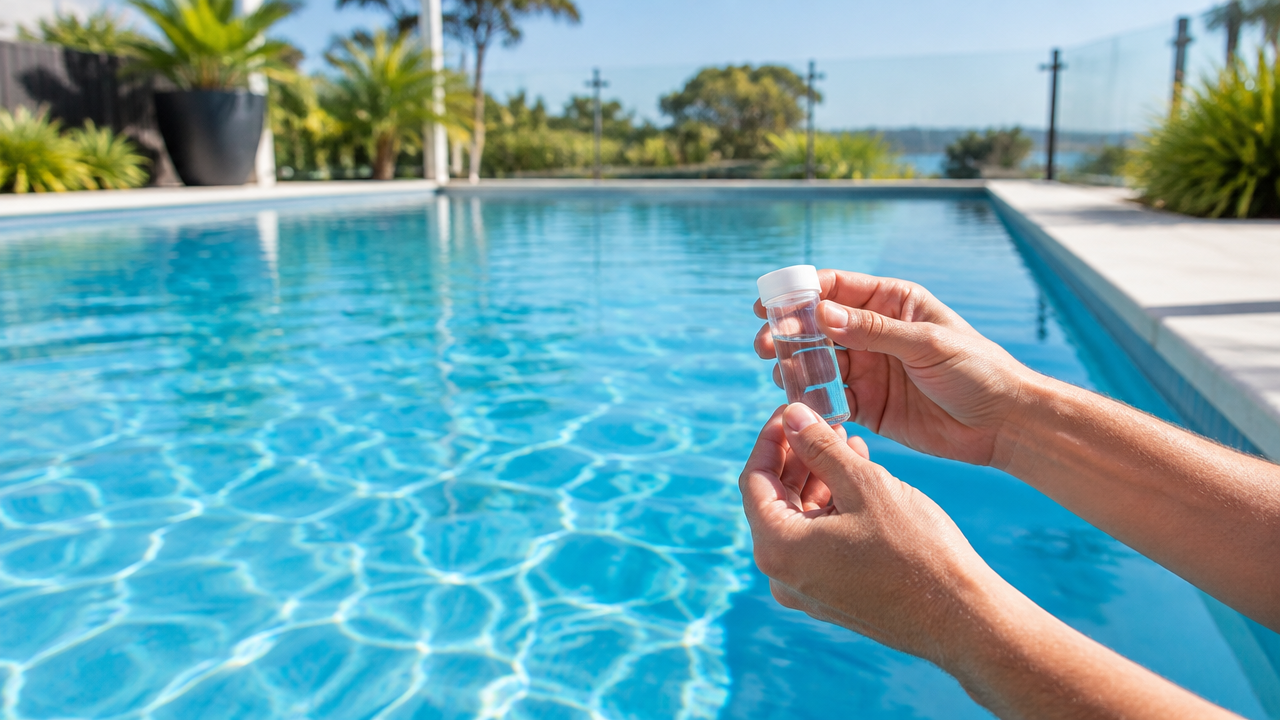
Pool stabiliser is cyanuric acid, a chemical that helps protect chlorine in outdoor pools from breakdown in sunlight. It can be useful for Australian pools exposed to strong sun, but adding more is not always better: too much can make chlorine less effective. Check your water and sanitising method before dosing.
Key points for pool owners
- Stabiliser helps outdoor chlorine last longer in sunlight, but it is not a disinfectant.
- It is usually unnecessary for indoor pools and bromine systems.
- Stabiliser can build up because it is not lost as quickly as chlorine.
- Some chlorine tablets add stabiliser as they dissolve, so include them in your checks.
- Use your pool’s actual test results and product instructions, not a guessed dose.
How does stabiliser protect chlorine?
Cyanuric acid loosely binds with chlorine in the water, helping reduce the amount sunlight breaks down. That can make chlorine levels more stable in a sun-exposed pool, especially during long, bright Queensland days. NSW Health explains that cyanurate helps minimise chlorine degradation by ultraviolet light.
There is a trade-off: as stabiliser rises, chlorine’s disinfecting action can be reduced. Stabiliser does not kill germs, clear algae or replace maintaining the right chlorine and pH for your pool. For a broader guide to cyanuric acid levels and imbalances, consider how the reading fits with your other results.
Does your pool need stabiliser?
An outdoor pool sanitised with chlorine may benefit from stabiliser if sunlight is rapidly reducing its chlorine reading. That includes saltwater pools: a salt chlorinator produces chlorine, so sunlight can still break it down. Stabiliser does not fix a faulty chlorinator, poor circulation, algae or an unsuitable pH.
It is generally not used for indoor pools, where sunlight is limited, or bromine pools. Check your equipment instructions and sanitiser type before adding it. If the pool is losing chlorine quickly, first test the water and review recent dosing, filtration and pool use rather than assuming the stabiliser is low.
What stabiliser level should you aim for?
There is no single target that suits every residential pool. The right reading depends on the sanitising system, products used and the guidance you follow. NSW Health’s outdoor pool guidance identifies about 30 mg/L as an optimal level and 50 mg/L as an upper limit in its operating context, but those figures should not be treated as a universal target for every home pool.
Use a reliable cyanuric acid test and compare the result with your pool equipment and product instructions. If you receive a pool-shop report, make sure the stabiliser reading is included and understood. This guide to reading pool shop test results can help you interpret the numbers before adding chemicals.
How should you add stabiliser safely?
Add it only when a test shows it is needed, and use the product label for the correct dose and application method. Different formulations can have different instructions, so do not assume a dose from another pool applies to yours.
- Confirm your pool volume and current cyanuric acid reading.
- Check whether your chlorine tablets or granules already contain stabiliser.
- Calculate a dose for your pool and follow the product label exactly.
- Keep chemicals separate, and avoid scattering concentrated product on the pool surface.
- Allow it to dissolve as directed, then retest before adding more.
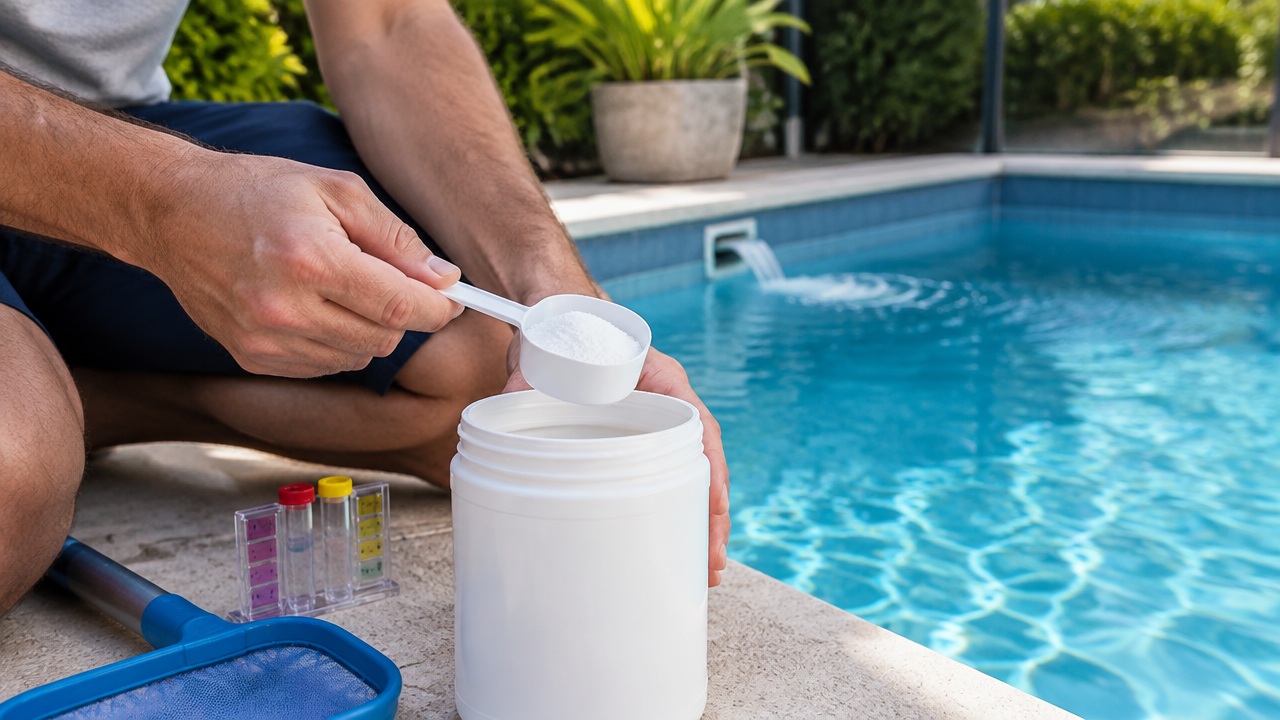
Do not swim while undissolved chemical is visible, and follow the label’s instructions about when swimming can resume. If you are unsure about the application method, ask a pool professional before dosing.
What if the stabiliser reading is too high?
Stop adding stabiliser and check whether your chlorine product contains cyanuric acid. Some stabilised chlorine products add it over time, so continued use can push the reading higher even when you are not dosing separate stabiliser. NSW Health notes that excessive cyanurate can reduce chlorine’s disinfecting power.
Retest to confirm the result before taking action. Dilution through partial draining and refilling may be considered, but it is not automatically suitable for every pool. Ask a pool professional about your pool’s construction, water conditions and local requirements before draining. For a closer look at how chemical products differ, see this guide to pool chemicals in Australia.
Keep stabiliser in balance with the rest of your water
Stabiliser works best as one part of a measured water-care routine, not as a stand-alone fix. Check chlorine, pH and cyanuric acid together, and account for chlorine products that contribute stabiliser. Avoid adding chemicals just because a generic recommendation suggests it.
MyPoolMate helps Australian pool owners track test history and pool details, then get recommendations based on their own pool. You can enter results manually or use its AI scanner to read printed pool-shop results. Splash, the pool-aware AI assistant, can help you make sense of the readings before you decide what your pool actually needs.
Frequently asked questions
Is baking soda the same as pool stabiliser?
No. Baking soda is sodium bicarbonate, used mainly to raise total alkalinity. Pool stabiliser is cyanuric acid, which helps limit chlorine loss from sunlight. They do different jobs, so one cannot replace the other. Check both readings before choosing a treatment, and adjust each parameter for its own purpose.
How long does pool stabiliser last?
For most outdoor chlorine pools, stabiliser remains in the water until it is diluted by splash-out, backwashing, draining and refilling. It is not used up like chlorine. Check its level before adding more, especially if you regularly use chlorine tablets that already contain cyanuric acid.
Can I add stabiliser and chlorine at the same time?
Do not mix stabiliser with chlorine or combine dry pool chemicals. Their compatibility and application instructions depend on the product. Follow each label, dose chemicals separately as directed, and retest before making another adjustment. Never put different chemicals together in a bucket or feeder unless the manufacturer specifically instructs you to.
Can you put too much pool stabiliser in?
High stabiliser can make chlorine less effective, and ordinary chlorine dosing will not quickly remove excess cyanuric acid. Confirm the result with a reliable water test, then ask a pool professional whether partial draining and refilling is suitable for your pool and local conditions.
How do you know if your pool needs stabiliser?
Check your cyanuric acid reading first. Outdoor chlorine pools may benefit from stabiliser, but indoor pools and bromine pools generally do not need it. If the level is low, choose a product suited to your sanitising system and follow its label. Recheck the water before adding another dose.


