
Algae bloom. Cloudy water. If you’ve ever arrived at your pool, towels ready and sunscreen on, only to find it tinted green or murky, you know exactly how that feels. The disappointment is real, and the frustration is worse when you remember the hours spent cleaning, testing, filtering, and the extra money for emergency chemicals. Algae can turn your pool from sparkling to unusable almost overnight, and fixing it is far harder, costlier, and more time-consuming than preventing it in the first place.
Here’s what many pool owners still don’t realise: Algae can’t grow unless there are phosphates in your water. The more phosphates your pool holds, the faster and thicker algae will come. Ignoring phosphates until it’s too late often results in cloudy, unswimmable water for days or even weeks. In my own experience, prevention is always easier than cure when it comes to phosphates and algal outbreaks. The smartest way is to pretreat with a phosphate remover before algae gets any momentum.
In this article, I’ll explain step-by-step how to control phosphates, why early action matters, the difference between reducing and maintaining, and what you can do to keep your pool clear, healthy, and fun all season long. MyPoolMate was built around expert pool chemistry management, and I firmly believe anyone can keep control with the right knowledge – and the right approach.
What are phosphates, and why do they matter for algae?
Phosphates are minerals found everywhere: in rainwater, leaves, soil, on swimmers, and in certain pool chemicals. Every time the wind blows debris in, or when pets jump in, a little more phosphate makes its way to your pool. Unfortunately, algae feast on phosphates as their top food source. Without phosphates, even in warm water and sunlight, algae can’t thrive.
Phosphates act as the fuel that lets algae multiply in your pool water. The higher the phosphate concentration, the faster an outbreak appears, and the harder it is to clean up. This is why phosphate removal is at the heart of stopping algae before it starts.
Why treating early works better than waiting for trouble
Over the years I’ve met many pool owners who put off phosphate control, thinking they’ll handle it if and when algae appears. More often than not, that wait-and-see method comes back to bite:
“The best time to remove phosphates is before algae takes hold.”
Once the green slime appears, the pool often clouds up, filters clog, and extra chlorine can’t quite keep up. I’ve seen recovery take over a week with steady brushing, vacuuming, adding clarifiers, and running filters day and night. That means no swimming, and plenty of expense along the way.
On the flip side, when I treat phosphates early or use a maintenance dose, I almost never run into major algae or cloudiness. The pool stays sparkling and chemical needs are lower. This is why pretreatment with phosphate remover is my go-to strategy, well before algae shows up.
How to address phosphates: reducing vs maintaining
The right tactic depends on your starting point:
- High phosphate levels already? It’s time to reduce them using a strong, safe, professional-grade phosphate remover. This will neutralize as much phosphate as possible, often in one full dose.
- Phosphates already low, but want to avoid any build-up? Keep it that way with a weekly maintenance product. A top pick is one that combines phosphate removal with broad-spectrum enzymes – these help break down oils and organic waste, which often bring phosphates with them.
Products like Lo-Chlor’s Lo-Phos E+ (with high-power enzymes) or Lo-Phos Max are designed exactly for these roles. When using them as directed, I’ve found mineral levels stay in check, meaning much less brushing, less filter cleaning, and rarely any scum lines around the waterline.
Signs your pool needs phosphate treatment
While phosphate test kits exist, many pool owners learn to recognize hidden phosphate build-up by these telltale symptoms:
- Frequent algae reappearing soon after shock or clean-up
- Persistent cloudy water, even after balancing pH and chlorine
- Scum lines forming at the waterline
- Unusually high filter pressure, indicating filter clogging with organic debris
- Surface spots or scale patches that don’t brush away easily
When you notice two or more of these signs, it’s worth testing for phosphates and planning a strong treatment. If you want to learn more about typical signs your pool may need treatment, check the pool health warning signals in this article.
Step-by-step: reducing high phosphate levels
When a test or visible water problems point to high phosphates, act quickly:
- Test your water and confirm phosphates are above the safe threshold (usually 200ppb or higher).
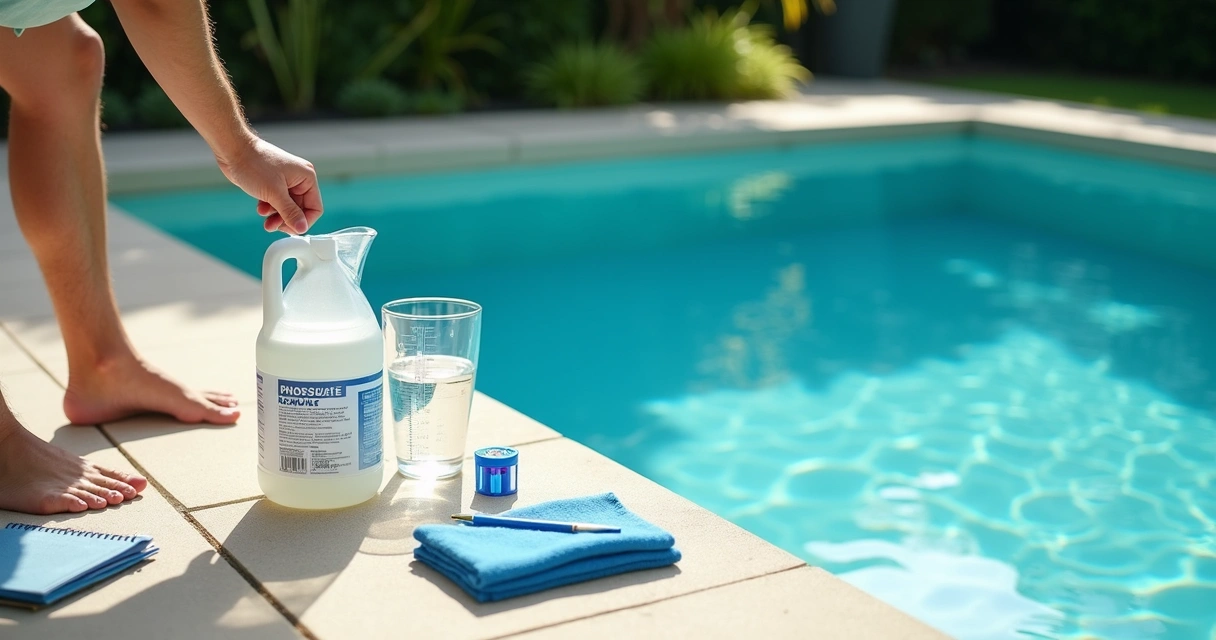
- Add a strong phosphate remover like Lo-Chlor Lo-Phos Max, following label directions based on pool volume.
- Expect some temporary water clouding. This is normal and shows phosphates are being pulled from the water.
- Run your filter continuously for 24–48 hours, cleaning/ backwashing as needed.
- Use a clarifier next. This helps trap leftover particles in the filter, speeding up the clean-up. Learn more about clarifiers and organic removal here.
- Retest for phosphates after a few days.
- Re-treat if needed until levels are below 100ppb.
By the time this process is done, most pools will be clear, bright, and ready for swimming. I always advise brushing walls and vacuuming to help move dead algae into the filter during this process.
Step-by-step: maintaining low phosphate levels
Keeping phosphates low takes far less effort than a big clean-up:
- Choose a maintenance phosphate remover combined with enzymes, like Lo-Phos E+, for weekly or biweekly use.
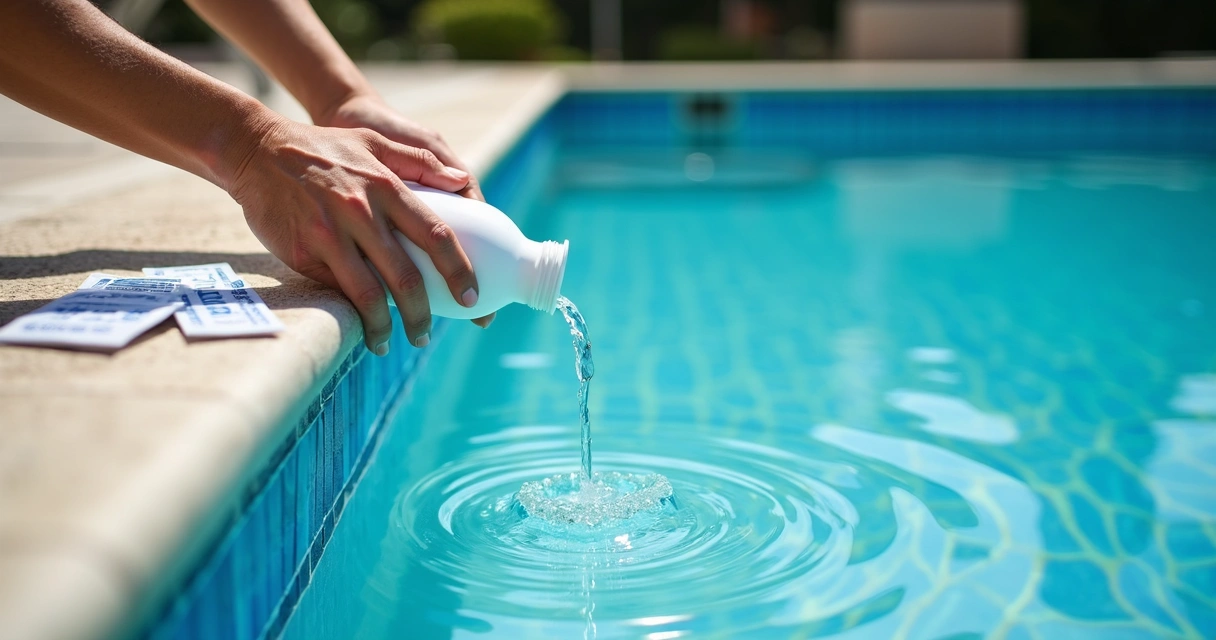
- Add the product as directed, usually by pouring around the pool edge or into the skimmer while the pump is running.
- Brush lightly and let your filter run, especially after heavy use or leaf falls.
- Test occasionally for phosphates to confirm they stay under 100ppb.
I find this routine keeps my water clear and the need for chlorine and algaecide low – especially during summer storms or pollen-heavy weeks. For help working out the right dose, you may find the chemical calculator here useful.
Extra advice on filter cleaning and clarifiers
When you treat high phosphates, filters go to work trapping the particles you’ve targeted. If you leave filters dirty, you risk all those phosphates going right back into the water. That’s why I always:
- Backwash or clean cartridges right before and again after phosphate treatment
- Add a clarifier to assist the filter in grabbing the smallest bits
- Keep an eye on filter pressure – rinse as needed if it spikes
“A clean filter and clarifier after phosphate removal make all the difference.”
I’ve noticed faster clearing and fewer problems when I make filter cleaning a habit as part of my phosphate control plan. For more insight into filter-friendly chemical routines, see tips on proper pool chemistry on the MyPoolMate blog.
The ongoing benefits of keeping phosphates low
Why make phosphate control a routine, not just a one-off? From my experience, it’s because keeping levels low prevents:
- Algae blooms and the headaches they cause
- Cloudy water that’s tough to clear after storms or heavy use
- Waterline scum, which looks bad and is hard to scrub off
- Chlorine overuse – less waste means fewer top-ups needed
- Filter clogging and added pump pressure
- Surface spots that can lead to long-term blemishes or scale
If you prioritise phosphate maintenance, your pool simply runs more smoothly. You’ll spend less on chemicals and labour in the long run, and your water will always look inviting – the real goal for any pool owner. Routine phosphate testing and enzyme treatment, as recommended above, are central to balanced pool care and to the mission behind MyPoolMate.
When to use each treatment: practical examples
I’ve seen excellent results by adjusting my approach based on real signs:
- After a heavy rainstorm, windstorm, or backyard landscaping, I always use a maintenance dose to neutralize new phosphates brought in.
- If I’ve let pool cleaning slip for a few weeks, or after a visible algae spot, I switch to a big one-off treatment.
- During pollen season or after big pool parties, I keep up with weekly enzyme-based removers.
Regular cleaning, filter rinsing, and phosphate control keep water safe, clear, and swim-ready. Waiting for a problem to show up first only turns small tasks into big ones.
Related issues linked to phosphate build-up
Some water problems might sneak up before an actual green bloom. Watch for:
- Waterline scum (sticky residue along the tiles)
- Surface spots, especially white or pale scaling marks
- Rising filter pressure, even though your water looks clear
- Cloudiness after storms or hot spells, with no pH or chlorine explanation
Each of these can have several causes, but in my experience, hidden phosphate build-up is almost always part of the puzzle. Treating with the right remover and keeping up with weekly product and filter care help prevent the cycle from starting all over again. For extra pool chemistry troubleshooting, check out the article on dosing pool chemicals properly.
Conclusion: clear water, easy maintenance, lower costs
What I really want you to know is this: preventing algae using phosphate removers is simple, effective, and saves far more time and money than dealing with algae after it appears. Strong products like Lo-Chlor Lo-Phos Max or E+ make the job straightforward, and enzyme cleaners work behind the scenes to keep organic waste and phosphates out of your pool for good. The result is less brushing, fewer chemicals, clear water, lower filter maintenance, and most of all, a pool you can enjoy whenever you wish.
If you’re ready to take the guesswork out of pool care and have personalised advice for your setup, try MyPoolMate. Our AI-powered water analysis and pool management features make it easier to stay ahead of algae, phosphates, and every other challenge Australian pool owners face. Experience a safer, better-looking pool and more free weekends for yourself.
Frequently asked questions
What is a phosphate remover?
A phosphate remover is a pool treatment product that binds or eliminates phosphates from water, starving algae of their food source. These are usually added as a liquid to the pool, where they capture and remove phosphate particles so they can be filtered out. I’ve found they come in a range of strengths, from maintenance doses to powerful, professional options.
How do phosphate removers stop algae?
Phosphate removers limit algae growth by taking away the phosphates algae need to survive and multiply. With little or no phosphate present, even in warm, sunny conditions, algae can’t form or spread. I always recommend pairing removers with filtration and brushing for best results.
Are phosphate removers safe for fish?
Most phosphate removers are intended for swimming pools, not for ponds with live fish. While some products claim to be fish-safe after thorough dilution and filtration, I always suggest reading the product label and manufacturer guidelines carefully before using around fish. For swimming pools, when used as directed, they’re generally safe for people and pets who swim.
How often should I use phosphate removers?
For prevention, a weekly or biweekly maintenance dose keeps levels low and avoids trouble. If you’re tackling a serious phosphate build-up, follow with a concentrated treatment and frequent filter cleaning, then continue with weekly doses once levels drop. Seasonal surges, like after storms or heavy leaf fall, may call for extra attention.
Where can I buy phosphate removers?
Most pool supply retailers and professional chemical shops carry strong phosphate removers, including enzyme-enhanced maintenance formulas. For best results, ask for Lo-Chlor’s Lo-Phos line, as mentioned above. MyPoolMate does not sell chemicals directly, but we help guide you to the right product for your specific pool through personalised treatment recommendations and ongoing water analysis.