
I have seen many backyard pools go cloudy not because the owner was careless, but because the routine was unclear. Pool care sounds technical at first. In practice, it is a set of small jobs done in the right order. If I had to explain pool maintenance in simple terms, I would say this: keep dirt out, keep water balanced, and keep your equipment running well.
That matters in Australia, where heat, storms, leaves, and heavy pool use can change water fast. Public aquatic sites across the country are under pressure too, with findings summarised by ABC News about ageing swimming pools in Australia showing how much attention water spaces need over time. For homeowners, a steady routine is much cheaper than fixing a neglected pool.
Small checks stop big problems.
Start with a simple weekly routine
When I help someone build a home pool care habit, I suggest a short weekly sequence. It is easy to follow and it works for most residential pools.
A good weekly pool routine starts with cleaning, then testing, then chemical adjustment.
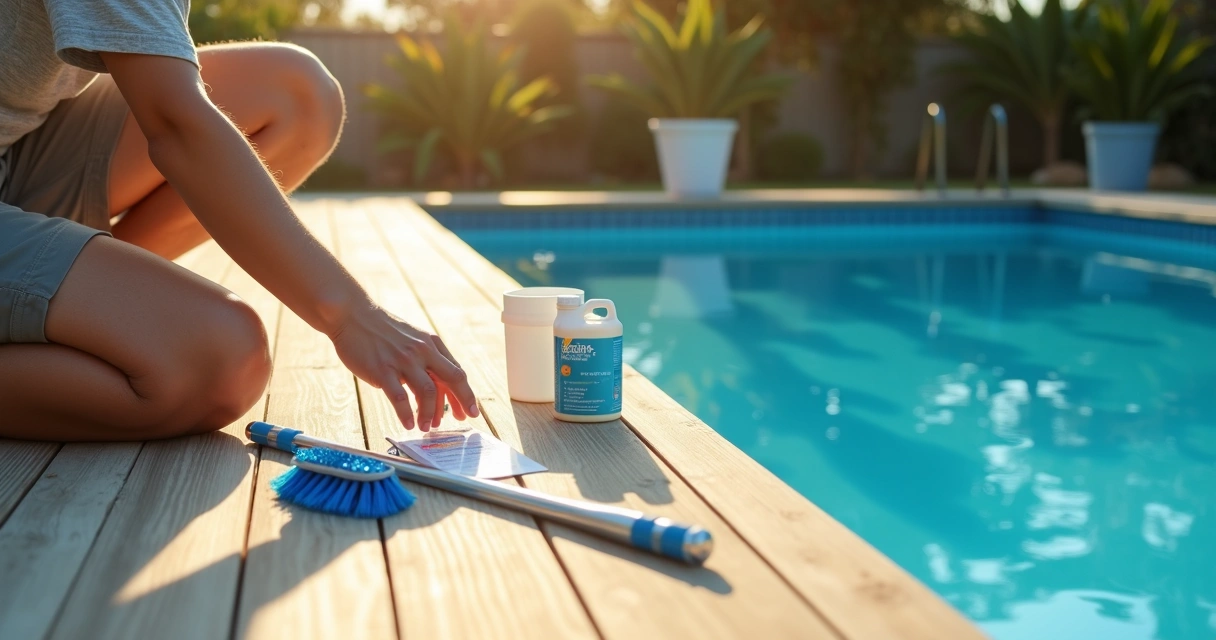
Here is the order I recommend:
Skim the surface to remove leaves, insects, and fine debris.
Empty skimmer baskets and the pump basket.
Brush walls, steps, corners, and the waterline.
Vacuum the floor, either manually or with an automatic cleaner.
Test the water and record the results.
Adjust chemicals one at a time, based on the test.
I like this order because dirt and organic matter can affect test readings and chlorine demand. If the pool is cleaner first, the water result makes more sense.
If you live in a warmer state, this Queensland pool care guide is a useful extra read, especially for conditions that stay hot and wet for long periods.
How I clean the pool properly
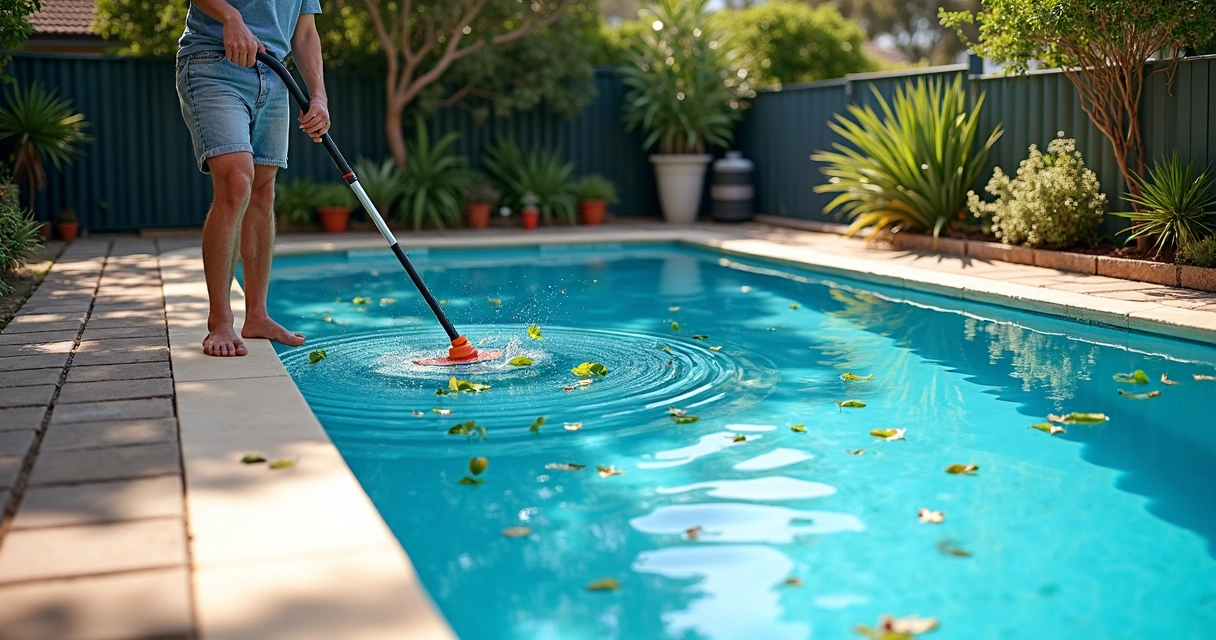
Skimming is the fastest job, but it should not be the only one. Leaves that sink or stick to walls feed stains and algae. I have seen owners skim every day and still wonder why the floor feels slimy. The missing step was brushing.
Skim the surface two to four times a week in summer.
Brush hard-to-reach spots at least once a week.
Vacuum weekly, or more often after wind and rain.
Brushing breaks up algae film before it becomes a visible bloom.
Pay extra attention to steps, corners, ladders, and behind lights. These are low-flow areas where growth starts. If your pool gets lots of dust or gum leaves, more frequent vacuuming will save you trouble later.
Testing and balancing the water
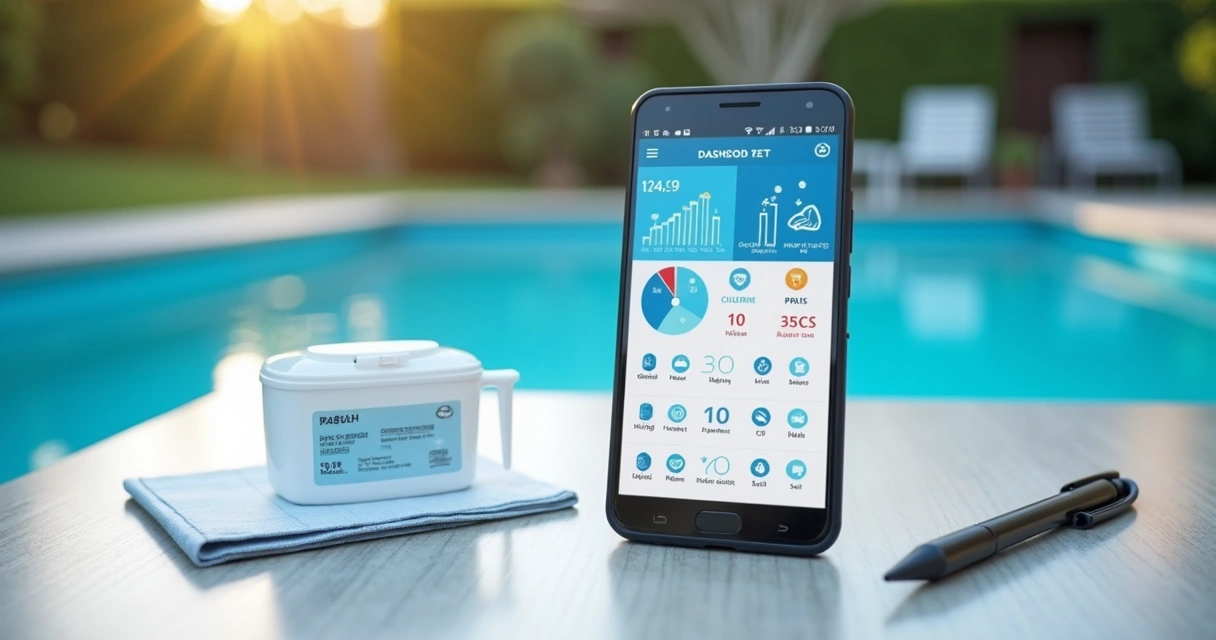
Water balance is where many owners feel unsure, and I understand why. Pool shops often hand over broad advice, but every pool is different. A shaded fibreglass pool with a salt system does not behave like a sunny concrete pool with tablets. This is one reason a tool like MyPoolMate can help, because it keeps your pool profile, test history, and treatment logic together.
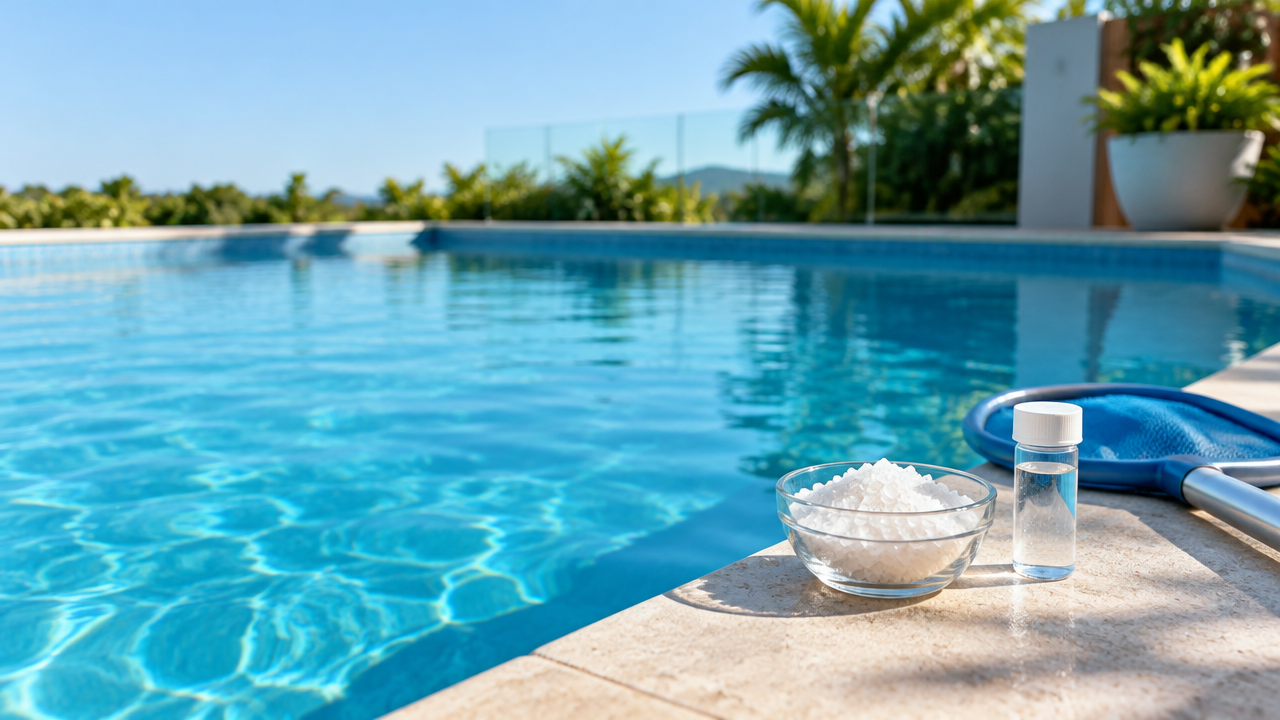
The main readings I watch are:
Free chlorine for sanitation
PH for comfort and chlorine performance
Total alkalinity for pH stability
Calcium hardness to protect surfaces and equipment
Salt level, if you have a salt chlorinator
Cyanuric acid, if stabiliser is used
If pH is off, chlorine becomes less effective even when the test shows chlorine is present.
I usually test one to two times a week in summer and weekly in cooler months. After testing, adjust only what needs changing. Add products separately. Let the water circulate between doses. If you own a salt pool and the reading looks high, this guide on how to fix high pool salt levels can help you avoid guessing.
I also think it helps to question big chemical lists. In my experience, many pools need less than owners are told. This article on whether you need every chemical being recommended explains that idea well.
Looking after the filter and equipment
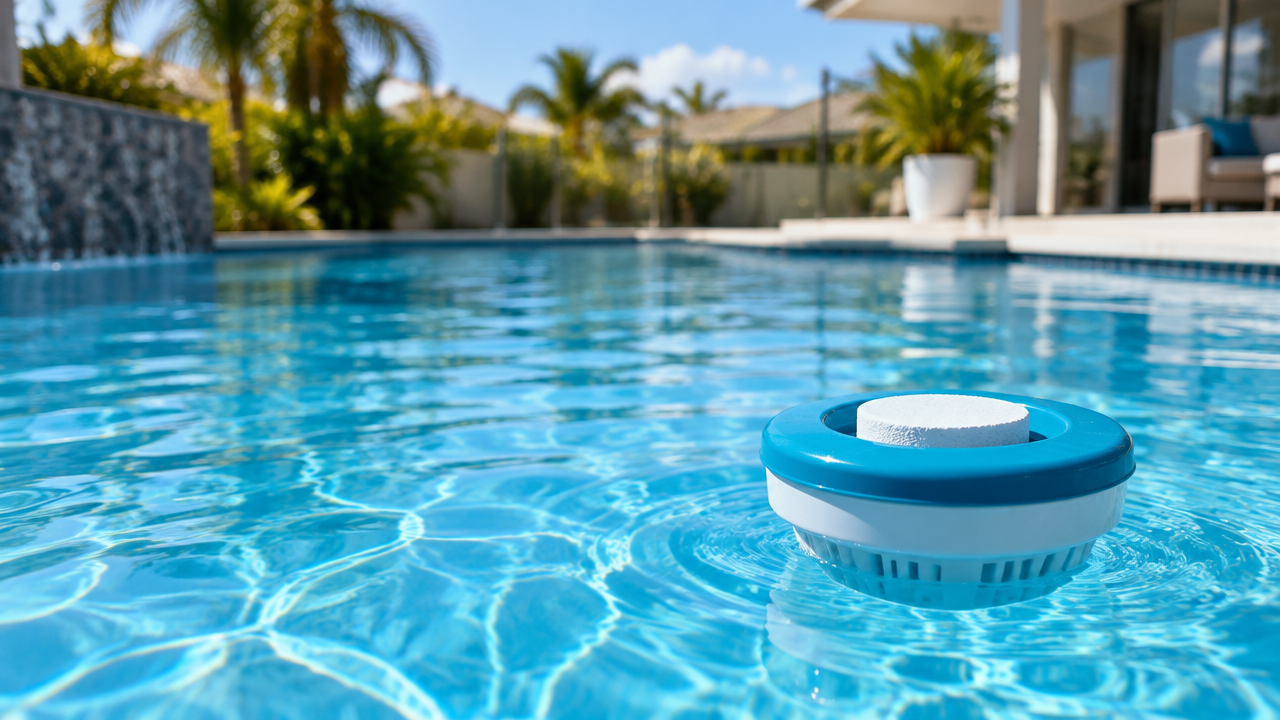
Your filter, pump, and chlorinator do the daily work, so they need routine checks. A dirty or blocked filter lowers flow, and poor flow leads to bad sanitation. The water may still look decent for a while. Then it turns quickly.
A pool filter should be checked before water quality drops, not after.
I suggest watching for these signs:
Weak return jets
Rising filter pressure
Cloudy water after cleaning
Air in the pump lid
Cartridge filters need cleaning on a regular schedule, though the exact timing depends on pool load and debris. If you want a clear walk-through, this step-by-step cartridge filter cleaning guide is worth keeping handy.
The Western Australian Department of Health also shares practical pool care guidance from WA Health that supports regular debris removal, vacuuming, balanced chemicals, and periodic professional checks.
Stopping algae before it starts
Most algae problems do not appear overnight. I have noticed they usually start after a missed cleaning cycle, poor circulation, low chlorine, or heavy rain. Prevention is easier than recovery.
To reduce the risk, I focus on:
Keeping free chlorine in range
Brushing low-flow spots weekly
Running the pump long enough in hot weather
Clearing debris fast after storms
Checking stabiliser and pH when chlorine seems weak
If algae does appear, act fast. Clean first, test fully, shock only when the readings support it, and keep filtration running. For urgent problems like algae blooms or zero chlorine, I think tailored help is far better than generic advice. MyPoolMate is built for this kind of situation, with AI-guided recovery plans and pool-specific recommendations.
What to do after rain and through the seasons
Heavy rain dilutes chemicals, adds debris, and can push contaminants into the pool. I never assume the water is fine just because it still looks blue.
After a storm, I do this:
Remove leaves and visible debris.
Empty baskets.
Test chlorine, pH, and alkalinity.
Brush and vacuum if dirt settled.
Run the pump longer until the water clears.
Seasonal shifts matter too. Summer usually means more sun, more swimmers, and more chlorine demand. Winter often means shorter run times and slower chemical drift, but not zero care. A digital log helps here. I like apps that store test history and show patterns over time. MyPoolMate does this well, and it can also adjust target ranges around seasonal settings.
Safe chemical handling and compliance
Chemicals work well when they are stored and handled with care. I always read labels, wear protection if needed, and add products to water as directed, not the other way around. I never mix chemicals together in a bucket unless the label clearly allows it.
Store pool chemicals in a cool, dry, ventilated place away from children and heat.
Safety is not only about chemicals. Barriers and registrations matter too. Government reporting has shown gaps in private pool compliance, including Western Australian updates on overdue pool barrier inspections and Victorian findings on private pool and spa safety registration. For me, good pool care includes the water, the equipment, and the safety setup around it.
Conclusion
I think the best way to handle pool maintenance is to make it routine, personal, and trackable. Clean first. Test often. Adjust only what your pool needs. Watch the filter. Respond quickly after rain. If something goes wrong, use smart guidance instead of guessing. If you want a simpler way to track results, understand root causes, and get tailored treatment help for your own pool, take a look at MyPoolMate and see how it can support your next maintenance check.
Frequently asked questions
How often should I clean my pool?
I recommend skimming several times a week, brushing weekly, and vacuuming at least once a week in most Australian homes. In summer, after storms, or when trees drop more debris, I would clean more often.
What chemicals do I need for maintenance?
Most pools need a sanitizer such as chlorine, plus products to adjust pH, alkalinity, and sometimes calcium hardness or stabiliser. Salt pools also need the right salt level. I prefer adding only what test results show is needed.
How can I prevent algae growth?
I prevent algae by keeping chlorine in range, brushing walls and corners, removing debris quickly, and making sure the pump and filter run properly. Algae often starts when circulation is poor or sanitizer drops too low.
When should I check the pool filter?
I check the filter system every week by looking at pressure, flow, and water clarity. Clean or service it when pressure rises, return flow weakens, or the water stays cloudy after normal treatment.
Is professional pool cleaning worth it?
In my view, it can be worth it for owners with limited time, tricky water issues, or equipment faults. Still, many homeowners can handle regular care themselves if they follow a clear routine and use a tracking tool to guide decisions.