

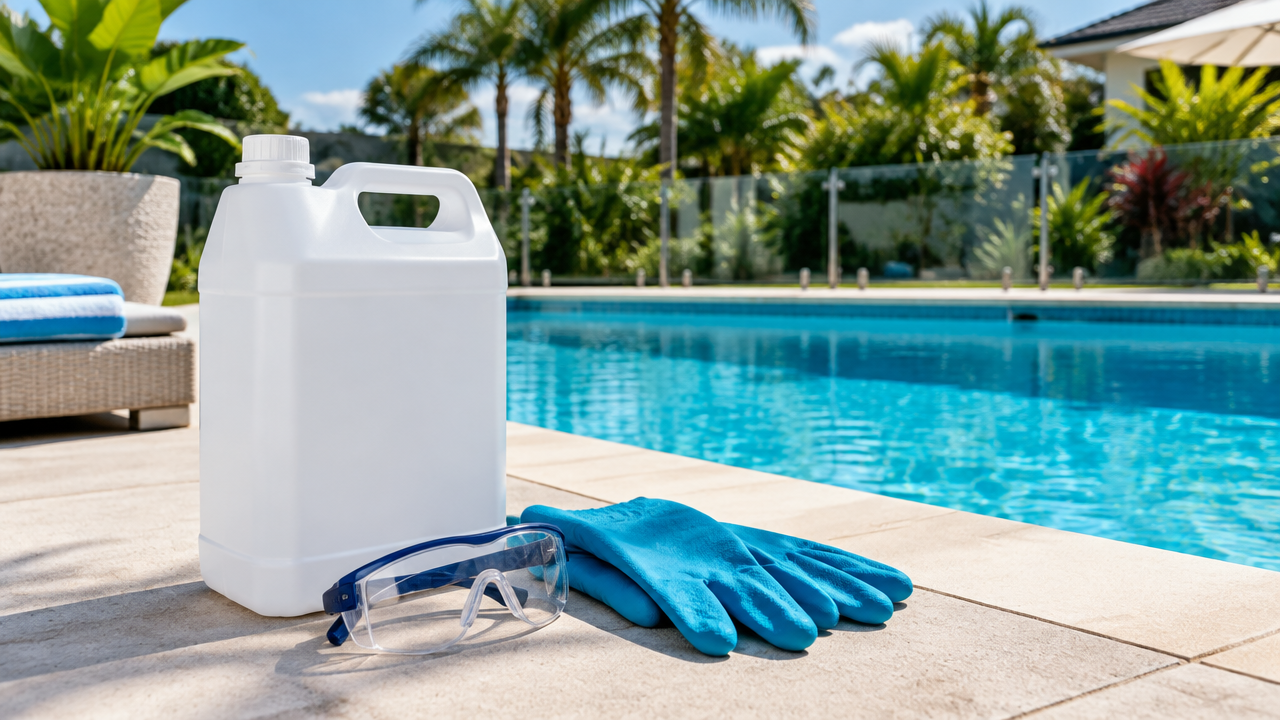
Sodium hypochlorite is the active ingredient in liquid pool chlorine, used to raise free chlorine in residential pools. The right dose depends on your pool volume, test results and product strength, so avoid guessing or using a generic dose. Here is a practical, safer way to choose a product, calculate a dose and check the result.
Key points for using liquid pool chlorine
- Choose a product labelled for swimming pools and check its available chlorine strength.
- Base the dose on a recent water test and your pool’s actual volume.
- Run circulation and follow the label’s instructions for adding the product.
- Never mix pool chemicals together, and store the container safely.
- Retest before adding more. A second dose is not automatically better.
What sodium hypochlorite does in a pool
Sodium hypochlorite is a liquid chlorine source. In pool water, it helps maintain free chlorine, the disinfectant that works against germs and helps control algae. Sunlight, hot weather, debris and swimmer load can all affect how quickly chlorine is used up, so the required dose changes with conditions.
Liquid chlorine does not add cyanuric acid, also called chlorine stabiliser. That can be useful if stabiliser is already high, but outdoor pools still need their stabiliser level checked and managed separately. Do not assume that a dose that worked last week will suit this week’s test.
Pool chlorine and household bleach can contain the same active chemical, but their strength and other ingredients may differ. Use a swimming-pool product with a clear label rather than treating an unfamiliar bleach as a like-for-like substitute.
How to calculate a dose from your test
Calculate from the desired increase in free chlorine, the pool’s volume and the product’s labelled available chlorine concentration. If the label gives available chlorine in grams per litre, the number is equivalent to milligrams per millilitre for a simple calculation:
Dose in mL = desired increase in mg/L × pool volume in litres ÷ available chlorine in mg/mL
For example, a 50,000-litre pool needing a 1 mg/L increase, using a product labelled at 120 g/L available chlorine, works out to about 417 mL. This is an arithmetic example, not a recommended target or a substitute for the product label. Check your pool’s actual volume, current reading and label units before calculating.
If you are unsure about the volume or label concentration, do not estimate a larger dose. A pool chemical dosing calculator can help organise the figures, but the product label and a reliable test remain essential.
How to add liquid chlorine safely
Follow the product label for the exact method. In general, keep the pool’s circulation running if the label directs, add the measured dose slowly to the water as instructed, and avoid splashing or pouring concentrate onto pool surfaces, fittings or clothing. Keep people out of the immediate area while handling it.
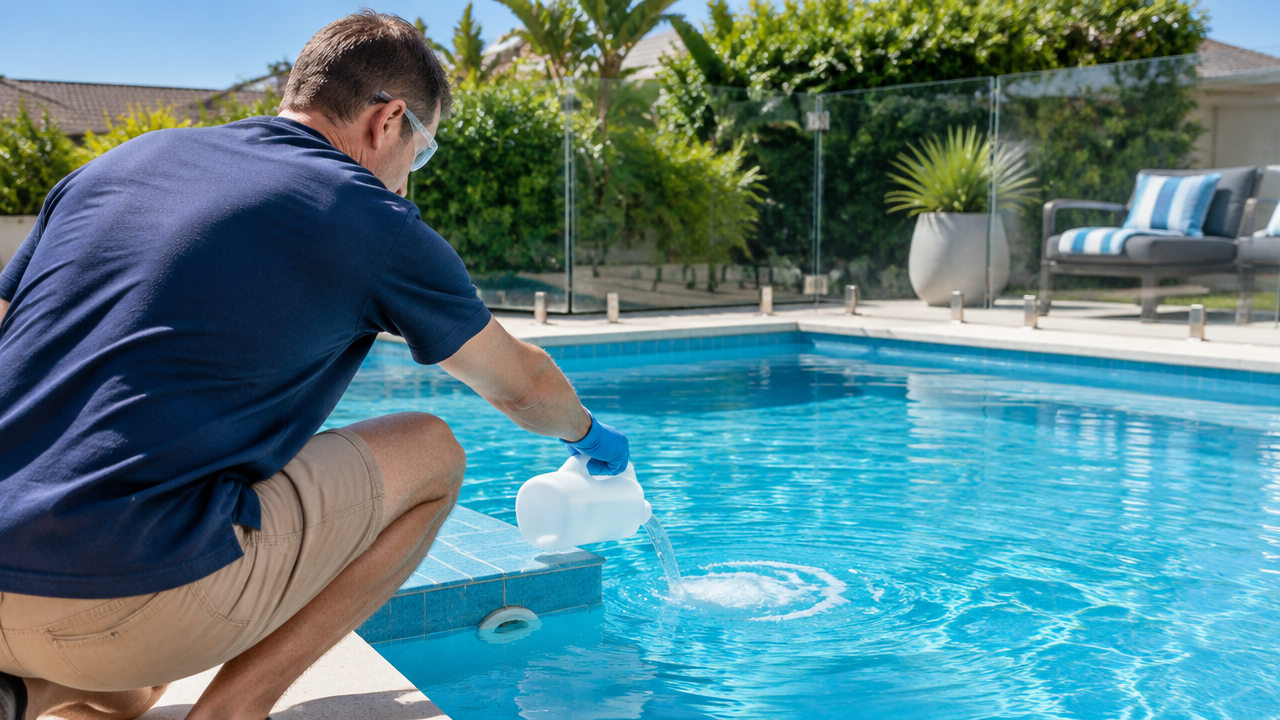
Wear the personal protective equipment stated on the label and work where air can move freely. Never combine sodium hypochlorite with acid, ammonia, another chlorine product or any other chemical. Mixing pool chemicals can produce dangerous reactions, so handle and store products separately.
Store the container upright, in its original labelled packaging, away from children, pets, direct sunlight and excessive heat. Heat and sunlight can reduce the product’s strength over time, making an old dose less predictable. For more practical precautions, use this guide to safe chlorine use around Australian pools.
When should you test and add it?
Test free chlorine and pH before deciding to add chlorine. Follow the test method’s instructions and use the target range recommended for your pool, product and local requirements. After dosing, allow the water to circulate for the period stated on the label, then retest before swimming or adding more.
A pool shop’s printed test result can be useful, but it is a snapshot. Record the result alongside the pool’s volume and recent chemical additions, then watch the trend. MyPoolMate lets Australian pool owners log results, scan pool shop printed test results, review test history and get recommendations based on pool details such as surface, sanitisation method and seasonal settings. Its AI assistant, Splash, can help make sense of the latest pool data.
When chlorine drops quickly, look for the cause instead of repeatedly increasing the dose. Heavy use, debris, sunlight, poor circulation or an out-of-balance pool may all matter. This guide to why pool chlorine gets used up can help you investigate the pattern.
Frequently asked questions
Is sodium hypochlorite the same as bleach?
Sodium hypochlorite is the active chlorine chemical in many bleach products, including liquid pool chlorine. They are not automatically interchangeable: household products can have different strengths or contain additives. For a swimming pool, choose a product labelled for pool use and follow its directions rather than dosing with an assumed concentration.
Is sodium hypochlorite harmful to people?
Yes, concentrated pool products can harm people if splashed, inhaled or swallowed. Wear the protective gear stated on the label, avoid breathing fumes and keep the product away from children and pets. Never mix it with acids, ammonia or other pool chemicals. If exposure or a spill occurs, follow the product safety directions.
What happens when sodium hypochlorite is mixed with water?
When liquid sodium hypochlorite is added to pool water as directed, it provides chlorine for disinfection. Add it only in the way specified on the label, with the circulation system running if instructed. Never mix the concentrate with another chemical in a bucket or container, as incompatible products can react dangerously.
What are the disadvantages of sodium hypochlorite for pools?
Its main drawbacks are that the liquid can lose strength during storage, sunlight reduces chlorine in outdoor pools, and careless handling can cause serious injury. It also does not add chlorine stabiliser, so check stabiliser levels separately where relevant. Test the water and adjust from measured results instead of adding extra by habit.
Can I use household bleach instead of pool liquid chlorine?
Use a pool-labelled liquid chlorine product with a clearly stated concentration rather than assuming household bleach is suitable. Household formulations can vary and may contain additives not intended for pool water. If you are considering another chlorine type, check how it affects stabiliser or calcium levels and choose according to your pool’s test results.


