
Calcium chloride is used in pools to raise calcium hardness, not to sanitise water or clear algae. Whether your pool needs it depends on a reliable test, the surface material and the overall water balance. Test first, then dose only if the result and product directions support it.
Key points for pool owners
- It increases calcium hardness by adding dissolved calcium to the water.
- Low calcium can contribute to damage on cement-based surfaces, while excess calcium can encourage scale when water balance favours precipitation.
- Pool finish, pH, alkalinity and temperature all matter, so one target is not right for every pool.
- Use a pool-labelled product and its own dose rate. Dissolving the chemical can release heat.
What does calcium chloride do in pool water?
Calcium chloride raises the water’s calcium hardness. Calcium hardness is usually reported as parts per million (ppm) equivalent to calcium carbonate, even though the product being added is calcium chloride.
Calcium is part of water balance, not a standalone measure of pool health. If water is under-saturated, it can draw calcium from cement-based finishes or grout, contributing to etching. If the balance favours precipitation, calcium carbonate can form scale on surfaces and equipment. NSW public-pool guidance describes calcium chloride as a way to raise hardness when calcium is too low, and links imbalance with damage to surfaces such as concrete and grout.
For a practical overview of how pool surface and test results affect the right range, read our guide to calcium hardness levels and fixes.
When should you add it, and when should you hold off?
Add calcium increaser only when a recent test shows a genuine shortfall for your pool. A low calcium reading is more significant for some cement-based finishes than for pools with other surfaces, so do not assume every pool should be adjusted to the same number.
Pause before dosing if you have hard fill water, visible scale, or a high calcium result already. Calcium hardness is difficult to reduce with chemicals; dilution with lower-hardness water is generally the practical route, and the replacement water should be tested first. The NSW guidance also notes that calcium-based chlorine products can add calcium over time, so include routine chemical use in your assessment.
Read the printed results carefully or enter them in a record you can compare over time. Our guide to reading pool shop test results can help you check what each measurement means before making a correction.
How much should you use?
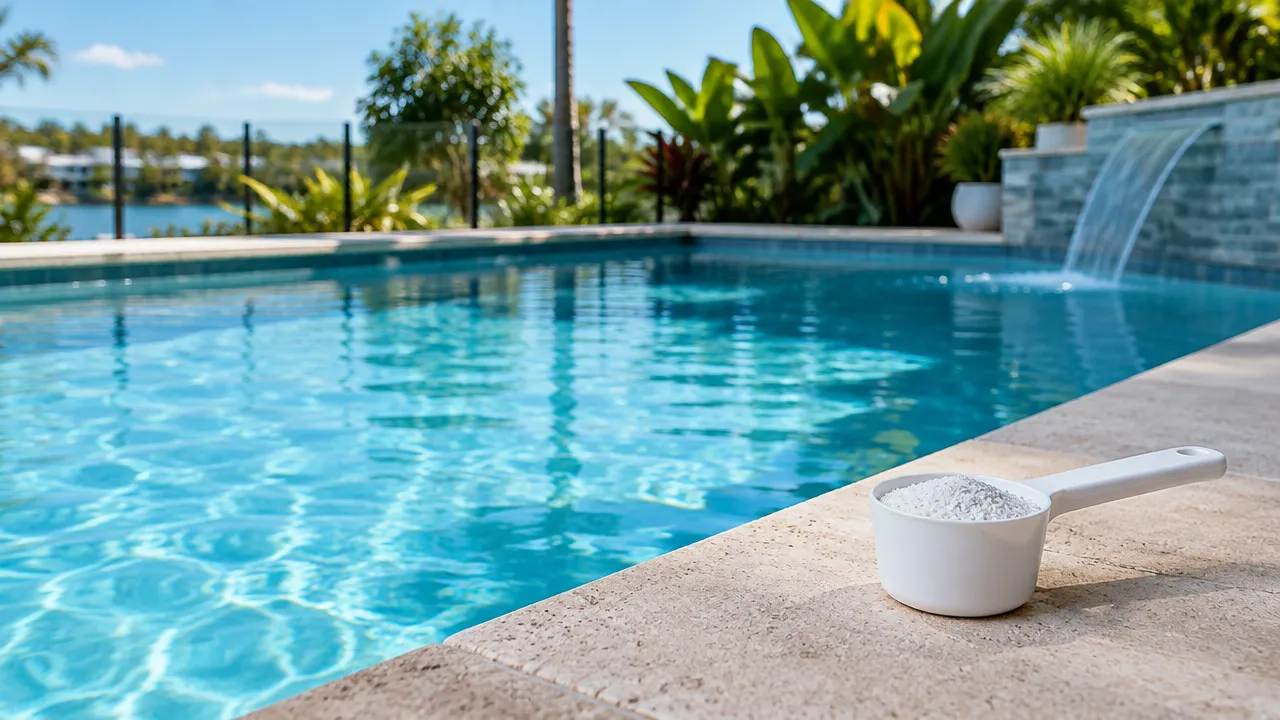
Work from the measured gap, your pool’s actual volume and the dose rate on your specific product. Do not use a rate copied from another brand: flakes, pellets and different concentrations can require different amounts.
As an example only, an Australian supplier gives a rate of 100 g per 10,000 litres to raise calcium hardness by 10 ppm. At that product’s stated rate, a 50,000-litre pool needing a 40 ppm increase would require 2 kg. The supplier says its rate is a guide, so check your own label and confirm the result with a follow-up test.
For an estimate based on volume and the size of the adjustment, use a metric pool chemical calculator, then verify its assumptions against the product label. Avoid making a large correction all at once unless the directions specifically call for it.
How do you add it safely?
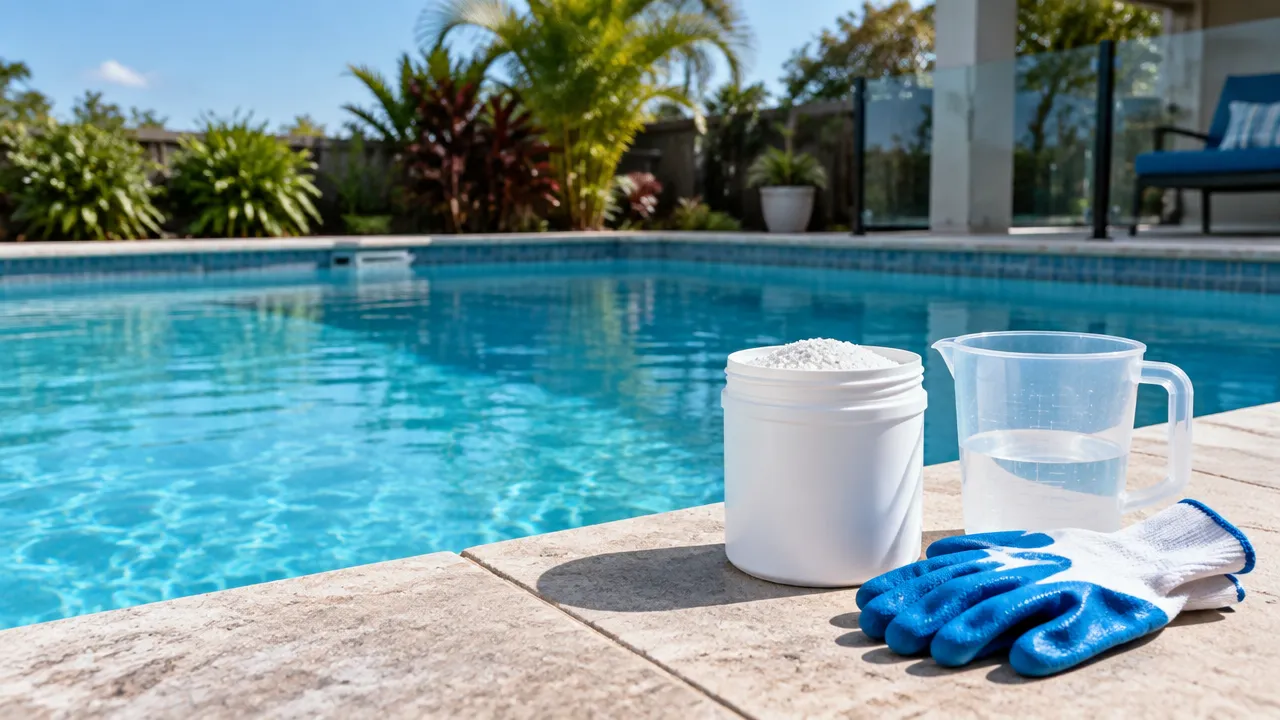
Follow the exact instructions on your pool product. Some directions specify pre-dissolving; others may differ. When dissolving is directed, add the granules to water gradually, never pour water onto the dry chemical. Mixing can release considerable heat, so use a clean, suitable plastic container and keep your face and hands clear of splashes.
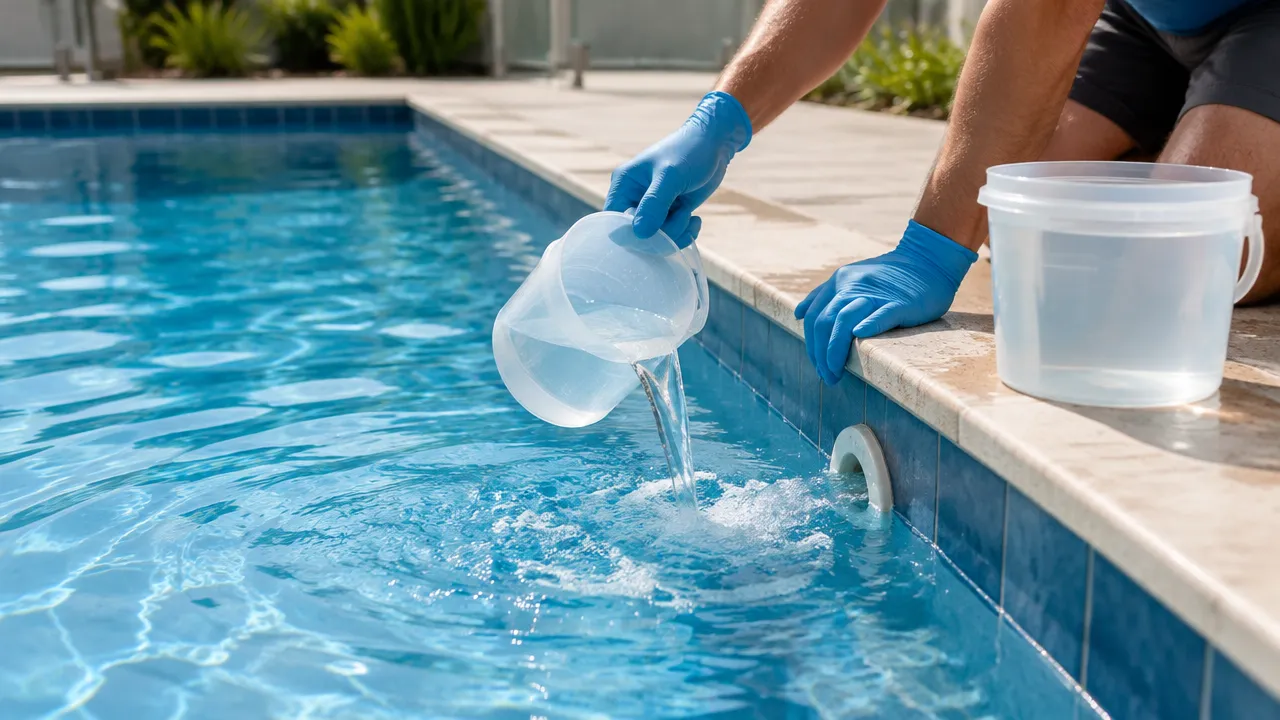
- Wear the protective gear stated on the label and keep children and pets away.
- Never mix calcium chloride with another pool chemical.
- Do not add it through the skimmer unless the product directions explicitly say to.
- Run circulation as directed, allow the water to mix, then retest before adding more.
Safe handling instructions can vary by product, so the package directions take priority over generic advice. For other common pool-chemical precautions, see our Australian pool chemical guide.
What calcium chloride will not fix
Calcium chloride will not lower calcium hardness, disinfect the pool, remove algae or reliably fix cloudy water. It also does not replace checking pH and total alkalinity. Adding it when calcium is already adequate can increase the chance of scale if the rest of the water balance is unsuitable.
Keep a record of the pool’s surface, volume and test history rather than treating a single reading in isolation. MyPoolMate helps Australian pool owners track pool details and water results, then uses that pool-specific context to support more tailored chemistry decisions. Its AI scanner can read printed pool-shop test results, while Splash can help you review your pool’s latest information before you make an adjustment.
Frequently asked questions
What do I use calcium chloride for in a pool?
For a pool, calcium chloride is used to raise calcium hardness when testing shows it is too low for your pool’s surface and water balance. It is not a disinfectant, algae treatment or general-purpose water clarifier. Check the pool’s needs before adding it, because extra calcium cannot be easily removed.
Which calcium chloride is best for a pool?
Choose a product specifically labelled for swimming pools, with clear dosing and safety directions. The product’s concentration affects how much is needed, so do not copy a dose from a different brand or an online example. Use the pool volume and test result, then follow the label and retest after circulation.
When should I add calcium chloride to my pool?
Add it only when a reliable calcium-hardness result and your pool’s surface and water balance show a need. A low reading can matter more for cement-based finishes than for some other surfaces, while adding calcium to already hard water can contribute to scaling. Confirm the target for your pool before dosing.
How much calcium chloride should I add?
Use the product label’s dose rate, your pool’s water volume and the measured increase needed. Rates vary with product concentration. For example, one Australian supplier’s stated rate is 100 g per 10,000 litres for a 10 ppm increase, but that rate is not universal. Retest after the product has circulated.