
Hypochlorous acid is the main fast-acting form of chlorine that sanitises pool water. For Australian pool owners, the practical takeaway is that effective sanitising depends on more than adding chlorine: pH, stabiliser, sunlight and pool use all affect how well it works.
Key points for pool owners
- Chlorine in water exists in different forms, including hypochlorous acid and hypochlorite ions.
- Higher pH shifts the balance away from hypochlorous acid, so chlorine can be less effective.
- Salt pools use chlorine too, and stabiliser helps limit chlorine loss in sunlight.
- Test your water and consider its full balance before deciding what, or how much, to add.
Hypochlorous acid does the sanitising work in your pool
When chlorine dissolves in pool water, it forms hypochlorous acid and hypochlorite ions. Together, these forms are included in the pool’s free chlorine reading. Hypochlorous acid is generally the more active disinfecting form at typical pool conditions.
It sanitises by oxidising important parts of microorganisms, disrupting their ability to function. This helps control bacteria and other unwanted organisms, while chlorine also reacts with contaminants introduced by swimmers and the environment.
That does not mean a higher chlorine dose is always better. If chlorine is being consumed quickly, the underlying cause might be heavy use, sunlight, organic debris or an imbalance elsewhere. Why pool chlorine can be wasted is often a more useful question than simply asking how much more to add.
Pool pH changes how much active chlorine is available
As pH rises, the balance shifts from hypochlorous acid towards the less active hypochlorite form. Around pH 7.5, the two forms are roughly equal at typical reference conditions, though temperature affects the balance. A lower pH generally means a greater share is present as hypochlorous acid.
That is why checking pH alongside free chlorine matters. Do not lower pH aggressively just to chase a larger share of active chlorine. Keep pH within the recommended range for your pool, equipment and local guidance, and make changes based on test results.
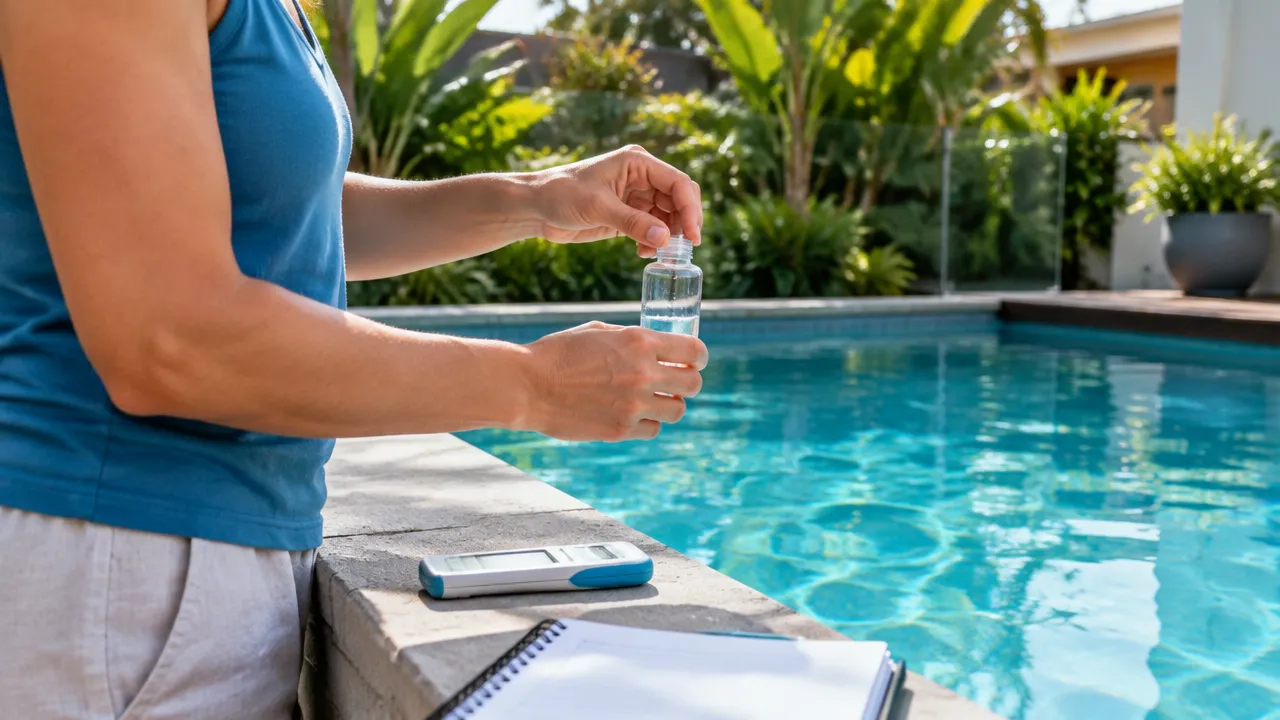
A water sample gives you a better basis for action than guesswork. If you use pool-shop testing, understanding the printed test results can help you see how pH and chlorine readings fit together.
Salt chlorinators and stabiliser affect the same chemistry
A saltwater pool still sanitises with chlorine. Its chlorinator generates chlorine from salt in the water, and that chlorine forms the same sanitising compounds found in pools treated with liquid or other chlorine products.
Sunlight breaks down chlorine, which is why outdoor pools may use cyanuric acid, also called stabiliser, to reduce chlorine loss to UV. But stabiliser levels matter: too much can reduce the immediate availability of chlorine. Read free chlorine and stabiliser together rather than treating either result in isolation. See how cyanuric acid affects pool chlorine before making adjustments.
Queensland’s strong sun, warm weather and busy swimming periods can change chlorine demand quickly. Rain, leaves, sunscreen and a full afternoon of swimming may all affect what your next test shows. A dose that suited the pool last week may not suit it today.
Use test results to guide treatment, not a generic dose
To maintain effective sanitation without overcorrecting, use a simple check-first routine:
- Test the water and note free chlorine, pH and stabiliser where relevant.
- Consider recent swimming, heavy rain, debris and strong sun.
- Check your pool volume and sanitiser type before calculating any dose.
- Follow product directions, allow the water to circulate as instructed, then retest.
Recommended levels depend on the pool and its conditions, so avoid applying a generic chemical list without checking what your water actually needs. MyPoolMate is designed to use details such as pool volume, surface and sanitisation method alongside test history to support more personalised, root-cause-driven guidance. Its AI scanner can read printed pool-shop test results, and Splash, the in-app AI assistant, can help you interpret your pool’s latest information.
That approach can help you avoid adding chemicals simply because they appear on a standard recommendation. For a closer look at that problem, read which pool chemicals your water actually needs.
Pool water is not the same as an HOCl skincare product
Pool water can contain hypochlorous acid, but it is not the same thing as a bottled product made for skin or wound care. A pool is treated for swimming, and its water contains other dissolved substances and may pick up contaminants during use.
Do not use pool water as a wound wash or skincare treatment. Likewise, do not mix pool chemicals or apply them outside the uses on their labels. If chemical fumes develop, leave the area and follow the product’s safety instructions.
Frequently asked questions
Is hypochlorous acid just pool water?
Not exactly. Hypochlorous acid is one active form of chlorine that can be present in properly sanitised pool water, but pool water also contains other chemicals and may contain contaminants. A bottled HOCl skin product is formulated for its stated use, so do not treat pool water as a skincare or wound-care product.
Is there a downside to hypochlorous acid in pools?
Yes. Its effectiveness changes with pH, sunlight, stabiliser and the pool’s chlorine demand, so a free-chlorine reading alone may not tell the whole story. Chlorine can also irritate when water balance is poor or exposure is excessive. Test the whole water balance and handle pool chemicals exactly as labelled.
What should you not mix with pool chlorine?
Never combine chlorine products with acid, ammonia or other pool chemicals in the same container or feed system unless the product label specifically permits it. Dangerous reactions or fumes can result. Add products separately, follow label directions and keep chemicals in their original containers. If unsure, stop and seek qualified pool-care advice.
Is it safe to breathe hypochlorous acid?
No, do not deliberately inhale hypochlorous acid or pool chemical vapours. The main concern is exposure to fumes from mishandled products or poorly ventilated areas. Never mix chemicals. Leave the area if fumes occur, and contact emergency services or poison advice if someone has symptoms after exposure.
Does a saltwater pool use hypochlorous acid?
Yes. A salt chlorinator produces chlorine from salt dissolved in the water, and that chlorine forms hypochlorous acid as part of the same sanitising chemistry used in other chlorine pools. Saltwater pools are not chlorine-free. Their water still needs regular testing and balanced treatment.