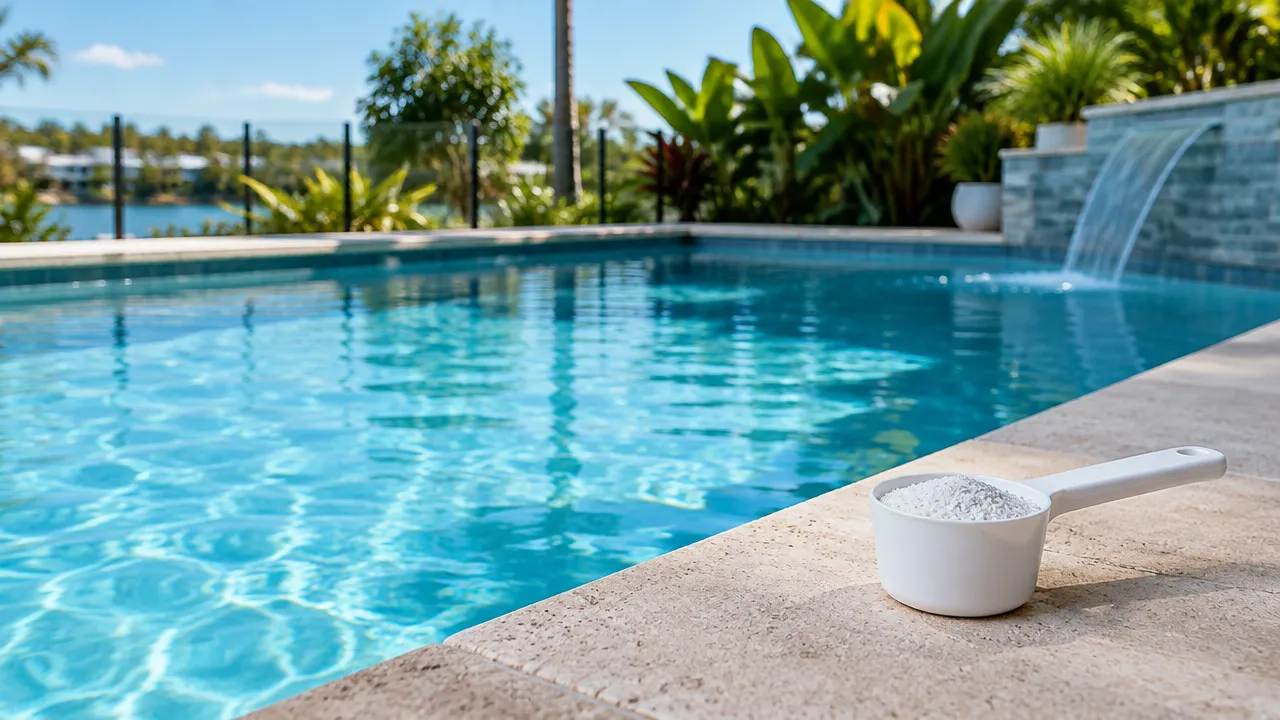

Trichlor is a slow-dissolving chlorine sanitiser that also adds cyanuric acid, which helps protect chlorine from sunlight. It can suit an outdoor pool with low stabiliser levels, but routine use gradually adds more cyanuric acid and can lower pH. The key is to choose it based on your pool’s test results, not as an automatic refill.
Key points to know before using trichlor
- It provides chlorine over time and includes built-in stabiliser.
- Repeated use adds cyanuric acid to the water.
- It is acidic, so pH can trend down with ongoing use.
- Use a suitable dispenser as directed on the product label.
- Test chlorine, pH and stabiliser before deciding whether to keep using it.
How trichlor tablets work in a pool
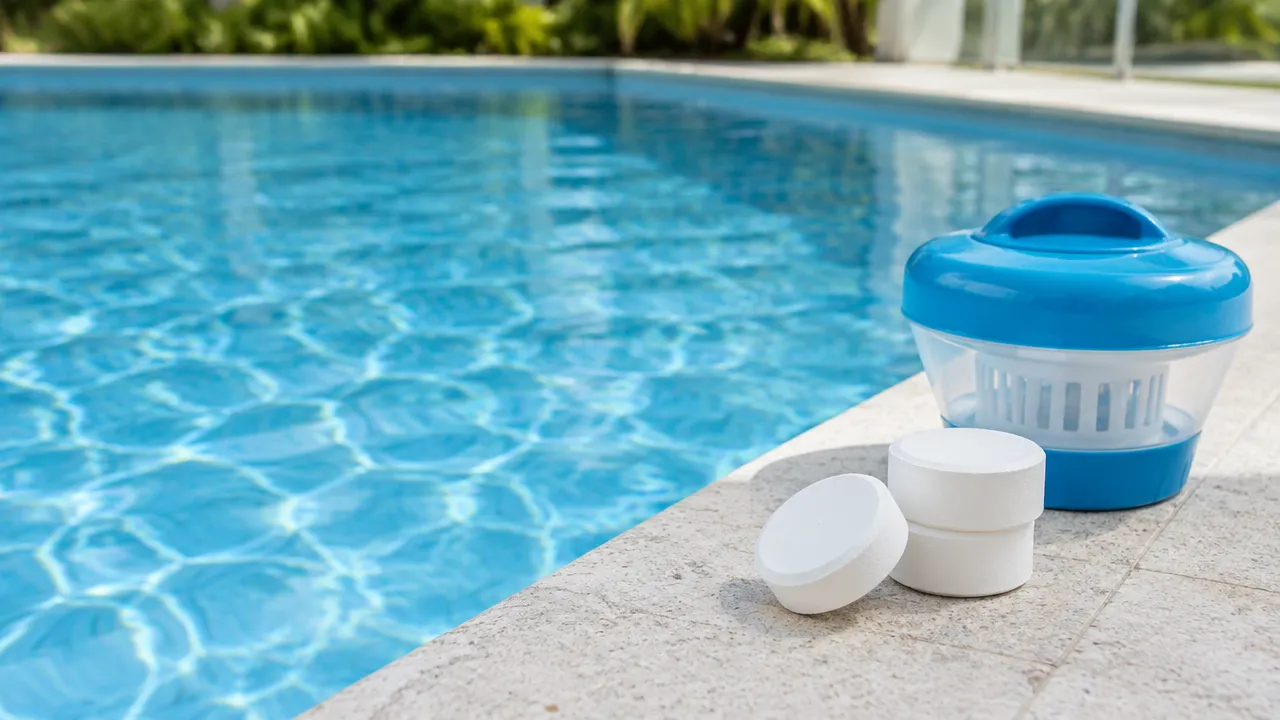
Trichlor tablets dissolve slowly, releasing chlorine to sanitise pool water. The chemical is trichloroisocyanuric acid, sometimes shortened to TCCA. NSW Health describes it as a slow-dissolving product with about 90% available chlorine that is highly acidic when added to water.
Trichlor also supplies cyanuric acid, often called stabiliser or CYA. In an outdoor pool, stabiliser slows chlorine loss in sunlight. That can be useful through bright Queensland weather, but it does not remove the need to test the water and maintain an appropriate free-chlorine level.
Think of each tablet as doing two jobs: adding sanitiser and adding stabiliser. If you want a clearer picture of how chlorine behaves in sunlight, read this guide to reducing wasted pool chlorine.
When trichlor is a useful choice
Trichlor can make sense when your pool needs steady chlorine dosing and its cyanuric acid level is low enough to accommodate more. It is often used in outdoor pools where sunlight can quickly reduce unstabilised chlorine. The tablets are convenient for routine sanitation when used in a compatible feeder or floater.
It is a less suitable default if stabiliser is already high, or if your pH is regularly trending low. NSW Health notes that continued use of trichlor or dichlor can cause cyanuric acid to build up; its guidance says levels above 50 mg/L can interfere with chlorine’s effectiveness. Pool conditions and local guidance differ, so treat this as a reason to test and assess, not a universal target for every pool.
For a more complete picture, check how cyanuric acid affects pool balance before adding another tablet.
What to monitor when using stabilised tablets
Check free chlorine, pH and cyanuric acid together. A chlorine result on its own cannot tell you whether more stabiliser is accumulating, and a pH trend can reveal the effect of an acidic product over time. Test after changes in dosing, heavy swimming, major rain or a period of hot, sunny weather.
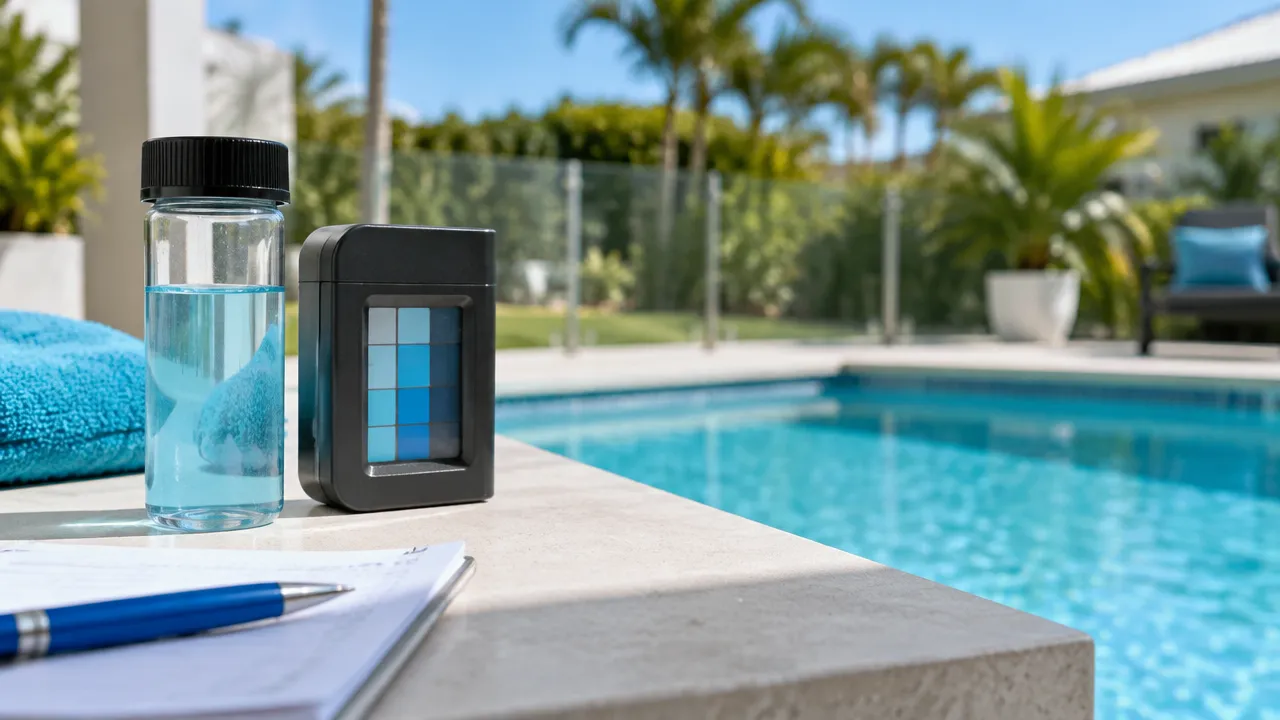
If your test result shows cyanuric acid rising, pause before adding more stabilised chlorine. NSW Health notes that cyanuric acid is not ordinarily consumed in the same way as chlorine, and can leave the water through processes such as splashing and backwashing. The appropriate response depends on your pool and equipment, so confirm the result and follow local advice.
MyPoolMate helps owners keep pool-specific test history and assess chemistry against details such as pool volume, surface and sanitisation method. You can enter results manually or use its AI scanner to read printed pool-shop test results. For practical testing context, see how to read pool-shop results.
Use tablets safely and follow the product label
Use a dispenser or chlorinator only as directed by the tablet label and equipment manufacturer. Do not leave a tablet directly on a pool floor or against a surface: concentrated chemicals can bleach or damage finishes. Skimmer use is not universal, so only use that method if the specific product and your system explicitly allow it.
- Keep pool chemicals in their original containers and follow label precautions.
- Never mix trichlor with other chemicals or place different products together.
- Keep tablets dry and away from children and pets.
- Check the water rather than guessing how many tablets to add.
For a broader safety checklist, use this guide to chlorine safety for Australian pools. If you need a rapid correction or have cloudy or green water, do not assume tablets alone are the right treatment. Diagnose the cause and use a recovery approach suited to the measured water conditions.
Alternatives when stabiliser or pH is a concern
If cyanuric acid is already high, consider a chlorine source that does not add more stabiliser, such as liquid chlorine, or a salt chlorinator that generates chlorine in the pool system. These options still need correct testing and maintenance, and they are not automatically better for every pool.
Compare the change against your pool’s actual chemistry, volume and equipment. MyPoolMate can keep that pool-specific history together, while its AI assistant Splash can help interpret the latest results and identify what needs attention. A personalised assessment is more useful than adding another chemical simply because a general recommendation says to.
Frequently asked questions
Is trichlor the same as chlorine?
Yes. Trichlor is a chlorine-based pool sanitiser, specifically trichloroisocyanuric acid. As it dissolves, it releases chlorine to help sanitise the water. It also adds cyanuric acid, a stabiliser that slows chlorine loss in sunlight, so regular use affects both chlorine and stabiliser levels.
Do trichlor tablets raise cyanuric acid levels?
Yes. Trichlor adds cyanuric acid to pool water as it dissolves. Because stabiliser can build up with repeated use, test it as well as free chlorine and pH. If the level is high for your pool, ask a pool professional about a suitable adjustment rather than continuing to add stabilised tablets.
Can I put trichlor tablets in a skimmer or floater?
Use a floating dispenser or chlorinator only if the product label permits it. Avoid placing a tablet directly on the pool surface, where concentrated chemicals can damage finishes. Skimmer use depends on the tablet and equipment instructions, so do not assume it is suitable for every pool or system.
How long do trichlor tablets last?
There is no fixed lifespan. Dissolving time depends on tablet size, water flow, temperature, pool use and the dispenser setting. Check the dispenser and test the water regularly instead of relying on a calendar estimate. Follow the product label, and adjust dosing based on measured chlorine levels.
What can I use instead of trichlor tablets?
Liquid chlorine can sanitise without adding cyanuric acid, while a salt chlorinator produces chlorine from salt in the water. Each option has different equipment and monitoring needs. The right choice depends on your pool, current stabiliser level and routine, so compare measured water results before changing systems.