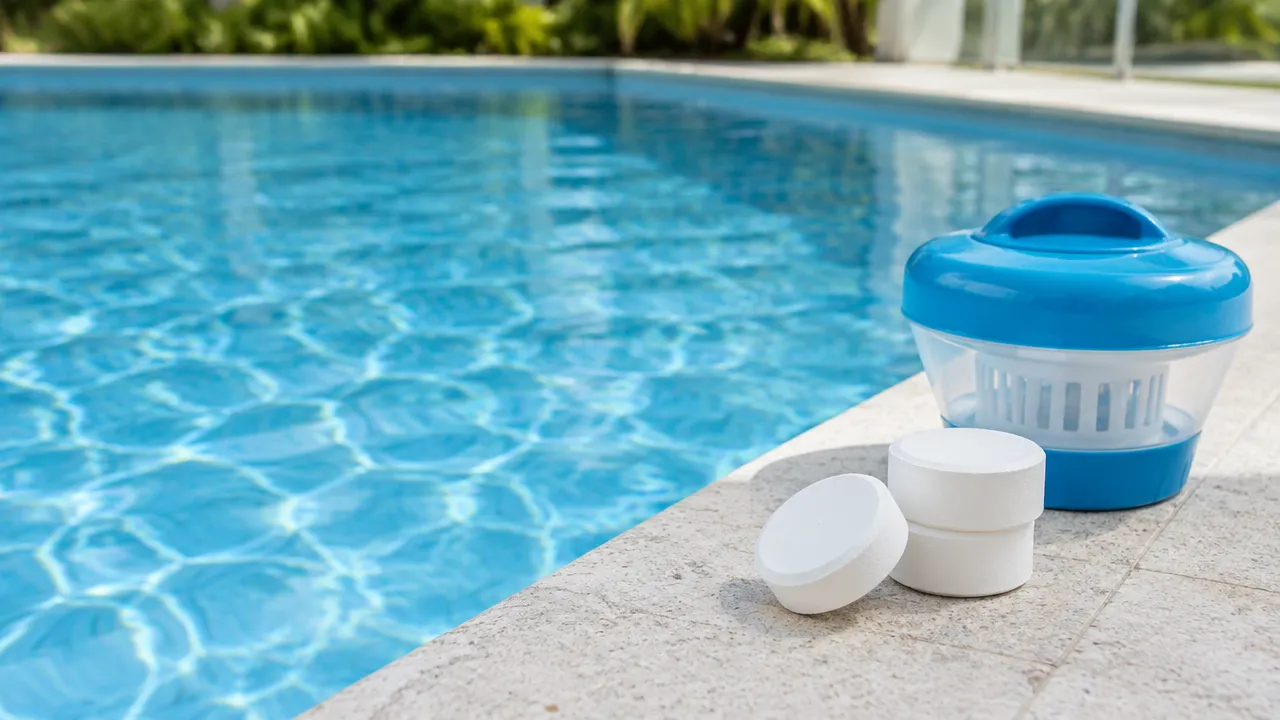

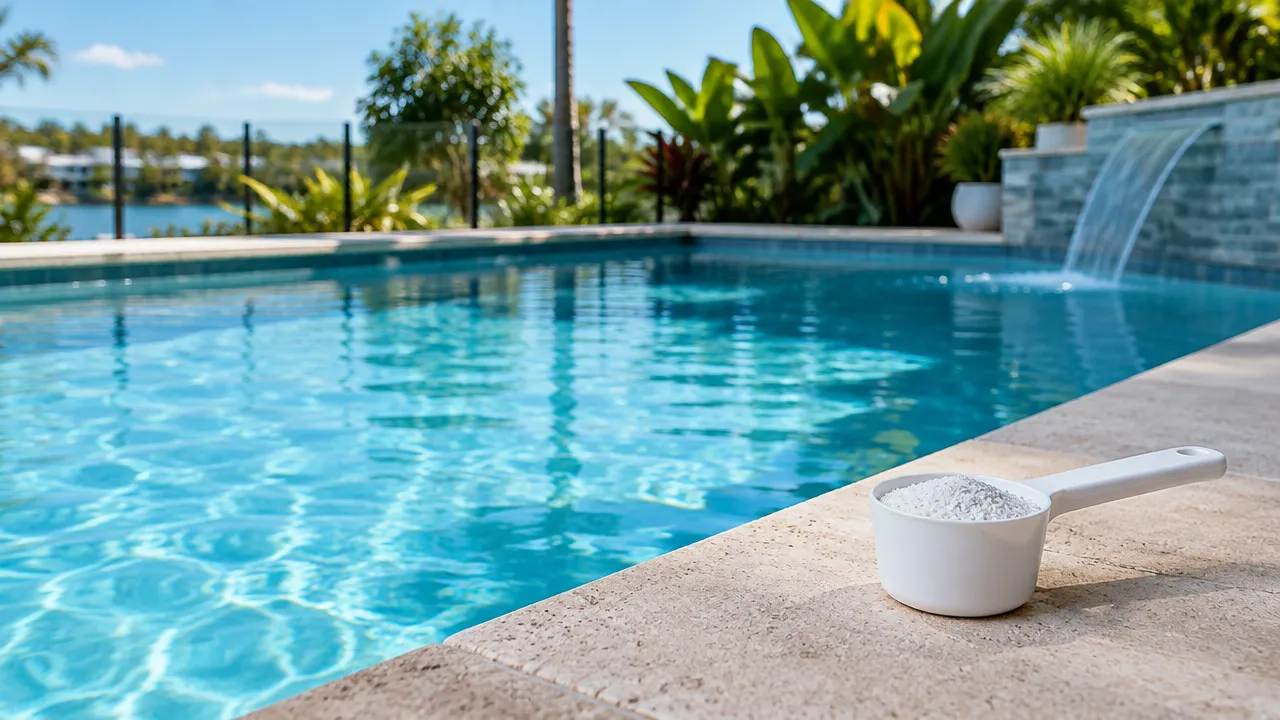
Dichlor is a fast-dissolving granular chlorine that also adds cyanuric acid, the stabiliser that helps protect chlorine from sunlight. It can suit an outdoor pool that needs chlorine and stabiliser, but repeated use can push stabiliser too high. The practical rule is simple: test both chlorine and cyanuric acid before deciding whether another dose is useful.
Key takeaways for pool owners
- Dichlor adds sanitising chlorine and cyanuric acid in the same product.
- Its stabiliser can help limit chlorine loss in sunny outdoor pools.
- Regular use can gradually raise cyanuric acid, so track it alongside chlorine.
- Choose a chlorine product based on your pool’s test results, not a routine dose alone.
- Follow the product label and local pool guidance for dosing and safety.
What dichlor does in pool water
Dichlor is short for sodium dichloroisocyanurate, a stabilised granular chlorine. When it dissolves, it supplies chlorine for sanitising and adds cyanuric acid, often called CYA, to the water. NSW Health describes dichlor as a source of both chlorine and stabiliser, with available chlorine varying by formulation.
Cyanuric acid helps shield chlorine from breakdown in sunlight, which can be useful in an exposed Australian backyard pool. But stabiliser is not itself a disinfectant. Its level needs to be considered together with chlorine, pH and your pool’s conditions. For a plain-language look at sunlight and chlorine, see this guide to why pool chlorine gets used up.
When dichlor can be a useful choice
Dichlor can make sense when testing shows you need to raise chlorine and your pool also needs stabiliser. Its granular form dissolves readily, and NSW Health says the product does not affect pool pH when added. Check your own product label, though, because formulations and directions can differ.
It may be handy for a measured, occasional chlorine boost or when establishing stabiliser in an outdoor pool. It is less suitable as an automatic weekly choice if your CYA is already at or near the limit recommended for your pool. The decision should come from current test results, not from the word “shock” on a container.
The main drawback is stabiliser build-up
Each dose adds CYA, and the stabiliser can remain in the water while chlorine is consumed. That means repeated dichlor use can steadily raise CYA unless water is diluted or otherwise replaced. NSW Health warns that continued use of stabilised chlorine can take cyanurate beyond its recommended limit, while the CDC notes that CYA-containing chlorine products affect pool-water management.
Too much stabiliser can make chlorine less effective at disinfecting. If CYA is high, adding more dichlor may compound the problem rather than solve it. Review how to manage cyanuric acid levels before choosing a product to bring chlorine back into range.
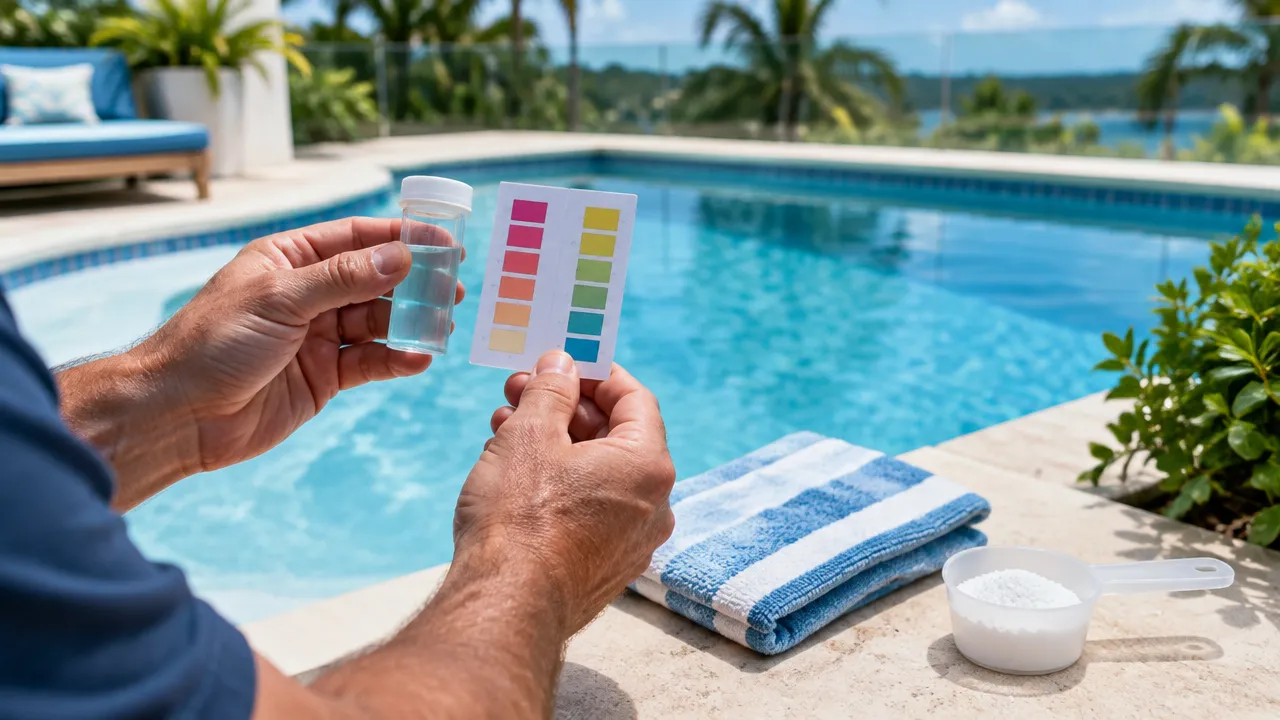
How to decide whether to use dichlor
| What your test results show | Practical next step |
|---|---|
| Chlorine is low and CYA is also below your target | Dichlor may address both readings, if its label and your local guidance support its use. |
| Chlorine is low but CYA is already high | Consider an appropriate unstabilised chlorine product rather than adding more stabiliser. |
| Chlorine and CYA are both within target | Do not add dichlor just because it is part of a routine. Keep testing and follow your maintenance plan. |
| You are treating a spa or hot tub | Check specific spa guidance. CDC advises against cyanuric acid and chlorine products containing it in hot tubs. |
Targets depend on the pool, product and applicable local guidance, so do not treat a generic number as universal. The CDC’s home pool guidance, for example, recommends maintaining pH between 7.0 and 7.8 and at least 2 ppm chlorine when using cyanuric acid or stabilised chlorine. Check Australian requirements and your product label for directions that apply to your pool.
Use it carefully and keep a clear test history
Read the label before dosing, measure for your pool volume, and never mix pool chemicals together in a bucket or container. Store chemicals as directed and keep them secured away from children. If you are unsure what a printed pool-shop result means, use a reliable testing process and check chlorine, pH and CYA together rather than reacting to one reading.
MyPoolMate helps Australian pool owners keep pool details and water-test history together, so changes in chlorine and stabiliser are easier to spot over time. You can enter results manually or scan printed pool-shop results, then use Splash, the pool-aware AI assistant, to help interpret the readings in the context of your pool. For background, see how to read pool-shop test results and this practical guide to pool chemical use.
Frequently asked questions
Is sodium dichlor the same as shock?
Dichlor can be used as a shock treatment, but “shock” describes a treatment goal, not one specific chemical. It adds chlorine and cyanuric acid together, so check your pool’s stabiliser level before using it. Follow the product label for the dose and any re-entry instructions.
How often should I add dichlor to my pool?
There is no single schedule that suits every pool. Add dichlor only when testing shows your chlorine needs a boost and the product label permits it. Check cyanuric acid as well: repeated doses add stabiliser, which can build up when little water is replaced.
Does dichlor raise cyanuric acid?
Yes. Dichlor adds cyanuric acid as well as chlorine, and that stabiliser tends to remain in pool water. Repeated use can raise the level over time, so test it and follow local guidance before choosing your next chlorine dose.
Can I use dichlor for a spa or hot tub?
Dichlor is a stabilised chlorine, so it adds cyanuric acid to the water. The CDC advises against using cyanuric acid or chlorine products containing it in hot tubs. Check your spa’s manufacturer guidance and use a treatment designed for that water volume and setup.
When should I stop using dichlor?
Stop using dichlor when your pool’s cyanuric acid level reaches the limit recommended by your local guidance or product instructions. Use an appropriate chlorine source that does not add more stabiliser, and continue testing both chlorine and cyanuric acid as you manage the water.