
In my experience, pool cleaning in Queensland is never just about making water look blue. It is about keeping the water safe, calm on the skin, and predictable through long hot spells, heavy rain, wind, and leaf drop. Queensland pools work hard. They get more sun, more swimmers, and more sudden weather swings than many owners expect.
Good pool care starts with water balance, not with adding random chemicals.
I have seen many homeowners react to cloudy water by buying several products at once. That usually costs more and solves less. When I look at a pool properly, I start with test results, circulation, filter condition, and the recent weather. That tells a much clearer story.
Queensland owners also need to think beyond appearance. Safe pools matter. Guidance around backyard pool safety risks and supervision in Queensland is a useful reminder that a home pool should be managed with care at all times, both in and out of the water.
Why Queensland pools need closer attention
The climate changes the workload. Strong sun burns through sanitizer faster. Summer storms push in dirt, phosphates, and diluted water. Humid conditions help algae take hold quickly. In some yards, one windy afternoon can fill skimmer baskets with leaves.
I think this is why many people feel their pool is fine one week and frustrating the next. The change is often not random. It follows weather, bather load, and missed testing.
Small imbalances become big problems fast.
For that reason, regular pool care in Queensland should focus on a short rhythm:
- Test often enough to catch drift before the water turns.
- Remove debris before it breaks down and feeds water problems.
- Keep circulation and filtration working every day.
- Adjust chemical doses to the actual pool, not a guess.
When I want a practical local routine, I often point people toward guides such as this Queensland pool maintenance guide, because climate-specific advice makes a real difference.
What water balance really means
Water balance is the point where sanitizer works well, the water feels comfortable, and surfaces and equipment are less likely to suffer damage. It is not one number. It is a relationship between several readings.
Balanced water helps chlorine work better and helps prevent irritation, scale, and corrosion.
The readings I pay most attention to are:
- Free chlorine or sanitizer level
- PH
- Total alkalinity
- Calcium hardness
- Stabilizer, also called cyanuric acid, where relevant
- Salt level, if the pool has a salt chlorinator
If pH is too high, chlorine loses strength. If alkalinity is unstable, pH tends to swing. If calcium is off, surfaces can stain, scale, or wear. If stabilizer is too low under Queensland sun, chlorine disappears too fast. If it is too high, chlorine can struggle.
I like to keep this simple. Test first. Adjust in the right order. Then retest.
For readers wanting more background, MyPoolMate regularly connects these readings to pool type, finish, sanitizer system, and season. I think that is much closer to how real pool care works than generic one-size-fits-all dosing.
How I approach testing and treatment
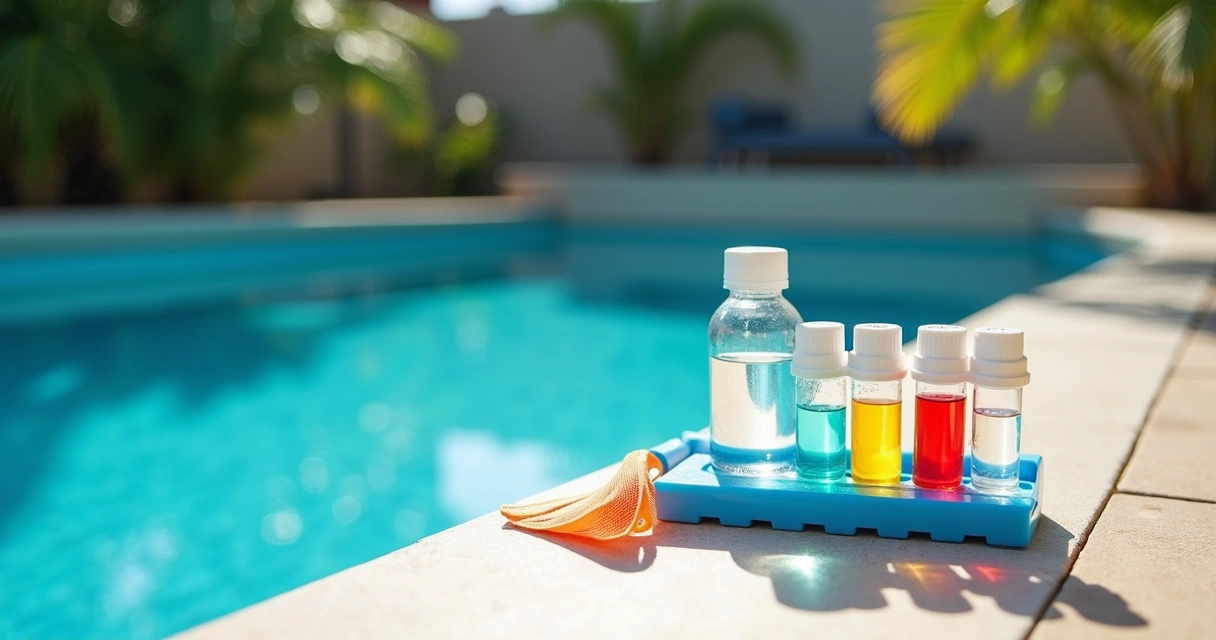
I do not trust appearance alone. Clear water can still be badly balanced. A pool can look inviting and still have low chlorine, high pH, or unstable alkalinity.
Accurate testing is the base of safe and comfortable swimming.
Queensland Health promotes proactive water quality management and safe swimming practices through its guidance on maintaining pool and spa water quality. Even though that guidance is aimed at broader aquatic settings, I find the principle applies at home too. Problems are easier to prevent than to repair.
My usual order is straightforward:
- Test sanitizer and pH first.
- Check total alkalinity.
- Review stabilizer and calcium hardness.
- Check salt if a chlorinator is installed.
- Only then decide on treatment.
When alkalinity is out, pH often becomes annoying to manage. That is why I often suggest reading practical advice on controlling pool alkalinity for stable water before chasing every other reading.
Seasonal treatment through the year
I find that many homeowners use the same routine all year, then wonder why summer gets away from them. Queensland pools need seasonal thinking.
Summer
Summer means higher chlorine demand, heavier use, more sunscreen and body oils, and storm runoff. I test more often and watch pH closely.
- Increase testing frequency
- Keep sanitizer in range without delay
- Brush and vacuum more often
- Shock or oxidise when bather load is high or water loses sparkle
In summer, waiting three or four extra days to test can be enough for algae to get ahead.
Autumn and winter
Cooler water slows algae growth and lowers chlorine demand, but care does not stop. Leaves can still build up, and neglected winter pools often become expensive spring recoveries.
- Reduce but do not stop testing
- Keep circulation regular
- Clear debris before it stains or breaks down
- Review salt cell and filter condition before spring
Spring
This is when I like to reset the system. I deep clean, check equipment, review water history, and correct any drift before swimming picks up.
For pools with heavy organic load, I have seen enzyme products help in some cases, especially when oils and fine debris keep returning. A useful overview is this explanation of enzyme pool care for organic debris and water issues.
The cleaning routine that actually works
Good pool cleaning in Queensland is part chemistry and part housekeeping. I do not separate them. Dirty pools consume more chemicals, and bad water makes dirt harder to manage.
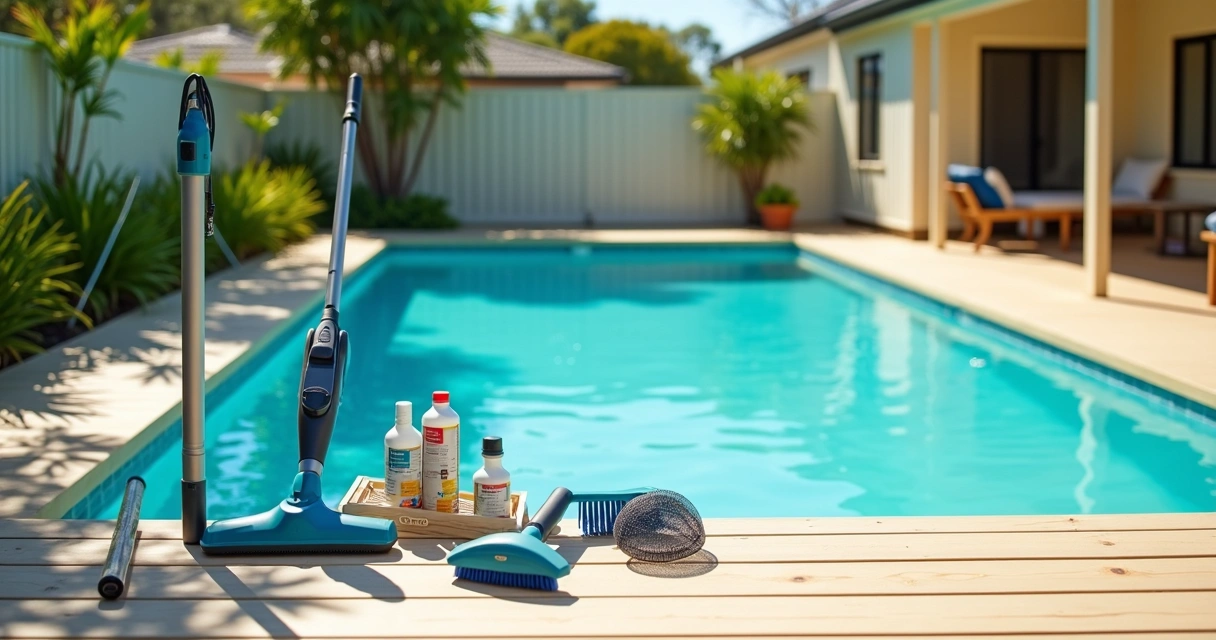
My routine usually includes the following jobs during the week:
- Skim leaves, insects, and floating debris
- Empty skimmer and pump baskets
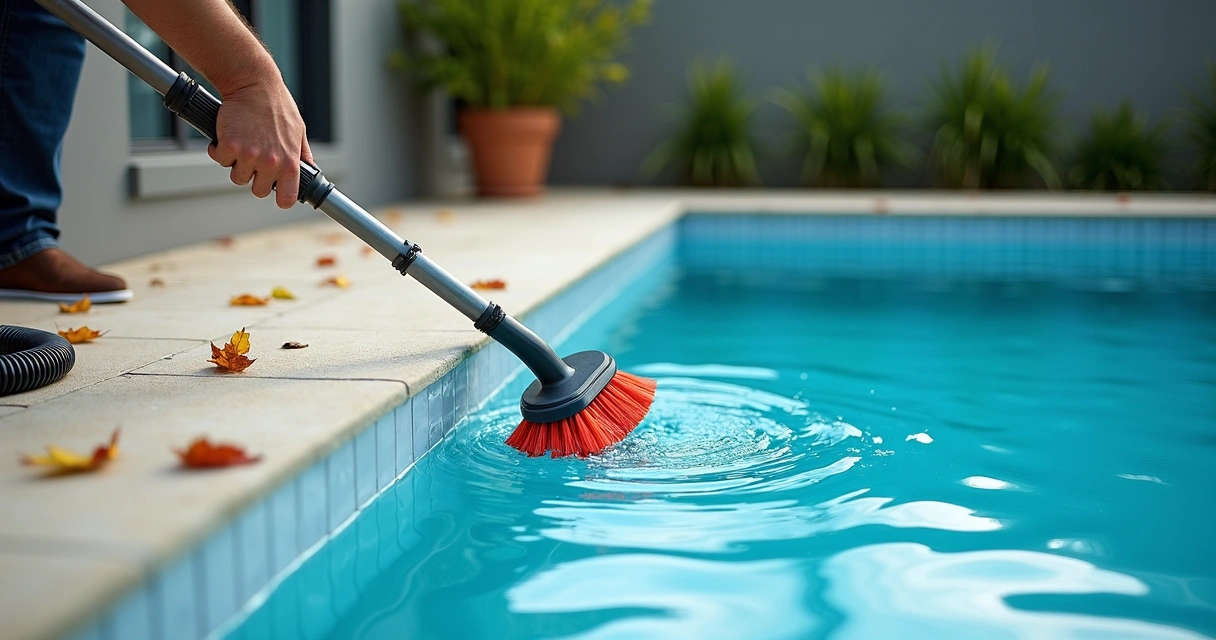
- Brush walls, steps, and corners
- Vacuum settled dirt from the floor
- Check water level
- Inspect the waterline for oils or grime
The brushing step gets missed a lot. I understand why. It feels less urgent than vacuuming. Still, algae often starts on walls, behind ladders, and in shaded corners before the water turns green.
Brushing breaks early biofilm and helps sanitizer reach the surface properly.
Vacuuming matters too. Fine dirt left on the floor can stain some finishes and keep cloudiness hanging around after storms. If I have had a week of wind and rain, I vacuum sooner rather than later.
Filter, pump, and chlorinator checks
I have seen many water problems blamed on chemicals when the real issue was weak circulation or a tired filter. If the system cannot move and clean the water well, treatment gets harder.
Here is what I look at regularly:
- Pump noise or air bubbles that may suggest suction issues
- Filter pressure rise that shows it is time to clean or backwash
- Salt chlorinator output and cell condition
- Visible leaks around equipment pads and unions
- Timer settings after power outages or seasonal changes
A clean filter and steady circulation often fix water quality problems faster than adding extra product.
If you run a salt pool, test salt properly. I have seen owners assume the chlorinator warning was wrong, only to find the level had drifted after rain, topping up, or partial drain work. If that sounds familiar, this article on fixing high pool salt levels with accurate testing is worth reviewing.
Using records and AI to avoid guesswork
I am a big believer in keeping history. Not because it looks tidy, but because patterns show up when you record them. A pool that keeps drifting high in pH, losing chlorine after certain weather, or going cloudy after parties is telling you something.
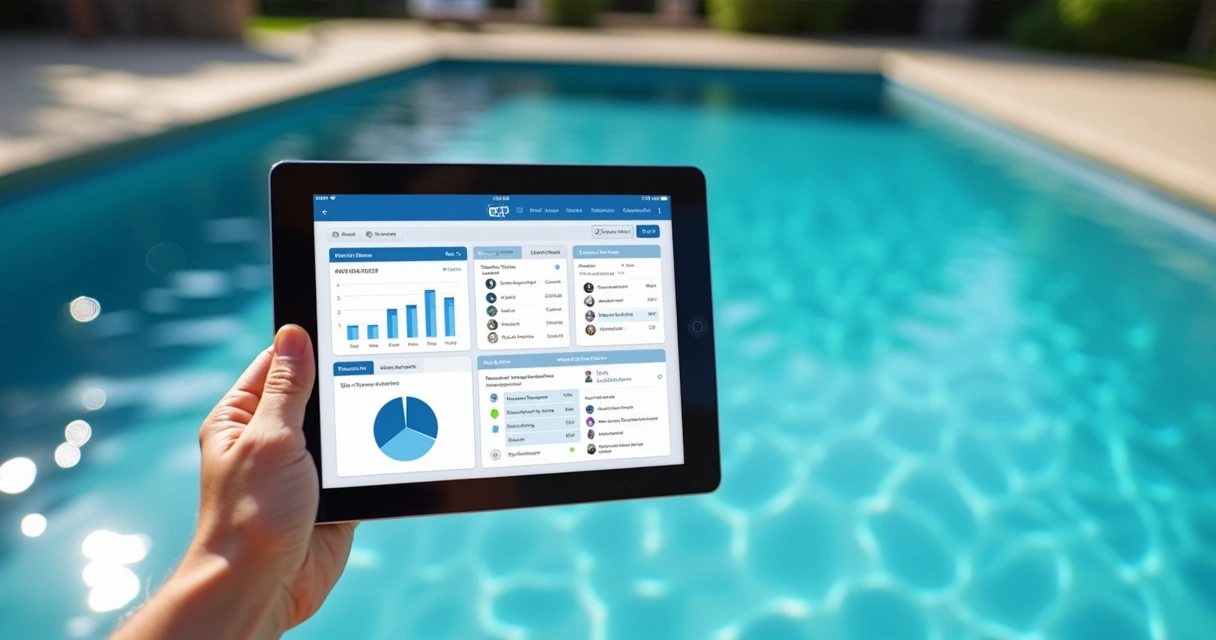
That is where a tool like MyPoolMate fits naturally. It lets owners store pool details, test results, photos, and recurring tasks in one place. I like that because the right treatment depends on the actual pool volume, surface, sanitizer type, and recent readings.
Personalised dosing is safer and often cheaper than broad chemical advice.
I have also found that photo history helps. A faint stain line, repeated leaf load, or slow algae return becomes easier to spot when you can compare images over time.
For anyone who wants a wider view of water behaviour and treatment logic, the articles in this pool chemistry section help connect the numbers to what is happening in the water.
Cleaning responsibility and safety checks
If the pool sits at a rental property, I always tell people to check who handles what. The Queensland tenancy guidance on pool laws and maintenance explains that owners must meet safety and compliance duties, while tenants are often responsible for routine upkeep like clearing leaves, depending on the agreement.
Fencing also needs separate attention from water care. If there is any doubt about compliance, I would rely on licensed pool safety inspectors and certification requirements in Queensland. Good water does not replace a safe barrier.
Conclusion
When I think about pool cleaning in Queensland, I come back to one idea. Clear water is a result, not a starting point. If you test accurately, clean debris before it breaks down, keep equipment working, and treat the pool according to season and real readings, the pool becomes easier to manage and cheaper to keep stable.
I have seen this over and over. The homeowners who do best are not the ones adding the most chemicals. They are the ones following a steady routine and learning from their own pool history.
The best long-term pool care is calm, consistent, and based on evidence from your own water.
If you want a simpler way to track tests, tasks, photos, and tailored treatment advice for your pool, I suggest getting to know MyPoolMate and seeing how its pool-aware tools can help you care for your water with more confidence.
Frequently asked questions
What is pool water balance?
Pool water balance is the relationship between sanitizer, pH, alkalinity, calcium hardness, stabilizer, and, in some pools, salt. When these levels work together, the water feels better, sanitizer works properly, and surfaces and equipment are less likely to suffer damage.
How often should I clean my pool?
In my experience, most Queensland pools need light attention several times a week and a fuller clean weekly. Skimming, basket emptying, and checking water should happen often in summer. Vacuuming, brushing, and filter care usually follow a weekly rhythm, though storms and heavy use can make that more frequent.
What chemicals are needed for Queensland pools?
Most pools need a sanitizer such as chlorine, plus products to adjust pH and total alkalinity. Some pools also need calcium hardness adjustment, stabilizer, salt for saltwater systems, and an oxidising treatment from time to time. The exact mix depends on your pool surface, sanitizer system, fill water, and season.
How much does pool cleaning cost?
The cost varies with pool size, equipment type, how often it is serviced, and whether the water is already balanced. A steady routine usually costs less over time than fixing algae, staining, or damaged equipment. I think the best way to control cost is to test well, record results, and avoid unnecessary dosing.
Where to find reliable pool cleaners?
I would start by looking for local professionals with clear service details, consistent communication, and a method based on testing rather than guesswork. Ask how they handle water balance, equipment checks, and service records. Even if you hire help, using a tool like MyPoolMate to keep your own test history and maintenance notes can make it easier to judge the quality of service.