
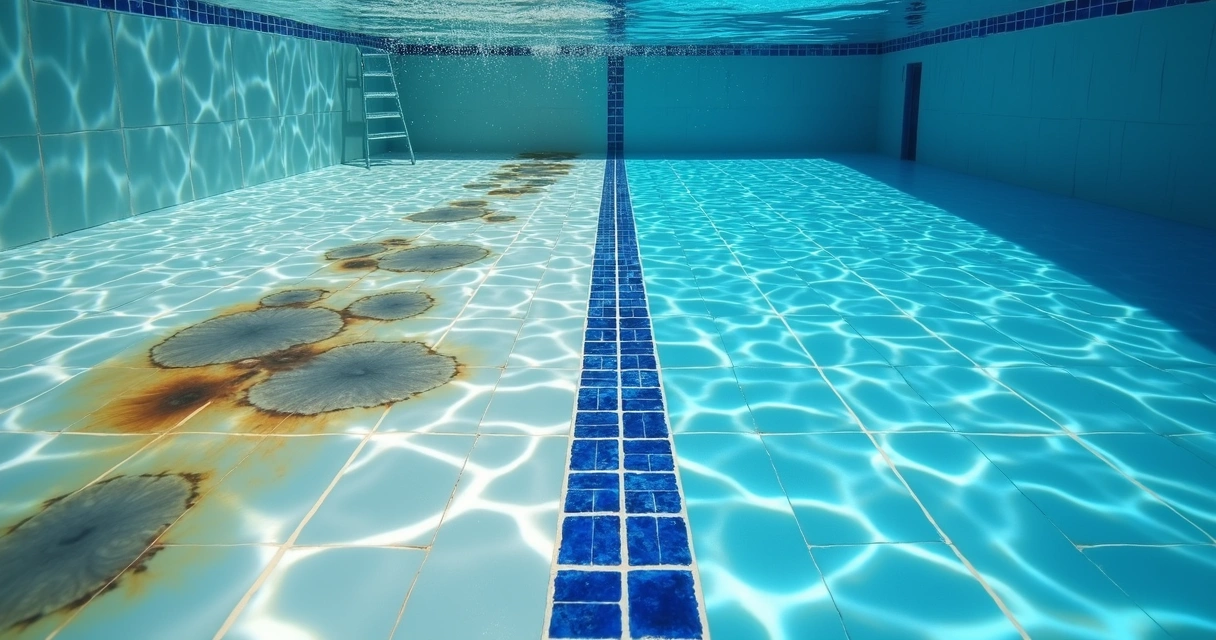
I have seen this happen many times. A pool owner finally gets a quiet afternoon, walks outside, looks at the water, and then notices it. A stain on the step. A dark patch near the wall. A strange mark on the floor that seems to stand out more every day.
It is hard to ignore. It gets worse when friends or family spot it too. What should feel relaxing suddenly feels embarrassing.
Pool stains steal attention fast.
In my experience, most of these ugly marks are caused by metals. Pool water always holds some metal ions, even when the water looks clear. It can also pick up more metals from pipes, heaters, source water, tools, and other surfaces it touches over time. Then the chemistry shifts, and the trouble starts.
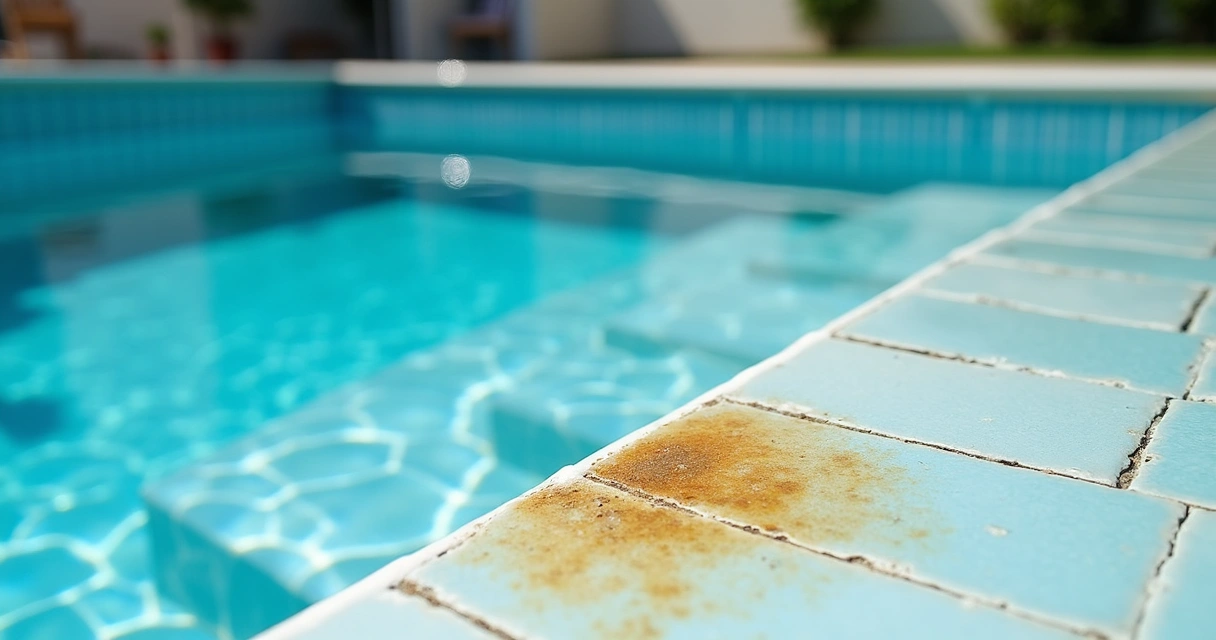
Metal stains form when dissolved metals leave the water and stick to pool surfaces as coloured oxides.
That often happens when pH gets too high, when oxidiser levels such as chlorine rise sharply, or when metal levels in the water become too high. I think this is why stains seem to appear out of nowhere. The metal may have been in the water all along, just waiting for the right conditions.
What the stain colour can tell me
If I am looking closely, the colour can give clues about which metal caused the stain. On another person’s pool, those details seem obvious. On my own pool, though, I admit that most stains simply look ugly.
Still, the usual colour guide is helpful:
Iron often leaves yellow to rust-coloured stains.
Silver can cause grey to black staining.
Copper usually creates blue to aqua marks.
Manganese, which is less common, can leave dark purple stains.
That kind of colour coding is useful if I want to play detective. But for most pool owners, the real issue is much simpler. The stains look bad, and they make the pool feel poorly cared for.
When I track test results over time, I find it easier to connect stains with water balance changes. That is one reason tools like MyPoolMate are useful. They help pool owners log results, review trends, and see if high chlorine, drifting pH, or changing seasonal conditions may be behind the marks.
Why acid washing is not my first choice
One well-known way to remove metal stains is acid washing. Yes, it can work. But I would never call it a light solution.
Acid washing has several downsides:
It is harsh on many pool surfaces.
It can be rough on equipment and surrounding materials.
It involves hazardous chemicals.
The pool usually has to be drained first.
It can become expensive very quickly.
Acid washing removes stains, but it does so in a way that can also remove part of the surface itself.
That is the part many owners do not enjoy hearing. Draining a pool, handling acid, and paying for labour or repairs is a lot to take on for a stain problem that may be fixed in a gentler way.
For routine stain treatment, I prefer methods that work while the pool is still full. They are usually safer, easier on the surface, and far more affordable.
In-water stain removers make life easier
In-water stain removers are made to treat stains without draining the pool. I like this approach because it is less disruptive. The pool stays full, the process is simpler, and there is less risk of surface damage compared with acid washing.
Many products in this category are designed for one metal type at a time. Some are for iron, some for copper, and some for other metals. Often, owners are told to use stain identification kits first so they can match the product to the stain.
That works in theory. In practice, it can take days.
I have seen how this becomes a small investigation:
Test the stain or study the colour.
Guess which metal is involved.
Choose the matching remover.
Wait to see if the guess was right.
If the guess is wrong, time is lost. The stain remains. Frustration grows.
For pool owners who want to understand the wider chemistry behind these issues, I often suggest reading more on pool chemistry. I also think many owners benefit from asking whether they really need every product they are sold, which is why this guide on recommended pool chemicals is worth a look.
A simpler option that works fast
One product that stands out to me is Multi-Stain Remover by Lo-Chlor®. It has been popular for decades, and I can see why. It is designed to remove all kinds of metal stains without the need to test and identify which metal caused them first.
Multi-Stain Remover by Lo-Chlor® treats metal stains in a full pool, without separate stain identification, and it often works overnight.
That is a very practical benefit. Instead of spending days trying to match colour to chemistry, I can use one treatment aimed at the whole stain problem. It is also safe for in-water use, which makes it gentler than draining and acid washing.
I like simple solutions when they are also effective. This one is both. In many cases, owners wake up to a visibly cleaner pool with far less effort than they expected.
Fast can also be simple.
Of course, removing the stain is only part of the job. If the metals remain active in the water, the stains can return.
What I do after stain removal
After any metal stain treatment, I always look at prevention. That means using a metal sequestrant. This type of product helps keep metals suspended in the water so they are less likely to fall out and stain surfaces again.
A metal sequestrant is needed after stain removal to help stop stains from coming back.
This step matters because stain removal without follow-up care can become a cycle. Clean the stain, wait, and then watch it return. I would rather break that pattern early.
Good testing helps here too. If source water, salt levels, chlorine spikes, or seasonal care habits are adding stress to the water, those factors should be corrected. I have found useful reading on related topics such as high pool salt levels, enzyme pool care for water issues, and pool maintenance in Queensland.
With MyPoolMate, pool owners can keep records of tests, photos, and treatment steps in one place. I think that makes it easier to spot patterns and avoid repeating the same stain problem month after month.
My final view
Pool stains get noticed at the worst time. Right when I want to relax, they pull my eyes straight to the flaw. And once guests notice them, the pool can feel less inviting than it should.
The good news is that metal stains do not always call for harsh treatment. Acid washing may remove them, but it is rough, hazardous, and costly. In-water removers are a gentler option, and Multi-Stain Remover by Lo-Chlor® offers a quick way to treat many metal stains without turning the job into a long guessing game.
I like solutions that work quietly and well. This is one of them. In fact, it is so simple that some owners may prefer not to tell their guests how easy the fix really was. If you want a cleaner pool and better control over the chemistry that causes stains, get to know MyPoolMate and see how its smart testing records and personalised guidance can help you stay ahead of the problem.
Frequently asked questions
What causes metal stains in pools?
Metal stains in pools are usually caused by dissolved metals such as iron, copper, silver, or manganese in the water. When pH is high, chlorine or another oxidiser is high, or metal levels build up too much, those metals can turn into coloured oxides and stick to the pool surface.
How to remove pool metal stains fast?
The fastest simple method is often an in-water stain remover that works without draining the pool. Multi-Stain Remover by Lo-Chlor® is a well-known option because it treats different metal stains without separate testing and often clears stains overnight.
Are metal pool stains harmful?
Most metal stains are more of a cosmetic problem than a direct health risk. They make the pool look dirty or neglected, but the bigger issue is what they say about water balance and metal levels, which should still be corrected.
What products remove pool stains best?
Products made for in-water stain removal are often the best first option for metal stains because they are gentler than acid washing. Some are designed for one metal only, while Multi-Stain Remover by Lo-Chlor® is made to remove many types of metal stains without first identifying the exact metal.
How to prevent metal stains in pools?
I prevent metal stains by keeping water balance steady, avoiding large chemistry swings, checking source water when needed, and using a metal sequestrant after stain removal. Ongoing tracking with a tool like MyPoolMate can also help catch the conditions that lead to staining before marks appear.