
In my experience, saltwater pools feel easier once you understand one simple truth. They are not a totally different type of pool. They are regular pools with a different way of making chlorine.
That idea removes a lot of stress. I have seen many owners assume a saltwater pool looks after itself. It does not. But it also does not need mystery or guesswork.
Most of the routine stays the same.
If you own a saltwater pool in Australia, I think the best approach is to split maintenance into two parts. First, the regular mechanical work like pumps and filters. Second, the salt-specific chemistry and cell care. That is also the kind of practical thinking I like in MyPoolMate, where advice is tied to your actual pool setup instead of broad rules.
What stays the same
The daily and weekly habits are much like caring for a standard chlorine pool. Your pump still needs attention. Your filter still gets dirty. Leaves still land in the water at the worst time.
I always tell owners to keep an ear on the equipment area. If the pump starts making odd noises, sucking air, or struggling to prime, something is off. Clean the pump basket, check the water level, and inspect the lid seal.
These routine jobs still matter:
Empty pump baskets and skimmer baskets.
Listen for odd pump noises or signs of low flow.
Grease the pump lid o-ring so the seal stays sound.
Brush walls and steps to stop buildup.
Vacuum or remove debris as needed.
Filter care also stays familiar. A sand filter should be backwashed when pressure rises above the normal range. A cartridge filter should be rinsed clean and, from time to time, soaked in a proper cleaning solution to remove oils and fine debris.
A saltwater pool still depends on good circulation and filtration to stay clear.
If you live in a warm state with a long swim season, I think local weather patterns make a big difference to your schedule. For broader seasonal context, I like the advice in this Queensland pool maintenance guide, because climate changes how hard your system needs to work.
Where saltwater pools differ
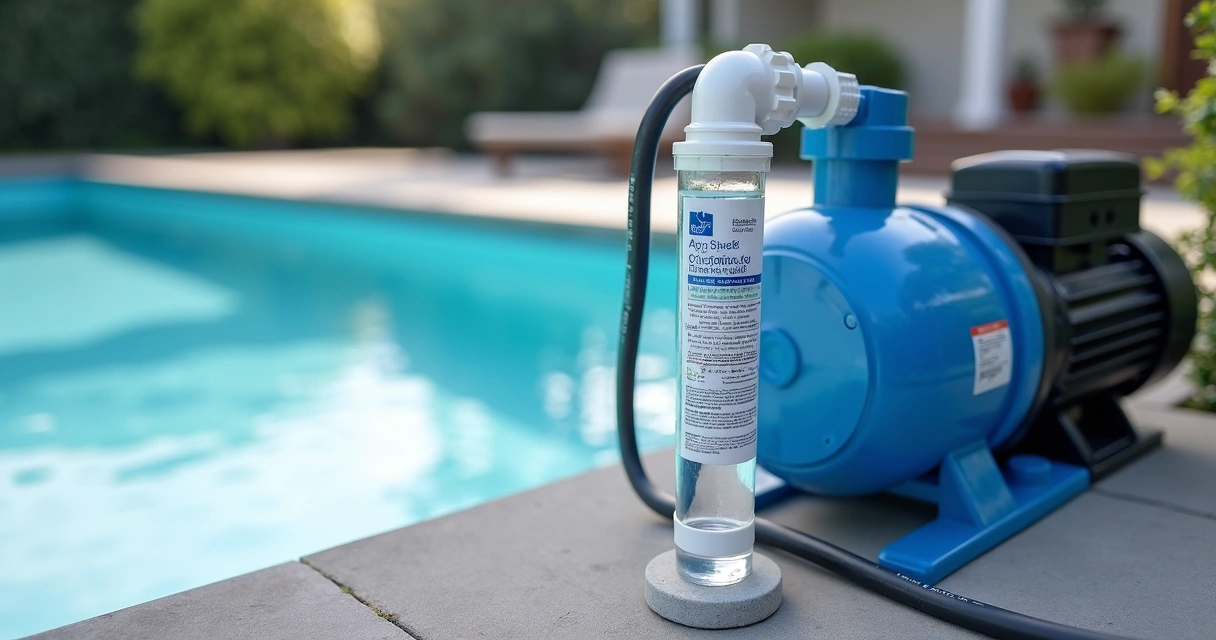
The main difference is chemical management. In a saltwater pool, the chlorinator makes chlorine from dissolved salt. So instead of constantly adding chlorine by hand, you control free chlorine by adjusting the chlorinator settings and run time.
Free chlorine in a saltwater pool is mainly controlled at the chlorinator, not by routine manual chlorine dosing.
That catches people out. They test the water, see chlorine is low, and think the answer is always to pour something in. Sometimes a manual dose is needed for recovery, but normal control should come from the chlorinator.
I pay close attention to three numbers:
Free chlorine
PH
Cyanuric acid, also called stabiliser
PH tends to drift up in saltwater pools. That is expected because electrolysis produces sodium hydroxide. I have seen owners chase this too late, then wonder why the water feels rough or scaling starts to form.
Check total alkalinity as well, because it affects how fast pH rises. If pH climbs too high, lower it with a suitable pH reducer or tablets recommended for your setup.
Higher pH is common in saltwater pools, so regular testing and correction are part of normal care.
Cyanuric acid should usually sit around 60 to 80 ppm in a saltwater pool. That is often a bit higher than many people expect. The reason is simple. Your pool is producing chlorine in small ongoing amounts, and that chlorine needs better protection from strong Australian sun.
If you want a deeper brand-specific setup example, I found this Axis salt chlorinator guide useful as a general reference for how owners can think about settings and output.
Salt cell care
This is the one maintenance task that really feels unique. Even self-cleaning cells need inspection. Once or twice a year, I would look inside the salt cell for calcium buildup.
If scale forms on the plates, chlorine output drops and flow warnings can start showing up. A dedicated kit can make the job easier. Many owners use a cleaner such as Aussie Gold Clean A Cell for safe soaking and rinsing.
For a wider fault-finding process, this salt water chlorinator troubleshooting guide helps connect symptoms with likely causes.
MyPoolMate fits well here because keeping a photo history of your cell, test results, and seasonal changes makes it easier to see whether a setting problem, scaling issue, or chemistry imbalance is the real cause.
Common problems and simple fixes
I think this is where owners save the most money. A clear symptom does not always mean you need more chemicals.
Low flow warning: Usually linked to a dirty filter, blocked baskets, or calcium on the cell.
Low chlorine production: Check salt level first, then inspect and clean the cell.
Too much salt: Partially drain and refill with fresh water. This guide on fixing high pool salt levels explains the process well.
Erratic salt readings: Confirm with a test strip, then clean the cell or replace it if worn.
Pool accident: Scoop out debris, boost the chlorinator, and run the pump for 24 hours.
Green hair: Usually copper related, not a saltwater-only issue. Use a metal sequestrant and check if any copper-based algaecide has been used.
High chlorine: Lower the chlorinator output or reduce run time.
Cloudy water: Clean or replace filters, and use a flocculant if very fine particles remain suspended.
High pH: This is common. Lower it with pH reducer and keep watching total alkalinity.
Cannot reach target chlorine: Check for heavy UV burn-off, low stabiliser, or an undersized chlorinator.
Too much cyanuric acid: Partially drain and refill to dilute it.
Metal corrosion: Install a sacrificial anode to help protect ladders, heaters, and other metal parts.
Extra tips that help over time
In my experience, stable pools are cheaper pools. Once your chlorinator setting, pH control, and stabiliser level are in the right range, ongoing care gets easier.
If you are comparing pool systems for a future build or renovation, this article on magnesium pools vs chlorine for Australian homes gives more context on how different setups change maintenance style.
I also think joining a pool club can be worthwhile if it gives you discounts on supplies and sends plain-language care tips. Small savings add up over a full swim season.
Conclusion
Once I explain it this way, saltwater pool care stops sounding hard. Most of the work is the same as any other pool. Clean the baskets. Watch the pump. Service the filter. Brush and vacuum when needed.
The real difference is paying closer attention to free chlorine, pH, cyanuric acid, and the salt cell itself. Get those right, and the system becomes easier to live with. If you want a simpler way to track tests, spot patterns, and get pool-specific guidance without overdoing chemicals, I suggest getting to know MyPoolMate and seeing how it can support your saltwater pool routine.
Frequently asked questions
What is a saltwater pool?
A saltwater pool is a swimming pool that uses a salt chlorinator to turn dissolved salt into chlorine. It still uses chlorine for sanitation, but the chlorine is made in the system instead of being added as the main day-to-day method.
How to clean a saltwater pool?
I clean a saltwater pool much like a standard pool. I remove debris, brush walls, vacuum as needed, empty baskets, and clean the filter. The extra task is checking the salt cell once or twice a year for calcium scale and cleaning it when needed.
How often should I test salt levels?
I think monthly is a good baseline for most home pools, with extra checks after heavy rain, backwashing, topping up water, or if the chlorinator shows a salt warning. It is also wise to confirm unusual readings with a test strip.
Is saltwater pool maintenance expensive?
It can be reasonable if the pool stays balanced. You may buy fewer routine chlorine products, but you still need testing supplies, acid or pH reducer, stabiliser, and occasional salt cell cleaning or replacement. Costs often rise when water balance is ignored.
What are the benefits of saltwater pools?
Many owners like the steadier chlorine production, softer water feel, and simpler daily chlorine control. In my experience, once the settings are dialled in, a saltwater pool can feel easier to manage because the chlorinator keeps producing chlorine in small ongoing amounts.