

Algaecides can help, but they are not a magic fix. For most Australian backyard pools, they work best as a preventative or as backup support during algae recovery, not as a substitute for chlorine, circulation, and proper testing.
If your water keeps turning green, the real issue is usually somewhere else: low sanitiser, poor filtration, hidden algae on surfaces, or chemistry that is out of range. This guide explains when an algaecide makes sense, how to use it safely, and when to skip it.
Key takeaways for pool owners
- Use an algaecide for prevention or support, not as your main sanitiser.
- Choose the product for the job: polyquat is often the safer general option, while copper based products need more caution.
- Do not treat green water blindly. Fix chlorine, pH, circulation, brushing, and filtration first.
- Measure carefully. Overdosing can create foam, cloudiness, or staining risk.
- Track results over time. Repeated algae problems often point to a pattern, not a one off mistake.
When does an algaecide actually make sense?
An algaecide is most useful when you are trying to stop algae before it takes hold or when you want extra support during a recovery. That often means after heavy rain, during hot humid stretches, before a holiday, or when your pool has a history of going green in the same season.
In Queensland especially, warm water and frequent storms can create the perfect conditions for recurring growth. If that sounds familiar, a proper prevention routine matters more than random chemical additions. MyPoolMate users often start by reviewing practical algae prevention steps for Brisbane pools and then matching treatment to their pool type, volume, and sanitiser setup.
What an algaecide should not do is replace the basics. If chlorine is low, debris is sitting on the floor, or the filter is struggling, the algae problem will come back.
Chlorine still does the heavy lifting
If algae is already visible, chlorine is usually the main tool that clears it. An algaecide can help in some cases, but it will not make up for weak sanitiser levels or poor filtration.
This is where many pool owners get sold too many products at once. A better approach is to solve the cause, not just the symptom. If you are unsure whether you need another bottle at all, the logic in how to judge recommended pool chemicals is a useful reality check.
Think of it this way:
| Task | What does most of the work | Where algaecide fits |
|---|---|---|
| Preventing future growth | Consistent sanitiser and circulation | Helpful as backup |
| Clearing a green pool | Chlorine, brushing, filtration, vacuuming | Secondary support only |
| Stopping repeat outbreaks | Fixing root causes | Useful if timed properly |
What is the best type of algaecide to use?
There is no single best product for every pool. The right choice depends on whether you want routine prevention, help during recovery, or support for a stubborn algae type.
Polyquat is often the safer all round option
For many residential pools, polyquat is a sensible preventative choice because it is commonly used without the foaming issues that some basic formulas can cause. If your aim is seasonal prevention, this is often the first type to consider.
Quat products can be cheaper, but not always smoother
Some quat based products are budget friendly, but they can be less forgiving in day to day use. If a pool owner is chasing the cheapest option rather than the best fit, they may end up with water that looks worse before it looks better.
Copper based products need extra caution
Copper based algaecides can be effective, especially for stubborn growth, but they carry more downside if used casually. If your pool surface, metal content, or water balance already make staining a concern, this is not a category to guess with. That is one reason many owners now prefer a pool specific decision process rather than generic store advice.
If you want more confidence before adding anything, MyPoolMate can compare your test history, pool surface, and recent changes, then Splash can help explain why one option may suit your pool better than another.
When should you add an algaecide to a pool?
The best time is usually after you have tested the water, corrected obvious imbalances, and confirmed the product matches your goal. In practical terms, that often means adding it as part of a prevention routine or once a recovery plan is already underway.
- Make sure the pump is running.
- Confirm your pool volume, so the dose is accurate.
- Check pH and sanitiser first, because badly balanced water reduces your chances of success.
- Brush problem areas before or after dosing, based on the label directions.
- Allow time for circulation before making more changes.
If you tend to add chemicals based on rough estimates, a proper metric dosing approach for pool chemicals can save money and reduce side effects.
What happens if you add too much?
Too much algaecide can create new problems. Depending on the product, that can mean foaming, cloudy water, wasted chemical, or a higher staining risk.
Overdosing also makes troubleshooting harder. If the water still looks poor, you cannot easily tell whether the original algae problem is unresolved or whether the treatment itself has added a second issue. For home pool owners, measured dosing nearly always beats aggressive dosing.
A simple rule helps here: if you are tempted to double the amount because the pool looks bad, stop and check the cause first.
Why is the pool still green after using it?
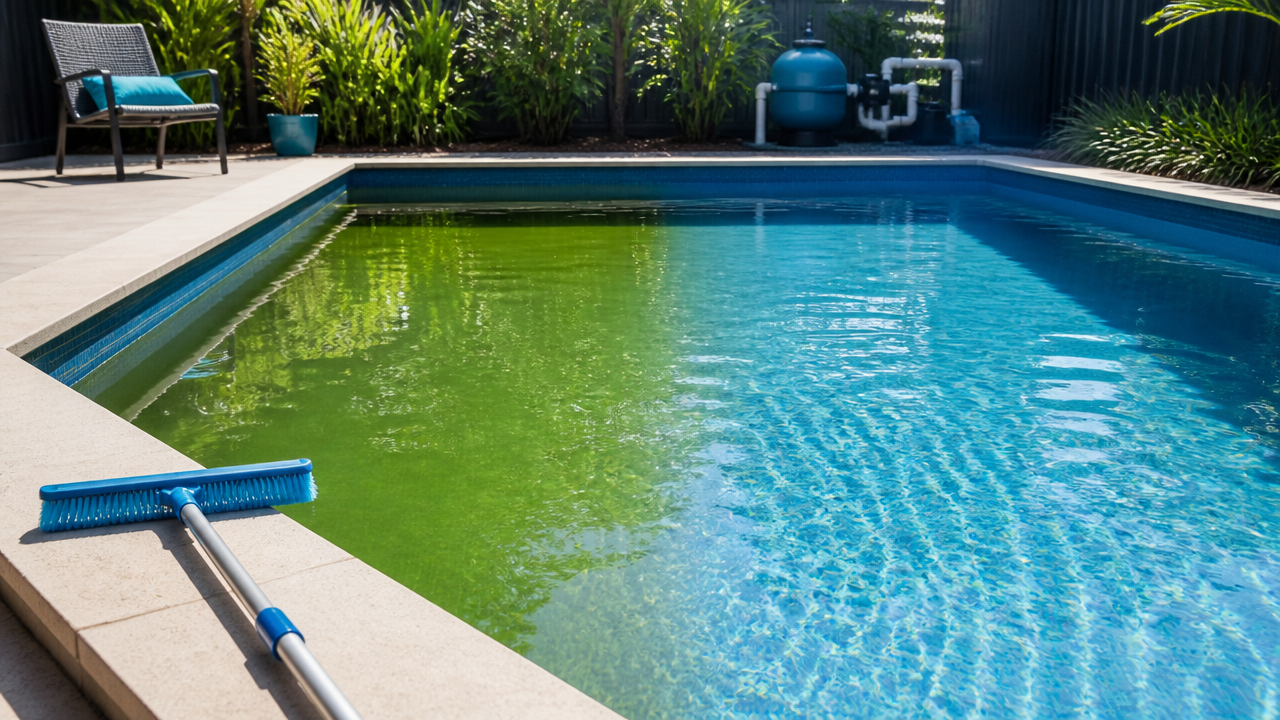
If the pool stayed green, the algaecide probably was not the real answer. Most failed treatments come back to four things: active chlorine was still too low, the filter could not remove dead material, algae was not brushed loose from surfaces, or the root cause was never fixed.
That is why a proper green pool recovery plan matters more than product choice alone. If you are dealing with repeat outbreaks, the steps in how to stop a pool going green again are usually more valuable than buying a stronger bottle.
MyPoolMate is especially useful here because it keeps your full test history in one place. Instead of guessing, you can look for patterns: storm weeks, low chlorine periods, seasonal shifts, or the same imbalance appearing after every top up. That helps Splash suggest a recovery path that is specific to your pool, not a generic script.
How to use algaecide safely in a residential pool
Safe use is mostly about timing, compatibility, and restraint. You want the product to support the water, not fight with everything else you have just added.
- Read the label fully before opening the bottle.
- Use the dose for your actual pool volume, not a guess.
- Do not pile several corrective chemicals in at once unless the instructions clearly allow it.
- Keep the pump circulating so the product disperses evenly.
- Retest after treatment instead of assuming the problem is solved.
If you want a more personalised plan, especially for recurring summer outbreaks, tools like AI guided pool water analysis can help you avoid unnecessary treatments and focus on what your pool actually needs.
Frequently asked questions
When should you add an algaecide to a pool?
Usually after you have balanced the water and confirmed you actually need it. For most home pools, an algaecide works best as a preventative or as support during recovery, not as the first and only fix for green water. Add it with the pump running and follow the product label for your pool volume.
What is the best type of algaecide to use?
Not always. The best option depends on whether you want prevention, extra support during recovery, or treatment for a stubborn algae type. Many residential owners do well with a non foaming polyquat for prevention. Copper based products can help in some cases, but they need more caution because of staining risk.
What kills algae better, chlorine or algaecide?
Chlorine usually kills active algae faster. Algaecide is better thought of as a support chemical or a preventative tool. If the pool is already green, poor chlorine control, weak circulation, dirty filters, or unstable water balance are often the real reasons it has taken hold in the first place.
Why is my pool still green after using algaecide?
The most common reasons are that the bloom was too advanced, chlorine demand was still high, the filter was overloaded, or dead algae was left in the water. Some owners also dose the wrong product or add too little for the pool volume. A full recovery plan needs brushing, filtration, vacuuming, and follow up testing.
What happens if you add too much algaecide?
Too much can cause foaming, cloudy water, wasted money, and in some cases staining or side effects that make the pool harder to balance. More is not better. Measure your pool volume properly, read the label, and dose in stages if you are unsure. That is safer for both the water and the pool surface.


