

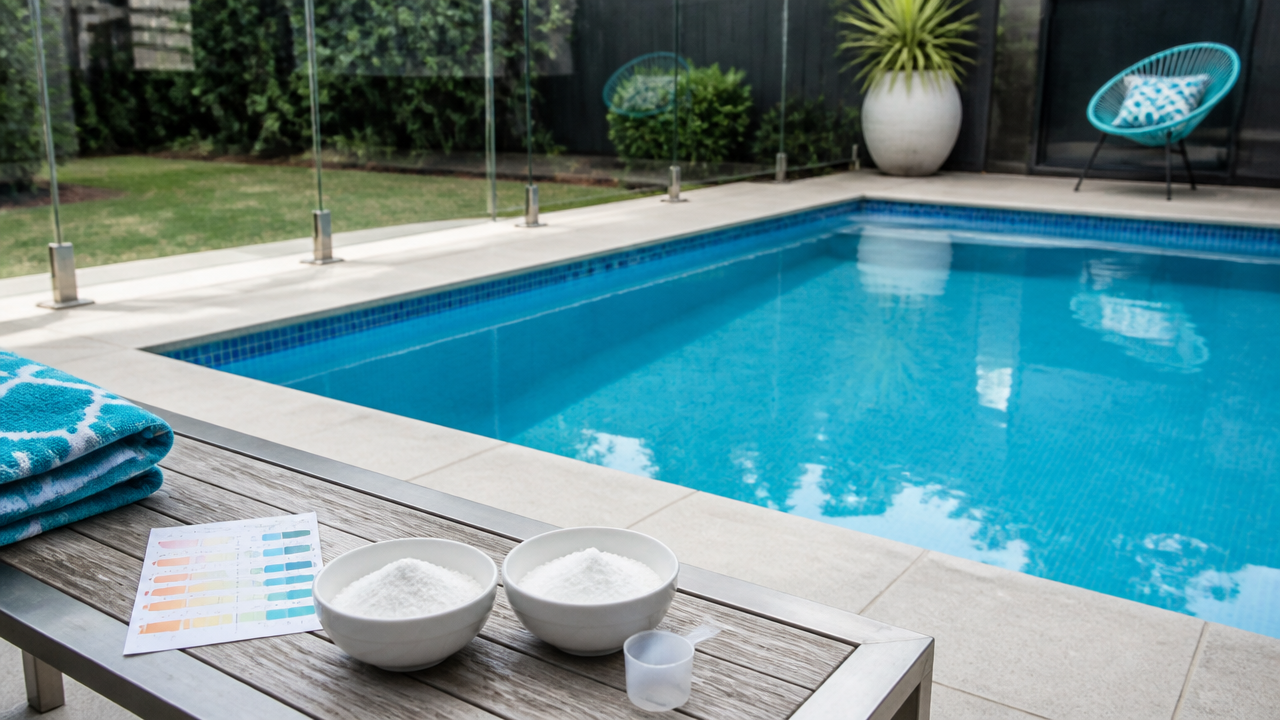
If your pool pH is low, baking soda and soda ash are not interchangeable. Baking soda is mainly for lifting total alkalinity, while soda ash is the better choice when you need to raise pH more quickly. For Australian backyard pools, choosing the right one saves money, avoids overshooting, and makes the rest of your water balance easier to control.
The simple rule is this: fix the parameter that is actually low. If you are not sure whether the real issue is pH, alkalinity, or both, MyPoolMate can help you read your printed pool shop results and turn them into a more precise plan for your pool.
Key points before you add anything
- Baking soda is sodium bicarbonate. It mainly raises total alkalinity and only nudges pH upward.
- Soda ash is sodium carbonate. It raises pH more strongly and also lifts alkalinity.
- If alkalinity is low, baking soda is usually the safer first step.
- If pH is low but alkalinity is fine, soda ash is usually the better fit.
- Adding the wrong product can create cloudy water, scale, or a frustrating pH rebound.
- Always retest after circulation before adding another dose.
Baking soda and soda ash do different jobs
The big difference is not the name on the bag. It is the effect each product has on water balance. Baking soda is a buffer. Soda ash is a stronger pH raiser.
That distinction matters because pH and total alkalinity are related, but they are not the same thing. If you treat them as one problem, you can fix one number while pushing the other too far. A good starting point is understanding the difference between stable total alkalinity and day to day pH movement.
| Product | Main chemical | Best used for | Typical side effect |
|---|---|---|---|
| Baking soda | Sodium bicarbonate | Raising total alkalinity | Small pH increase |
| Soda ash | Sodium carbonate | Raising low pH | Can lift alkalinity quickly |
Should I use baking soda or soda ash in my pool?
Use the one that matches the actual imbalance. If total alkalinity is low, start with baking soda. If pH is low and alkalinity is already in range, use soda ash.
This is where many pool owners get tripped up. Low pH can look like the urgent problem because it is easy to focus on a single number, but low alkalinity often sits underneath it. When alkalinity is too low, pH tends to swing around. In that situation, lifting alkalinity first can make the water more stable and reduce the need for repeated corrections.
On the other hand, if alkalinity is already healthy, adding baking soda may barely shift pH and can leave you with alkalinity that is now higher than ideal. If you need a clearer framework, MyPoolMate's guide to raising pool pH safely is a helpful next step.
Will baking soda raise pool pH?
Yes, but only a little compared with soda ash. Its main job is buffering the water, not rapidly correcting acidic conditions.
That is why baking soda is often the better choice when your test results show low total alkalinity with mildly low pH. It supports both numbers, but its stronger influence is on alkalinity. For many residential pools, that is useful because it steadies the water without the sharper jump you can get from soda ash.
If your pH is well below target and alkalinity is already fine, baking soda can be too gentle. You may add more than you need, see little pH movement, and end up making the next correction harder. That is one reason broad pool shop advice can miss the mark. A more tailored approach, like AI pool water analysis, helps you avoid using a product just because it sounds familiar.
When soda ash is the smarter choice
Soda ash is usually the better option when pH is low and needs a proper lift. It works faster on pH than baking soda does.
That does not mean more is better. Soda ash can cloud the water temporarily if it is overdosed or broadcast carelessly. It can also push total alkalinity up at the same time. In a hard water pool, especially during hot Queensland conditions with lots of evaporation, that can increase the risk of scale if you overshoot.
Use it when the water needs a genuine pH correction, not as a default substitute for every low reading. If you often end up with several chemicals on the same pool shop receipt, it is worth comparing that with a more targeted plan in the common over-prescribing problem many pool owners run into.
The safest order for adjusting your water
Most pools are easier to correct in stages. In many cases, total alkalinity comes first, then pH, then a recheck of sanitiser and the rest of your balance.
- Test the water or scan your printed pool shop results.
- Check whether alkalinity, pH, or both are low.
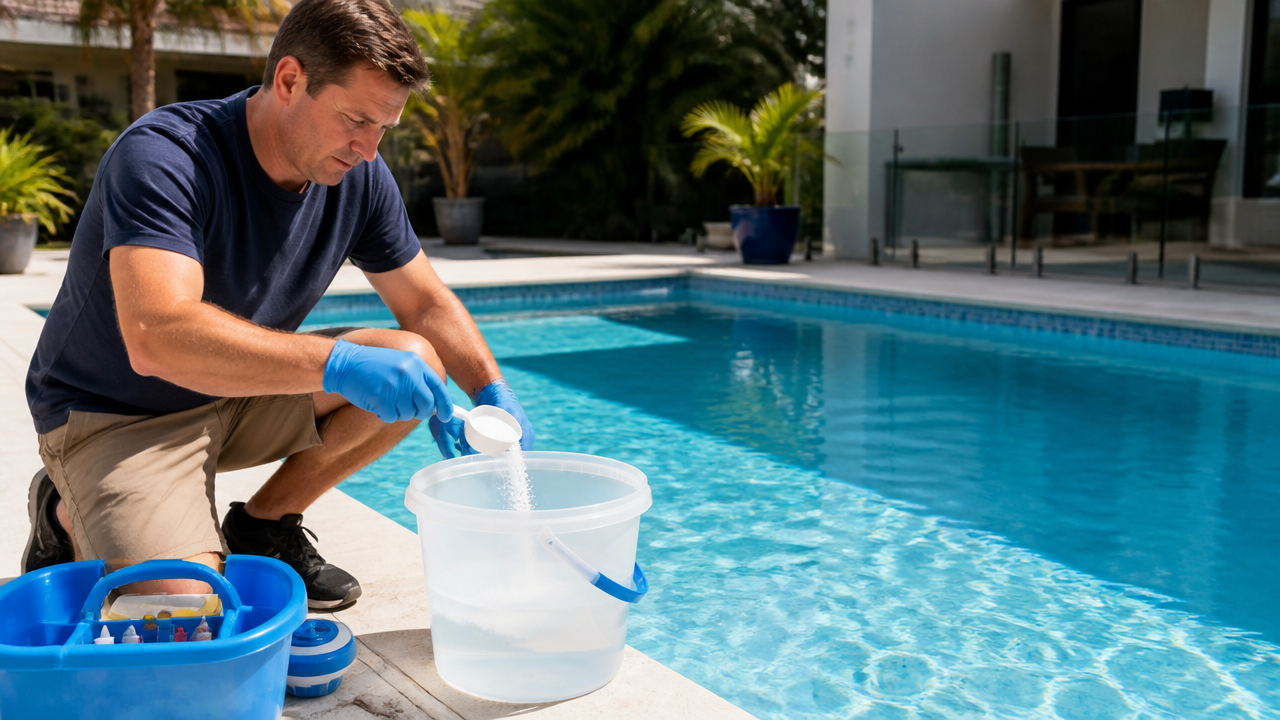
- If alkalinity is low, add baking soda in a measured dose.
- Circulate the pool, then retest.
- If pH is still low and alkalinity is now acceptable, use soda ash carefully.
- Retest again before making any further changes.
This stepwise method helps prevent the common cycle of overshooting one value, then adding another product to undo the first. MyPoolMate supports this process with a clearer order for pool chemicals, test history, and pool-specific recommendations instead of one-size-fits-all dosing.
What mistakes cause the most trouble?
The biggest mistake is treating low pH as the only problem. The next biggest is adding large doses before retesting.
Adding baking soda when alkalinity is already high
This can leave the water over-buffered and harder to adjust later. You may still have low pH, just with a second imbalance added on top.
Using soda ash too aggressively
Fast pH correction sounds good, but large additions can create cloudy water and drive alkalinity upward at the same time. Smaller staged doses are safer.
Ignoring your pool's context
Salt pools, heavy rain, fresh top-ups, high evaporation, and recent chemical changes all affect the right next step. That is where keeping records matters. If you want a more consistent routine, MyPoolMate also helps with reading pool shop test results and building a maintenance history around your actual pool.
A practical rule of thumb for Australian backyard pools
If you remember one thing, make it this: use baking soda to support alkalinity, use soda ash to lift pH. They overlap a bit, but they are not the same fix.
For time-poor pool owners, that simple distinction prevents a lot of wasted money and back-and-forth corrections. Test first, adjust in stages, and let the water circulate before deciding on the next dose. When you have pool-specific guidance instead of generic advice, the chemistry gets simpler very quickly.
That is the value MyPoolMate aims to deliver. Instead of selling you a longer list of chemicals, it helps you identify the root cause, choose the right product, and avoid adding more than your pool actually needs.
Frequently asked questions
Is bicarb soda the same as baking soda?
Yes. In Australia, bicarb soda and baking soda are the same product: sodium bicarbonate. In pool care, it is mainly used to lift total alkalinity, with only a modest effect on pH. That is why it is not usually the best first choice when pH is low but alkalinity is already acceptable.
Should I use baking soda or soda ash in my pool?
Use baking soda when total alkalinity is low and your water needs more buffering. Use soda ash when pH is low and alkalinity is already close to target. If you pick the wrong one, you can push balance in the wrong direction and create cloudy water, scaling, or a pH bounce a few days later.
Will baking soda raise pool pH?
Not exactly. Baking soda can raise pH a little, but its bigger effect is on total alkalinity. If your pH is low and alkalinity is already fine, baking soda may not move pH enough. In that case, soda ash is usually the better tool because it lifts pH more directly.
What is the safest way to adjust pool chemistry?
Add small, measured doses, let the water circulate, then retest before adding more. Many pool owners do best by correcting alkalinity first, then fine-tuning pH. Avoid guessing by eye. MyPoolMate helps by reading pool shop printouts, tracking your history, and suggesting the next adjustment based on your actual pool.
Can too much baking soda or soda ash cause problems?
No. More is not better. Overdosing can push pH or alkalinity too high, which can lead to cloudy water, calcium scale, and extra chemical use to reverse the mistake. A better approach is to test, dose in stages, and recheck after circulation rather than trying to fix everything in one hit.


