

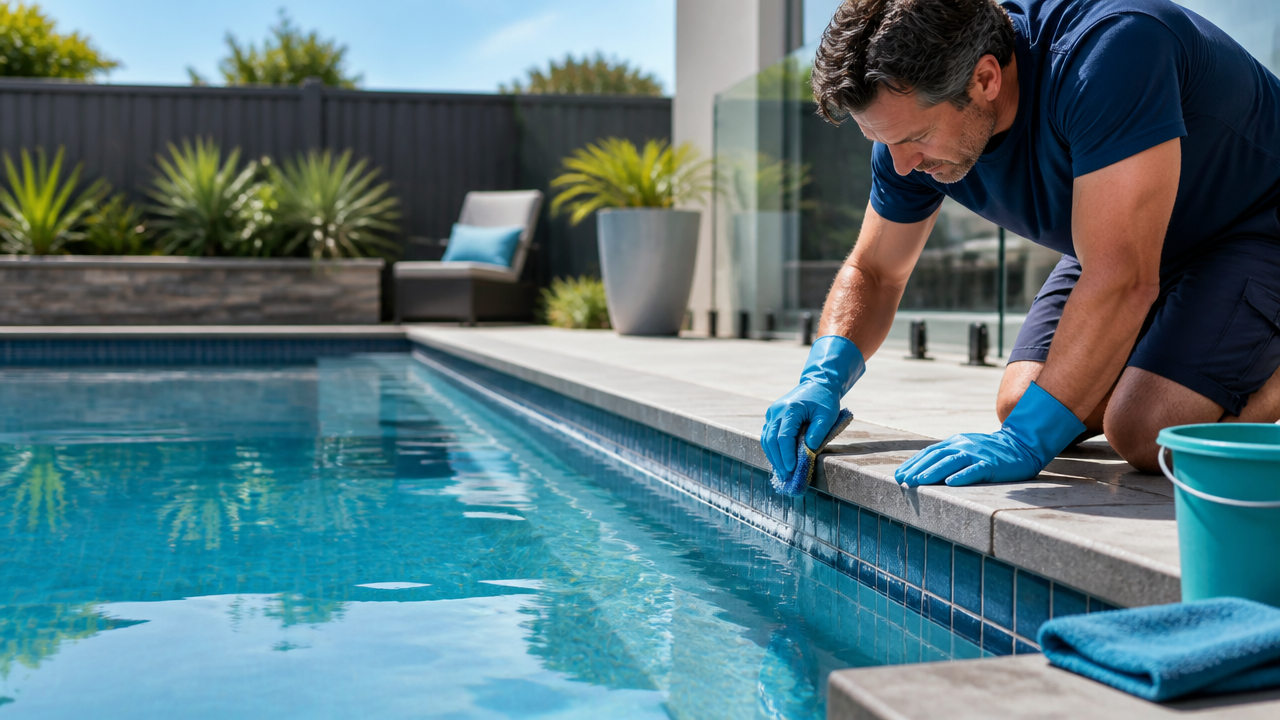
If your pool has a rough white line around the waterline, you are usually dealing with calcium scale. The good news is that it can be removed, but the right method depends on how hard the deposit is and what surface it is stuck to. For Australian backyard pools, the real fix is two-part: clean off what is there, then stop the water balance from creating more.
This guide is for residential pool owners who want a practical plan, not vague pool-shop advice. You will learn how to identify mineral buildup, remove it safely, and use MyPoolMate to keep the chemistry in the safe zone so it does not keep coming back.
The key points before you start scrubbing
- Most white crust at the waterline is calcium scale, not dirt, and it needs a different approach.
- The safest cleaning method depends on the finish, because tile, glass, pebble and plaster do not all tolerate the same tools.
- High pH, high alkalinity and high calcium hardness are the usual drivers, especially during hot, high-evaporation periods.
- Removing the deposit without fixing the water balance is only a short-term win.
- MyPoolMate and Splash can help you track test history and spot the pattern early, before the scale line gets stubborn.
How do you know it is limescale and not just dirt?
If the mark feels rough, chalky or crusty, it is probably scale. Normal grime wipes or brushes away fairly easily. Mineral buildup tends to cling hard to the waterline, around spillways, on tiles, and near returns where water movement and evaporation are constant.
A simple clue is colour and texture. Scale is often off-white, pale grey or slightly beige, and it can look like a hard ring rather than a smear. If you need a closer comparison, MyPoolMate has related guidance on how to remove scale from your pool and on telling scale apart from metal staining.
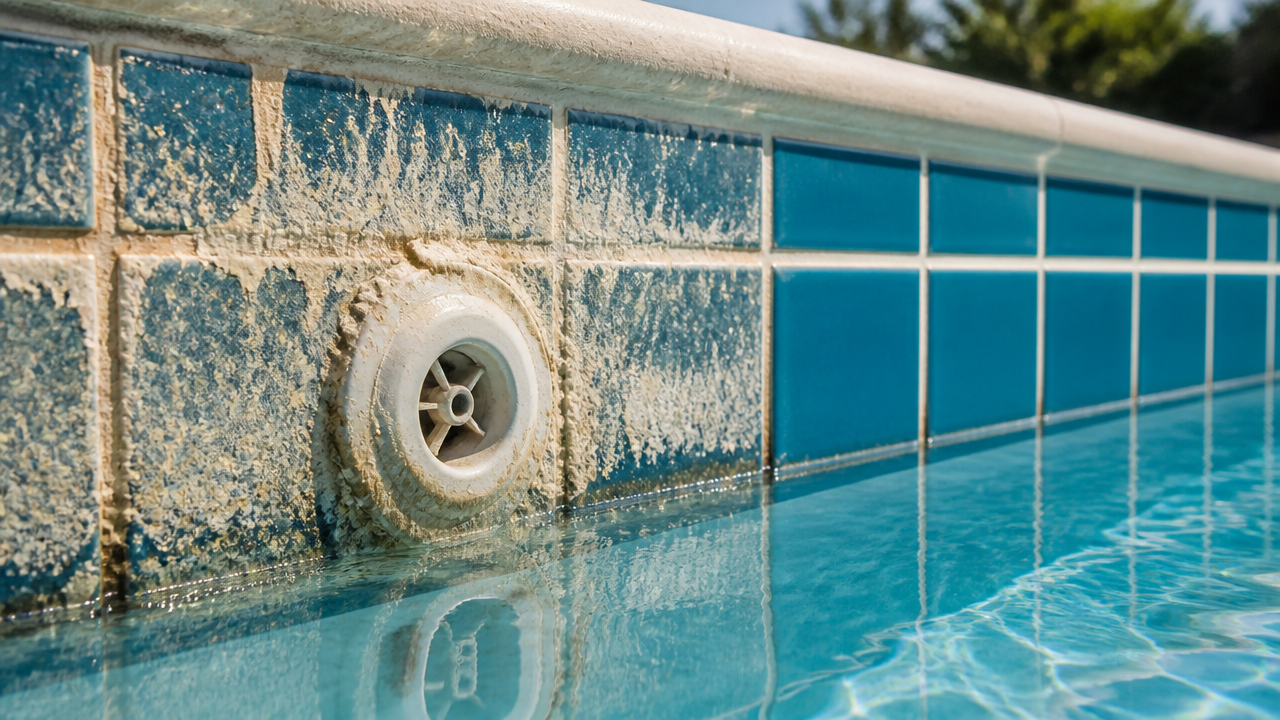
If you are not sure, start gently. A nylon pad or soft scraper will remove loose grime, but true calcium deposits usually stay put until you use a scale-specific method.
Why does calcium scale form in pools?
Scale forms when your water holds more calcium than it can comfortably keep dissolved. In plain English, the minerals come out of the water and stick to the nearest surface. That usually happens when pH is too high, total alkalinity runs high, calcium hardness is elevated, or all three drift upward together.
Australian conditions can speed this up. In hot weather, especially through a Queensland summer, evaporation leaves minerals behind while the waterline dries and concentrates residue. Topping up with hard fill water can make it worse again. Salt chlorinators can also scale internally if the chemistry drifts, which is why MyPoolMate covers salt chlorinator scale prevention and calcium hardness levels and fixes.
The key point is this: the white line is a symptom. The cause is the balance of the water.
What is the safest way to remove pool scale?
The safest method is the mildest one that actually works on your surface. Start there, then step up only if needed. Aggressive tools can leave scratches, dull the finish or damage grout.
For light buildup
- Use a pool-safe scale cleaner made for tiles or waterline deposits.
- Apply with a soft cloth, nylon pad or non-metallic scrubbing pad.
- Work in small sections and rinse as you go.
- Keep the area wet so loosened deposits do not bake back on.
For moderate buildup
- Use a plastic scraper on hard deposits at the waterline.
- On suitable ceramic tile only, a wet pumice stone can help.
- Avoid steel tools, harsh household acids and random DIY chemicals.
For severe buildup
If the scale is thick, widespread or bonded tightly to textured tile or stone, professional bead blasting may be the safest option. It is often faster and can prevent the trial-and-error scratching that happens when people attack the deposit with the wrong tool.
If your chemistry has also drifted badly, it helps to pair cleaning with a plan for lowering pool pH safely and for stabilising total alkalinity.
Can you use vinegar or household cleaners?
Sometimes, but usually not as your main solution. Vinegar is mildly acidic, so it may soften light residue on removable parts, but it is often too weak for proper pool scale and can become a slow, frustrating job on fixed surfaces.
Household cleaners are also risky because many are not designed for pool finishes. Some can etch stone, dull polished surfaces or leave residues that do not belong in pool water. A purpose-made pool product, or a mechanical method suited to the surface, is usually the better call.
If you are staring at a stubborn waterline ring, focus less on kitchen-cupboard hacks and more on matching the method to the finish and the severity of the deposit.
When should you call a professional?
Call a professional when the scale is thick, the finish is delicate, or you cannot identify the surface with confidence. Glass mosaic, polished stone, older plaster and specialty coatings are the common cases where guessing gets expensive.
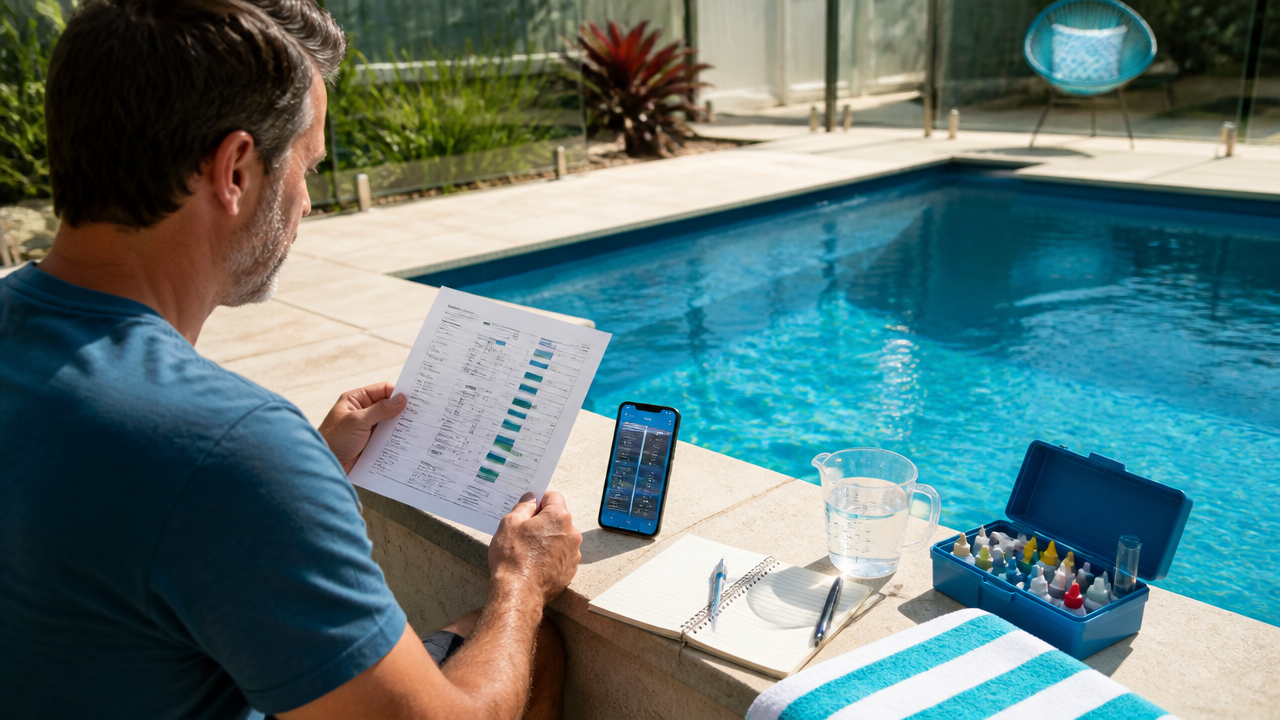
You should also get help if the buildup keeps returning quickly after cleaning. That often means the chemistry problem is ongoing, not occasional. In that case, tracking test results matters more than another hard scrub. MyPoolMate can store your readings, show trends over time, and turn a pile of numbers into a more useful pool shop test result workflow.
How do you stop scale coming back?
The long-term fix is balanced water and steady habits. You do not need to chase perfect numbers every day, but you do need to stop pH, alkalinity and calcium hardness from drifting into scale-forming territory for weeks at a time.
- Test regularly, especially during hot weather and after topping up.
- Correct high pH early instead of letting it sit.
- Keep total alkalinity in a stable range so pH is easier to control.
- Watch calcium hardness over time, not just once.
- Brush the waterline and wipe fresh residue before it hardens.
- Review the whole pattern, not one isolated test result.
This is where MyPoolMate is genuinely useful. Instead of generic dosing advice, it looks at your pool profile, test history and conditions, then helps identify the likely cause. Splash, the in-app AI assistant, can also guide you through what changed, what to correct first, and whether your current maintenance routine still makes sense. If you want a broader system for routine care, the guide to pool maintenance in Australia is a good next step, along with the overview of the MyPoolMate pool management app.
A simple action plan for this weekend
If you want the short version, do this. First, confirm the deposit is rough mineral scale and not just dirt. Next, choose the gentlest removal method your surface can safely handle. Then retest your water and correct the balance so the same line does not return next month.
That sequence matters. Clean, diagnose, prevent. If you skip the last step, you are just signing yourself up to scrub the same white ring again.
Perguntas frequentes
Is vinegar effective for pool limescale?
Vinegar can loosen light mineral residue on removable parts, but it is usually too mild and too slow for established pool scale on tiles, stone or plaster. For most pools, a dedicated scale remover, careful scraping, or professional treatment is the safer and more effective option.
Can you use a pumice stone on pool tiles?
A pumice stone can work on hard ceramic tile when the surface stays wet, but it can scratch softer finishes, glass mosaic, polished stone and some coatings. Test a small hidden patch first. If you are unsure about the finish, use a gentler method or get professional advice.
Why does calcium scale keep coming back in a pool?
Scale forms when calcium levels, pH and total alkalinity sit too high for too long, especially in hot weather with strong evaporation. In Queensland and other warm parts of Australia, topping up with hard water and letting the waterline dry can make buildup happen faster.
Do you need to drain the pool to remove limescale?
Not always. Thin deposits can often be removed with a pool-safe scale cleaner, nylon pad, plastic scraper or careful pumice use on suitable tile. Thick, stubborn or widespread buildup may need professional bead blasting or a more intensive treatment to avoid damaging the surface.
How long does it take to remove pool scale?
It depends on severity, but many pool owners notice a big improvement within one cleaning session for light deposits. Heavy buildup often needs repeated passes plus chemistry correction. If the water balance stays scale-forming, the white crust usually returns even after a successful clean.


