

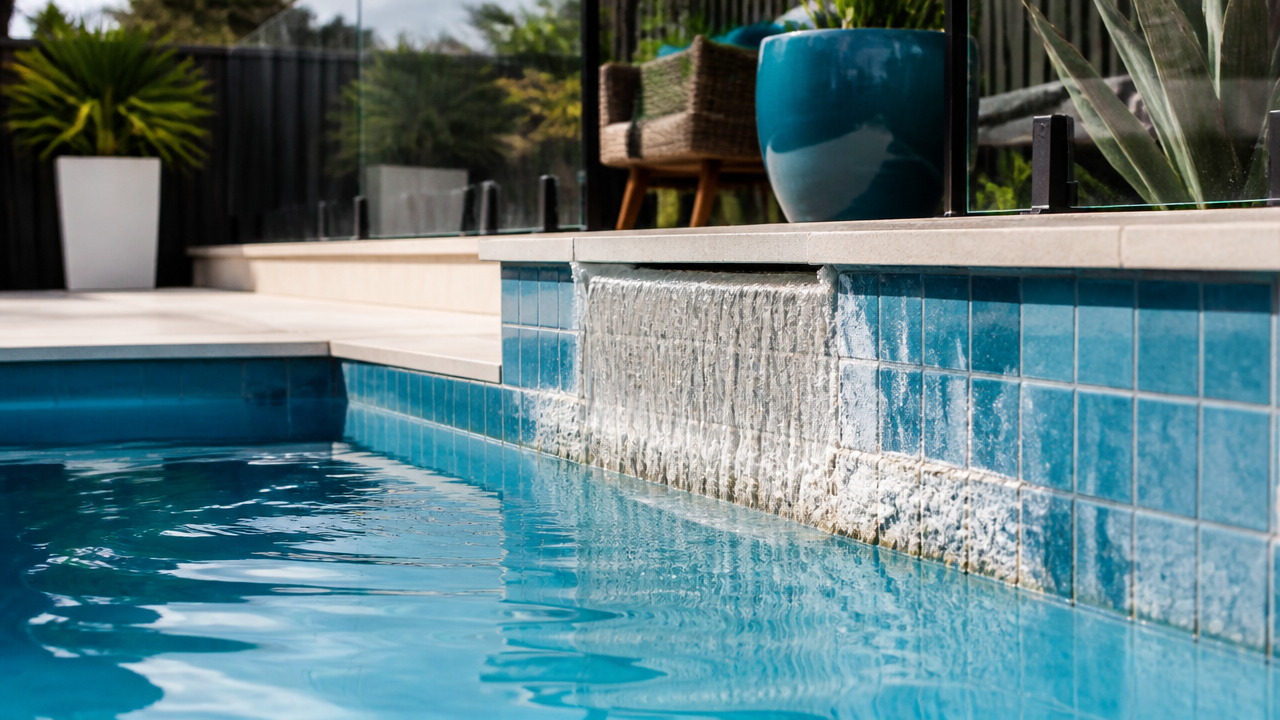
Calcium scale is the hard, chalky buildup that makes pool tiles feel rough and leaves a white or grey line around the waterline. For Australian backyard pool owners, it is usually a water balance problem first and a cleaning problem second. If you only scrub it off without fixing the chemistry behind it, it often comes straight back.
The good news is that most cases can be managed safely. With the right test results, a careful cleaning method and ongoing tracking in MyPoolMate, you can remove deposits, protect your surface and stop scale from building up again.
Key takeaways
- Scale forms when water carries more calcium than it can comfortably hold, then leaves it behind on surfaces.
- High pH, high alkalinity, evaporation and warm conditions often push a pool toward scaling.
- Rough white deposits at the waterline are common, but scale can also coat chlorinator cells, glassy tiles and fittings.
- Safe removal starts with confirming the stain type, then using the gentlest method that works.
- Prevention is mostly about steady balance, not big chemical corrections after the fact.
What does pool scale look like, and how is it different from other stains?
Pool scale usually looks chalky, crusty or sandpapery, not colourful or slimy. It often appears as an off white or pale grey band around the waterline, on spillways, inside water features or on hard surfaces where evaporation is strongest. If you run a finger over it, it often feels rough.
That matters because treatment depends on the cause. Metal stains tend to look brown, green or black, while organic staining is usually darker and can respond differently. If you are not sure what you are seeing, compare the symptoms with this guide to pool stains and metal marks before choosing a cleaner.
In early stages, scale may just look like a dull haze on tile. In heavier cases, it can harden into crust that traps dirt and makes the waterline look permanently dirty even after brushing.
Why calcium deposits are common in Australian pools
In many Australian pools, especially during hot spells, evaporation is the accelerant. Water disappears, but minerals stay behind. As topping up continues, calcium can gradually concentrate, and if pH or alkalinity also drifts high, the water starts dropping those minerals onto surfaces.
Queensland pool owners often see this pattern sooner because long warm periods, strong sun and frequent evaporation increase the pressure on water balance. A pool can look clear and still be scaling. That is why a simple visual check is not enough.
Routine testing and seasonal adjustments help a lot. A practical place to start is understanding your broader pool chemicals in Australia, especially how pH, alkalinity and calcium hardness influence each other rather than acting as separate numbers.
What actually causes scale to form?
Scale forms when the water becomes scale forming rather than scale dissolving. In plain language, the pool is holding more calcium than conditions allow, so some of it leaves the water and sticks to hard surfaces.
| Factor | How it increases scaling risk |
|---|---|
| High pH | Makes calcium more likely to fall out of solution |
| High total alkalinity | Supports conditions that favour mineral deposits |
| High calcium hardness | Gives the water more calcium to deposit |
| Evaporation | Concentrates dissolved minerals over time |
| Warm water and heaters | Encourages scaling on hot surfaces and equipment |
This is why a single number rarely tells the whole story. A pool with acceptable calcium hardness can still scale if pH stays high. Likewise, lowering pH without checking alkalinity and hardness may only provide a short term fix. If you want a deeper baseline, this article on ideal calcium hardness levels is a useful companion.
How do you get rid of calcium scale in a pool?
The safest removal method is always the least aggressive one that will do the job. Start by balancing the water, because cleaning first can waste effort. Once the chemistry is no longer pushing minerals onto surfaces, work through the buildup from gentle to stronger methods.
- Brush the affected area to remove loose, dusty deposits.
- Clean the waterline with a pool safe scale remover suited to your surface.
- Use non abrasive pads or brushes on tiles only if the finish allows it.
- Rinse and recheck the area after circulation has run.
- For chlorinator cells or scale inside equipment, follow the manufacturer safe cleaning process.
For waterline buildup, this step by step guide to removing tile scum lines can help you clean without damaging the finish. If the scale is inside a salt system, use a surface specific method such as this walkthrough on cleaning a saltwater chlorinator cell.
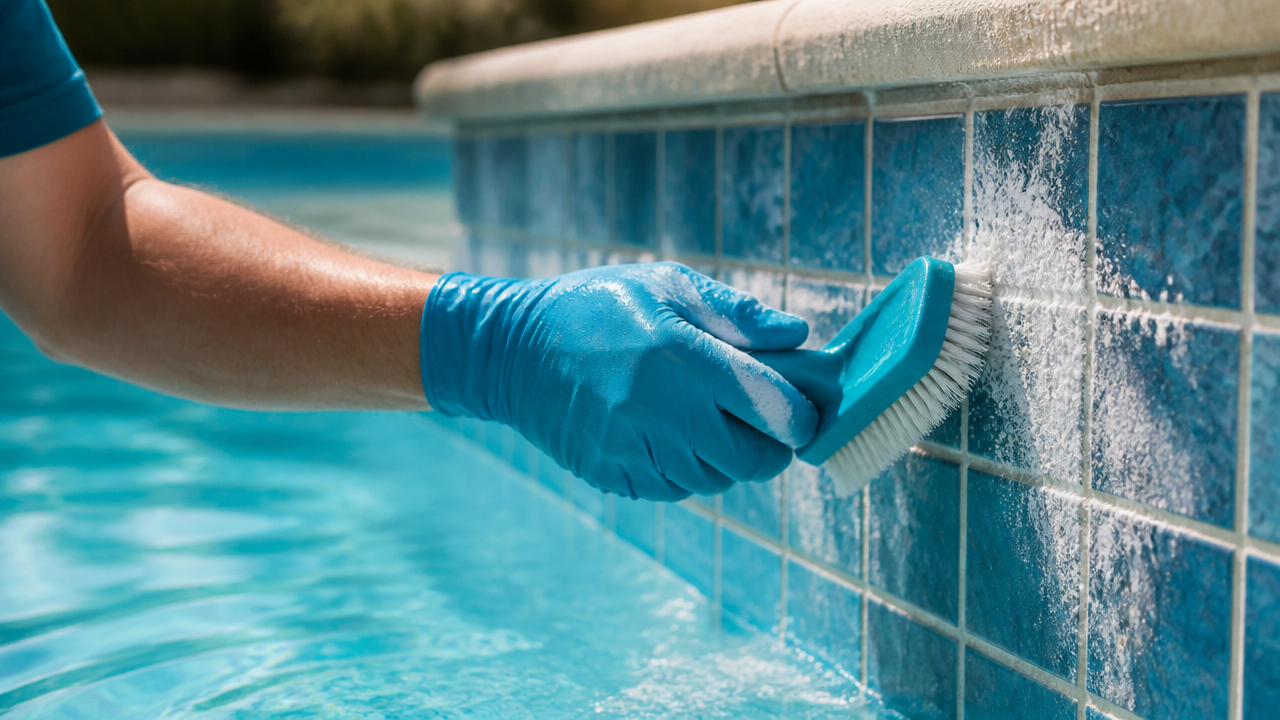
Avoid jumping straight to harsh scraping, strong acid treatments or random household products. Those can etch surfaces, damage equipment and create a bigger repair bill than the scale itself.
When is scale a sign of a bigger water balance problem?
If scale keeps returning, the deposit is not the core issue. Repeat buildup often points to persistent high pH, overcorrection, poor test interpretation or a mismatch between your pool surface, sanitiser and treatment habits.
This is where many pool owners get stuck. Pool shop advice can be generic, and the same product recommendation does not suit every pool. A plaster pool, fibreglass pool and tiled pool can behave differently even when the printout looks similar. Reading a pool shop test result properly helps you spot whether the real issue is hardness, alkalinity, pH drift or a combination.
If the buildup is severe, the water is cloudy, or your chlorinator and heater are scaling too, treat it as a system problem. This broader guide to Queensland water balance is helpful for linking visible symptoms to underlying chemistry.
How do you stop scale from coming back?
Prevention is mostly about smaller corrections made sooner. Keeping pH steady, alkalinity controlled and calcium hardness appropriate for your pool surface is easier than correcting a scaling pool after weeks of drift.
- Test consistently, especially during hot weather and after heavy top ups.
- Lower high pH before it stays elevated for days.
- Keep alkalinity in a stable range so pH is less likely to bounce.
- Review calcium hardness after dilution, refill or seasonal changes.
- Check equipment that tends to scale first, such as cells, heaters and spillways.
If pH is the main driver, this guide on lowering pool pH safely and this one on controlling total alkalinity are the best next reads.
How MyPoolMate helps prevent recurring scale
Scale is easier to prevent when you can see trends, not just one test result. MyPoolMate stores your pool profile, tracks your history and helps you interpret results in context, which is the part most generic advice misses.
Instead of treating every high reading as a cue to add more product, the app looks at your specific pool, recent tests and seasonal conditions. Splash, the in app AI assistant, can help you work through why scale is forming, what to fix first and whether the deposit points to a broader recovery issue.
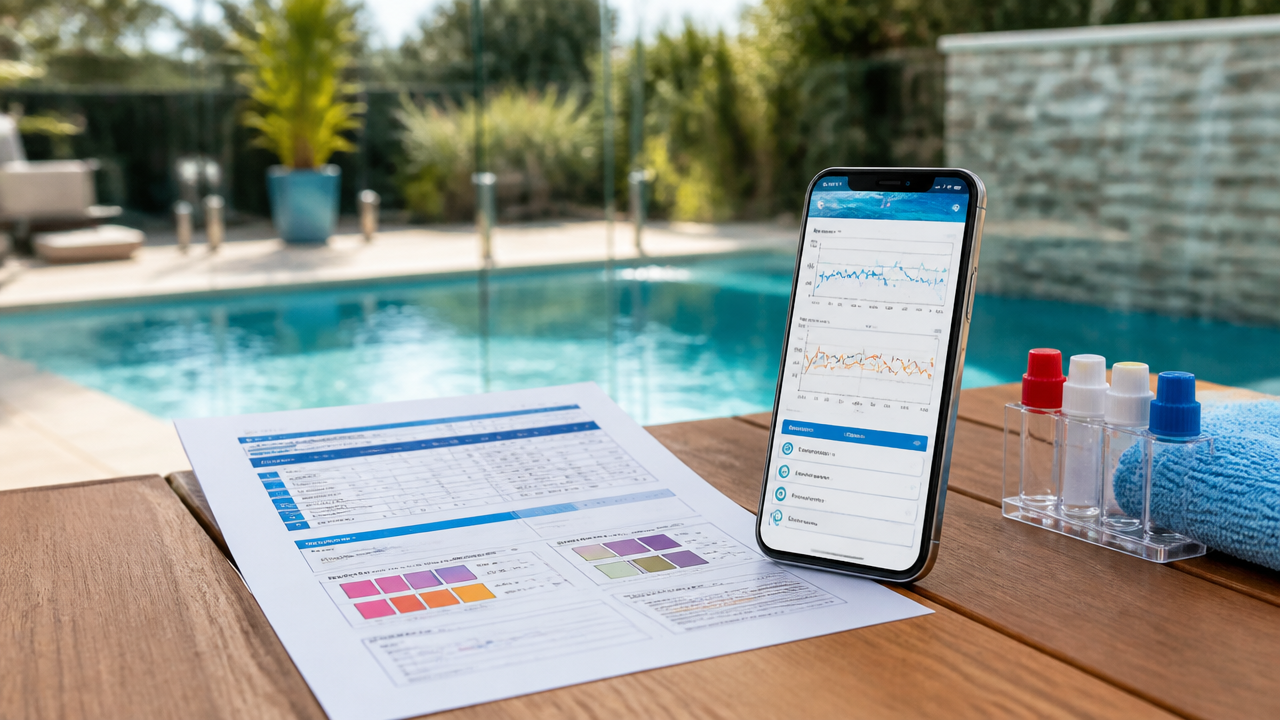
If you want a smarter routine rather than guesswork, explore how an AI pool water analysis workflow turns printed shop results and ongoing notes into clearer, more personalised decisions.
Frequently asked questions
How do you get rid of calcium scale in a pool?
The safest approach is to confirm it is scale, then start with brushing and a pool safe cleaner made for mineral deposits on tiles or hard surfaces. If the buildup is thick or widespread, fix the water balance first, then remove what is left. Acid washing or aggressive scraping should be a last resort.
Are calcium scale and limescale the same thing?
They are closely related terms. Limescale usually describes the hard, chalky deposit left by calcium rich water, and in pools that deposit is commonly calcium based scale. For pool owners, the practical point is the same: it forms when water balance pushes minerals out of solution and onto surfaces.
What causes calcium scale to form in pools?
High pH, high total alkalinity, warm weather, heavy evaporation and high calcium hardness all increase the risk. That is why many Australian pools, especially in hot conditions, can develop rough waterlines, cloudy deposits on tile and scaling inside equipment if balance drifts for too long.
Will baking soda raise calcium hardness?
Baking soda raises total alkalinity, not calcium hardness. In some pools that can actually increase scaling risk if pH is already trending high. If calcium hardness is low, use a calcium hardness increaser and adjust in stages based on a proper water test and your pool surface type.
How long does it take to remove pool scale safely?
It depends on how severe the buildup is. Light deposits can improve after one careful cleaning once the water is balanced. Heavier scale may need repeated treatment and, in stubborn cases, professional descaling. The key is stopping the chemistry that caused it, otherwise the crust returns quickly.


